Sulli Maria, Barchi Lorenzo, Toppino Laura, Diretto Gianfranco, Sala Tea, Lanteri Sergio, Rotino Giuseppe Leonardo, Giuliano Giovanni
Italian National Agency for New Technologies, Energy and Sustainable Economic Development (ENEA), Casaccia Research Centre, Rome, Italy.
Department of Agricultural, Forest and Food Sciences (DISAFA), Plant Genetics and Breeding, University of Turin, Grugliasco, Italy.
Front Plant Sci. 2021 May 17;12:638195. doi: 10.3389/fpls.2021.638195. eCollection 2021.
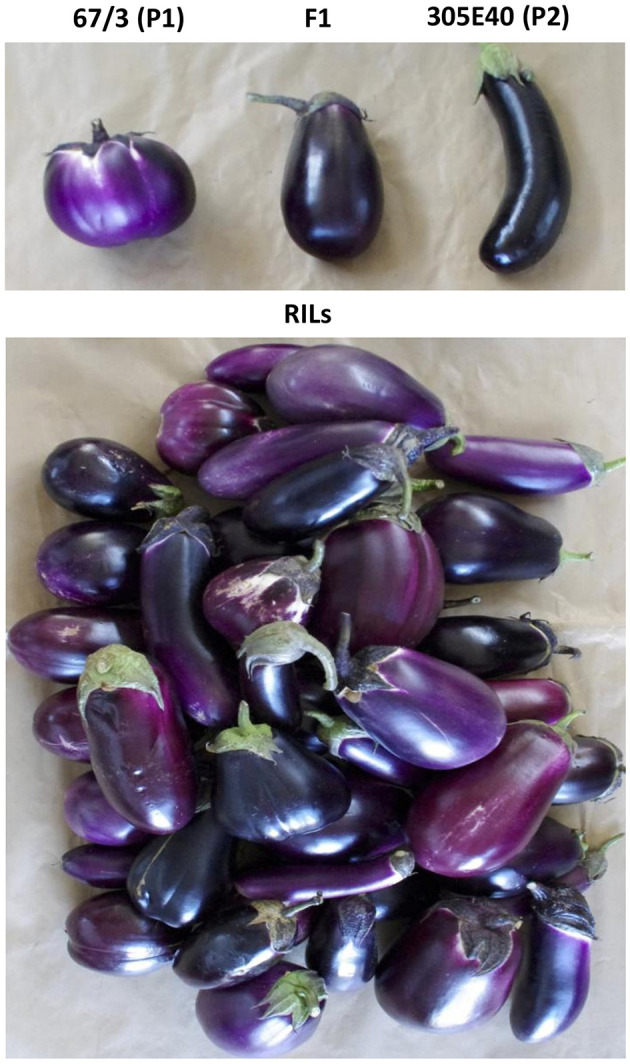
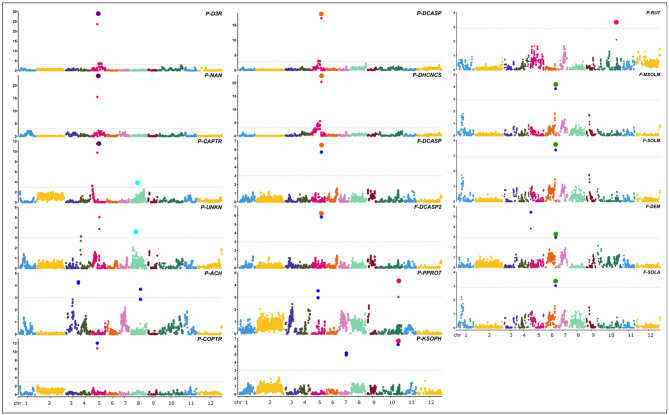
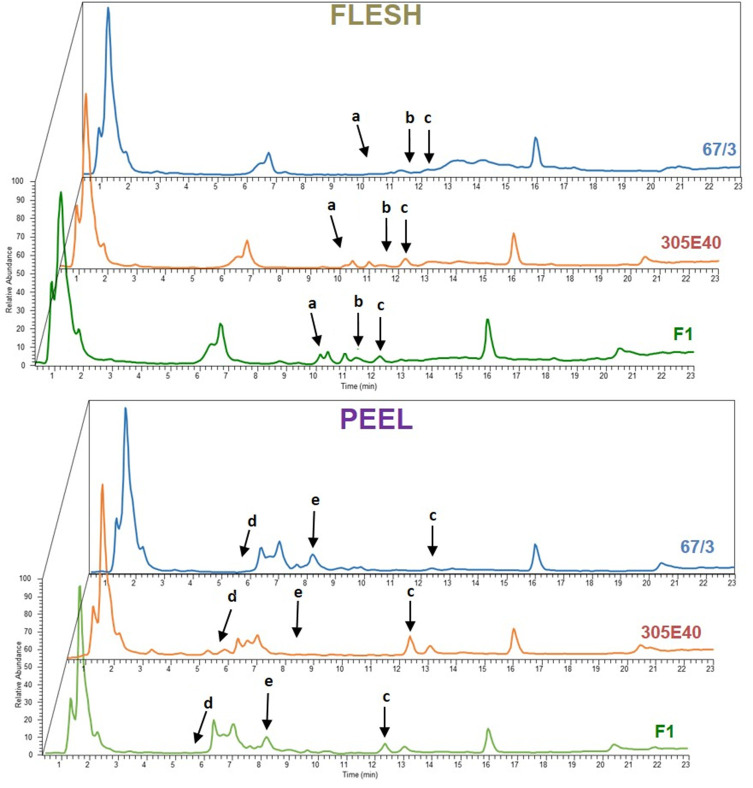
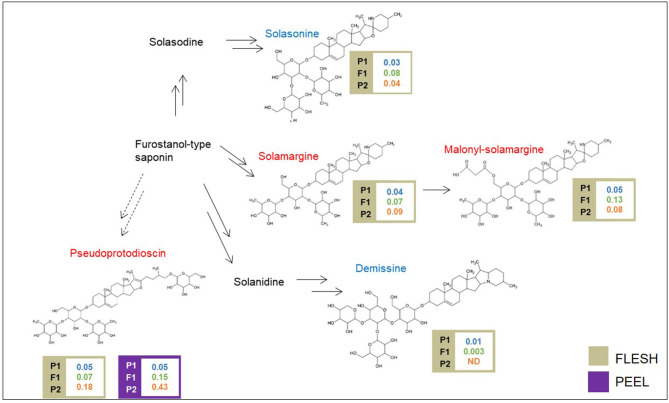
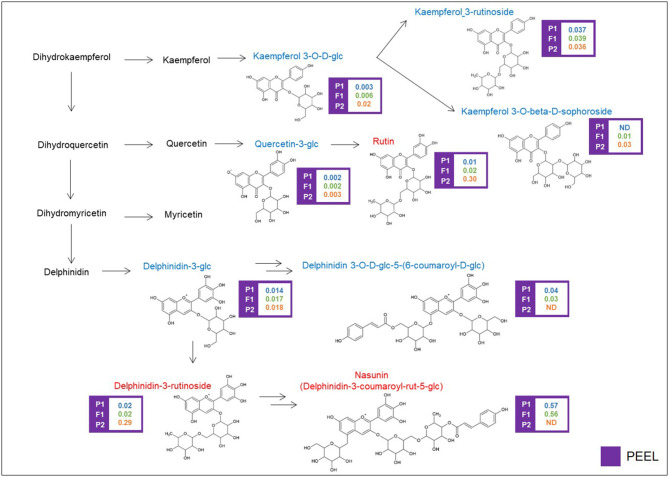
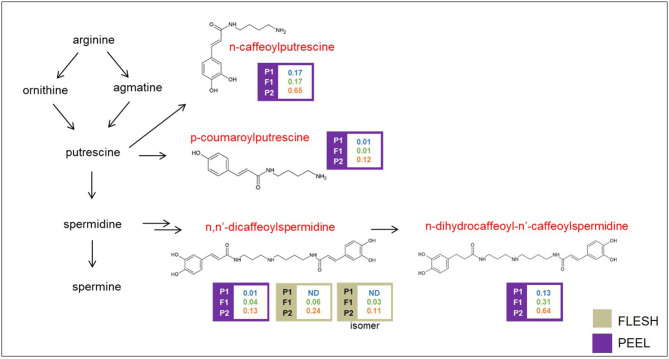
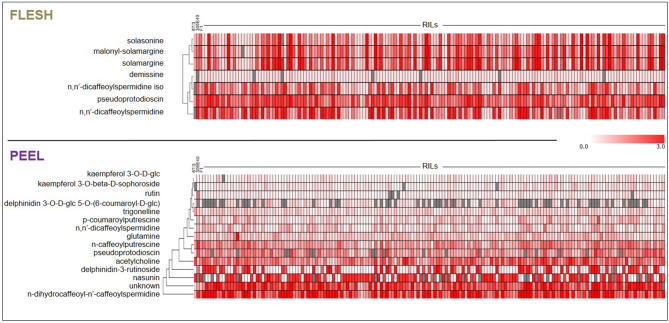
Eggplant ( L.) represents the third most important crop of the Solanaceae family and is an important component of our daily diet. A population of 164 F6 recombinant inbred lines (RILs), derived from two eggplant lines differing with respect to several key agronomic traits, "305E40" and "67/3," was grown to the commercial maturation stage, and fruits were harvested, separated into peel and flesh, and subjected to liquid chromatography Liquid Chromatography/Mass Spectrometry (LC/MS) analysis. Through a combination of untargeted and targeted metabolomics approaches, a number of metabolites belonging to the glycoalkaloid, anthocyanin, and polyamine classes and showing a differential accumulation in the two parental lines and F1 hybrid were identified. Through metabolic profiling of the RILs, we identified several metabolomic quantitative trait loci (mQTLs) associated with the accumulation of those metabolites. Each of the metabolic traits proved to be controlled by one or more quantitative trait loci (QTLs); for most of the traits, one major mQTL (phenotypic variation explained [PVE] ≥ 10%) was identified. Data on mQTL mapping and dominance-recessivity relationships of measured compounds in the parental lines and F1 hybrid, as well as an analysis of the candidate genes underlying the QTLs and of their sequence differences in the two parental lines, suggested a series of candidate genes underlying the traits under study.
茄子(L.)是茄科第三重要的作物,也是我们日常饮食的重要组成部分。由两个在几个关键农艺性状上存在差异的茄子品系“305E40”和“67/3”衍生而来的164个F6重组自交系(RIL)群体被种植至商业成熟阶段,果实被采收,分离为果皮和果肉,并进行液相色谱-液相色谱/质谱(LC/MS)分析。通过非靶向和靶向代谢组学方法相结合,鉴定出了一些属于糖生物碱、花青素和多胺类且在两个亲本系和F1杂种中表现出差异积累的代谢物。通过对RIL的代谢谱分析,我们鉴定出了几个与这些代谢物积累相关的代谢组数量性状位点(mQTL)。每个代谢性状都被证明受一个或多个数量性状位点(QTL)控制;对于大多数性状,鉴定出了一个主要的mQTL(表型变异解释率[PVE]≥10%)。关于亲本系和F1杂种中被测化合物的mQTL定位和显性-隐性关系的数据,以及对QTL潜在候选基因及其在两个亲本系中的序列差异的分析,提示了一系列研究性状潜在的候选基因。