Department of Biotechnology, Motilal Nehru National Institute of Technology Allahabad, Prayagraj, 211004, India.
Sci Rep. 2021 Jun 3;11(1):11765. doi: 10.1038/s41598-021-91154-x.
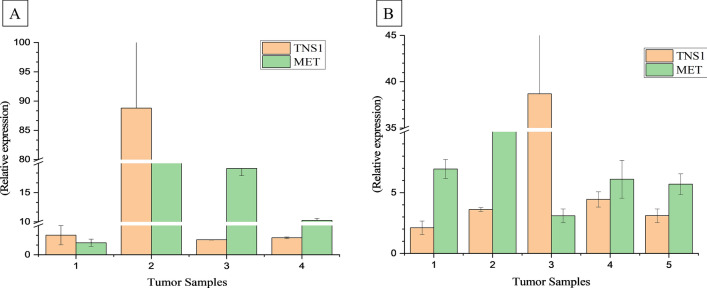
Past decades of the current millennium have witnessed an unprecedented rise in Early age Onset of Colo Rectal Cancer (EOCRC) cases in India as well as across the globe. Unfortunately, EOCRCs are diagnosed at a more advanced stage of cancer. Moreover, the aetiology of EOCRC is not fully explored and still remains obscure. This study is aimed towards the identification of genes and pathways implicated in the EOCRC. In the present study, we performed high throughput RNA sequencing of colorectal tumor tissues for four EOCRC (median age 43.5 years) samples with adjacent mucosa and performed subsequent bioinformatics analysis to identify novel deregulated pathways and genes. Our integrated analysis identifies 17 hub genes (INSR, TNS1, IL1RAP, CD22, FCRLA, CXCL3, HGF, MS4A1, CD79B, CXCR2, IL1A, PTPN11, IRS1, IL1B, MET, TCL1A, and IL1R1). Pathway analysis of identified genes revealed that they were involved in the MAPK signaling pathway, hematopoietic cell lineage, cytokine-cytokine receptor pathway and PI3K-Akt signaling pathway. Survival and stage plot analysis identified four genes CXCL3, IL1B, MET and TNS1 genes (p = 0.015, 0.038, 0.049 and 0.011 respectively), significantly associated with overall survival. Further, differential expression of TNS1 and MET were confirmed on the validation cohort of the 5 EOCRCs (median age < 50 years and sporadic origin). This is the first approach to find early age onset biomarkers in Indian CRC patients. Among these TNS1 and MET are novel for EOCRC and may serve as potential biomarkers and novel therapeutic targets in future.
过去几十年,印度乃至全球的早发性结直肠癌(EOCRC)病例数量呈前所未有的上升趋势。不幸的是,EOCRCs 被诊断为癌症的更晚期。此外,EOCRC 的病因尚未完全阐明,仍然不清楚。本研究旨在确定与 EOCRC 相关的基因和途径。在本研究中,我们对 4 个 EOCRC(中位年龄 43.5 岁)肿瘤组织和相邻黏膜进行了高通量 RNA 测序,并进行了后续的生物信息学分析,以确定新的失调途径和基因。我们的综合分析确定了 17 个枢纽基因(INSR、TNS1、IL1RAP、CD22、FCRLA、CXCL3、HGF、MS4A1、CD79B、CXCR2、IL1A、PTPN11、IRS1、IL1B、MET、TCL1A 和 IL1R1)。鉴定基因的途径分析表明,它们参与了 MAPK 信号通路、造血细胞谱系、细胞因子-细胞因子受体通路和 PI3K-Akt 信号通路。生存和分期分析确定了 4 个基因 CXCL3、IL1B、MET 和 TNS1(p=0.015、0.038、0.049 和 0.011),与总生存率显著相关。此外,在 5 个 EOCRC(中位年龄<50 岁和散发性起源)的验证队列中,还验证了 TNS1 和 MET 的差异表达。这是首次在印度 CRC 患者中寻找早发性生物标志物的方法。其中 TNS1 和 MET 是 EOCRC 的新发现,可能成为未来潜在的生物标志物和新的治疗靶点。