Ayme Jean-François, Lehn Jean-Marie
Institute of Nanotechnology, Karlsruhe Institute of Technology 76344 Eggenstein-Leopoldshafen Germany.
Laboratoire de Chimie Supramoléculaire, Institut de Science et d'Ingénierie Supramoléculaires, Université de Strasbourg 8 allée Gaspard Monge 67000 Strasbourg France
Chem Sci. 2019 Dec 17;11(4):1114-1121. doi: 10.1039/c9sc04988f.
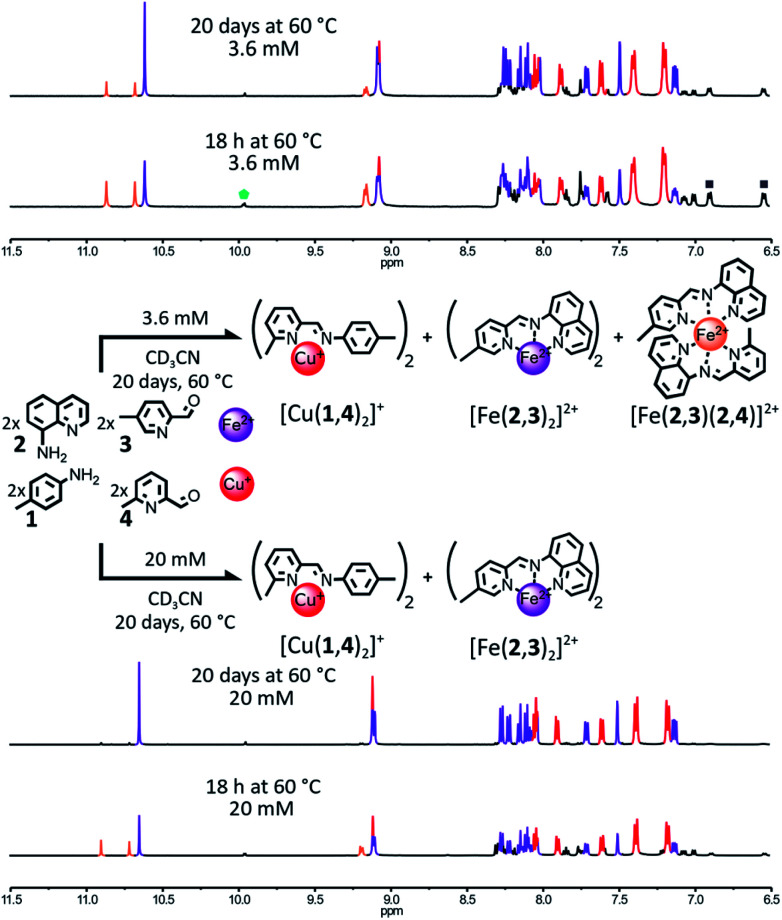
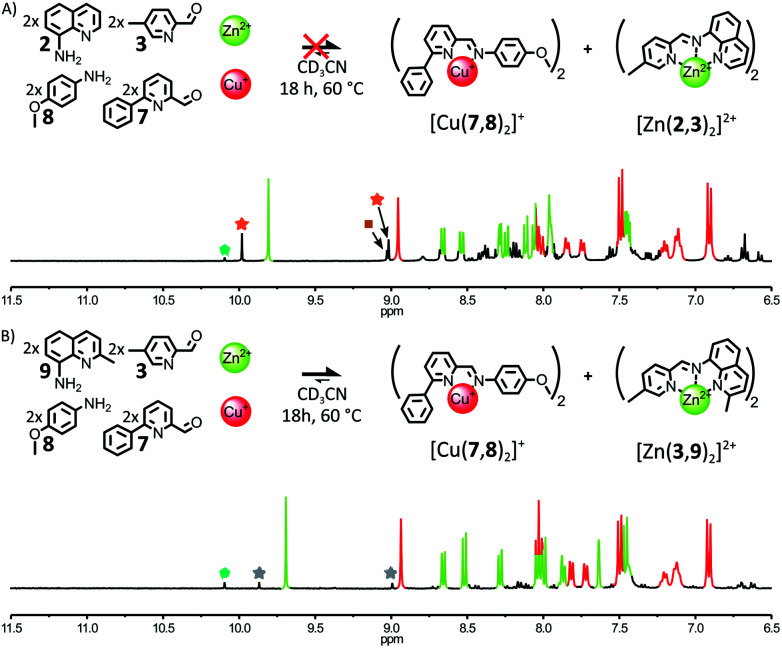
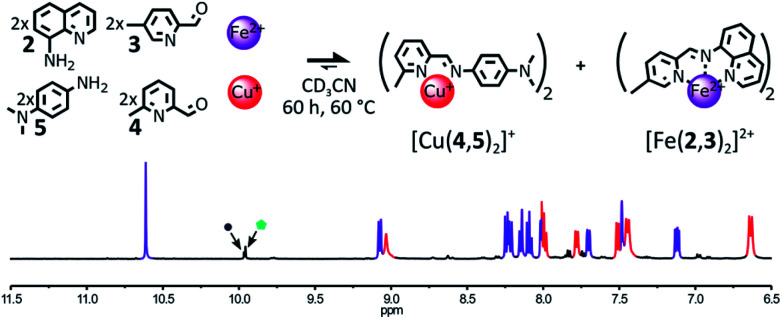
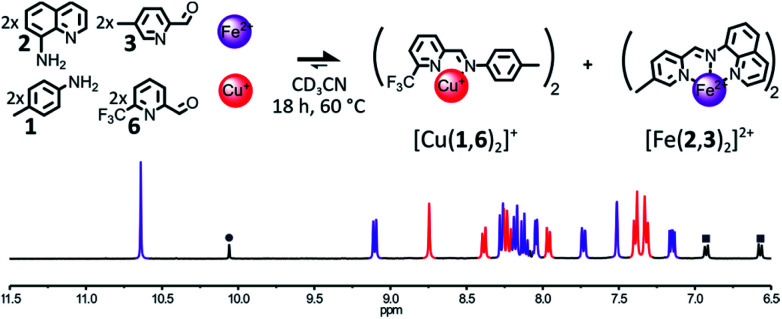
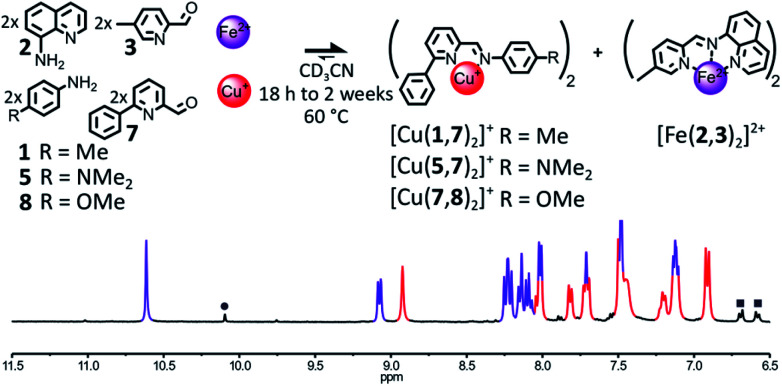
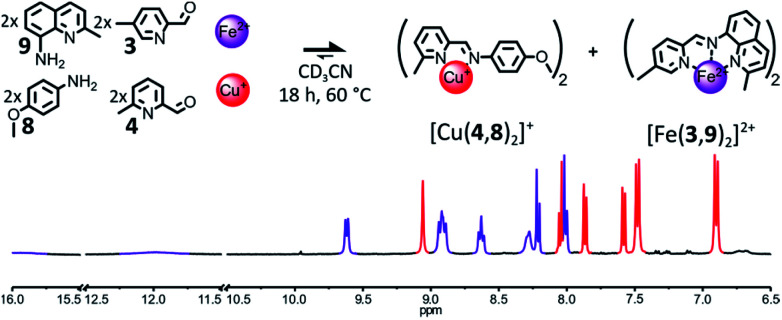
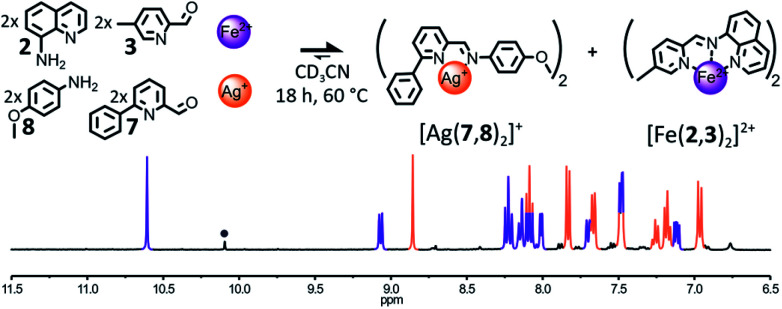
A major hurdle in the development of complex constitutional dynamic networks (CDNs) is the lack of strategies to simultaneously control the output of two (or more) interconnected dynamic processes over several species, namely reversible covalent imine bond formation and dynamic metal-ligand coordination. We have studied in detail the self-sorting process of 11 constitutional dynamic libraries containing two different amines, aldehydes and metal salts into two imine-based metal complexes, having no overlap in terms of their compositions. This study allowed us to determine the factors influencing the fidelity of this process (concentration, electronic and steric parameters of the organic components, and nature of the metal cations). In all 11 systems, the outcome of the process was primarily determined by the ability of the octahedral metal ion to select its pair of components from the initial pool of components, with the composition of the weaker tetrahedral complex being imposed by the components rejected by the octahedral metal ions. Different octahedral metal ions required different levels of precision in the "assembling instructions" provided by the organic components of the CDN to guide it towards a sorted output. The concentration of the reaction mixture, and the electronic and steric properties of the initial components of the library were all found to influence the lifetime of unwanted metastable intermediates formed during the assembling of the two complexes.
复杂的结构动态网络(CDN)发展中的一个主要障碍是缺乏在多个物种上同时控制两个(或更多)相互连接的动态过程输出的策略,即可逆共价亚胺键形成和动态金属 - 配体配位。我们详细研究了11个包含两种不同胺、醛和金属盐的结构动态库自分类为两种基于亚胺的金属配合物的过程,这两种配合物在组成上没有重叠。这项研究使我们能够确定影响该过程保真度的因素(浓度、有机成分的电子和空间参数以及金属阳离子的性质)。在所有11个系统中,该过程的结果主要由八面体金属离子从初始成分池中选择其成对成分的能力决定,较弱的四面体配合物的组成则由八面体金属离子拒绝的成分决定。不同的八面体金属离子在CDN有机成分提供的“组装指令”中需要不同程度的精度,以引导其实现分类输出。发现反应混合物的浓度以及库初始成分的电子和空间性质都会影响在两种配合物组装过程中形成的不需要的亚稳中间体的寿命。