Burkhardt Elke, Van Opzeeland Ilse, Cisewski Boris, Mattmüller Ramona, Meister Marlene, Schall Elena, Spiesecke Stefanie, Thomisch Karolin, Zwicker Sarah, Boebel Olaf
Alfred Wegener Institute Helmholtz Centre for Polar and Marine Research, Am Handelshafen 12, 27570 Bremerhaven, Germany.
Helmholtz Institute for Functional Marine Biodiversity (HIFMB), Carl von Ossietzky University, Ammerländer Heerstraße 231, 26129 Oldenburg, Germany.
R Soc Open Sci. 2021 May 26;8(5):201142. doi: 10.1098/rsos.201142.
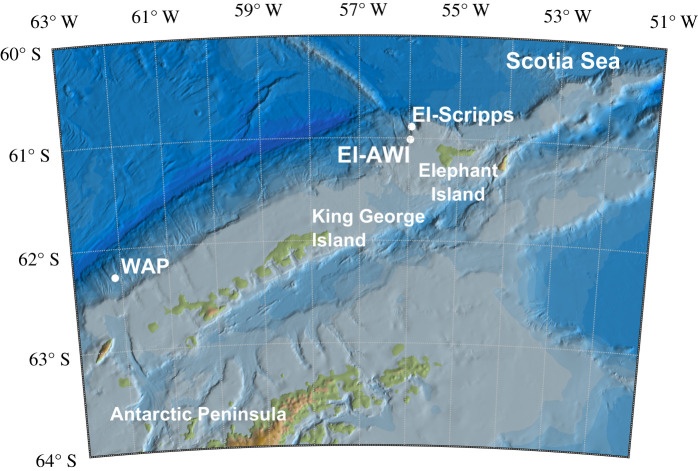
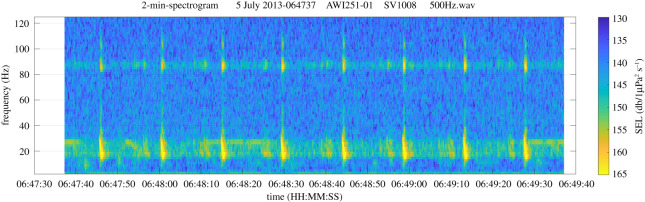
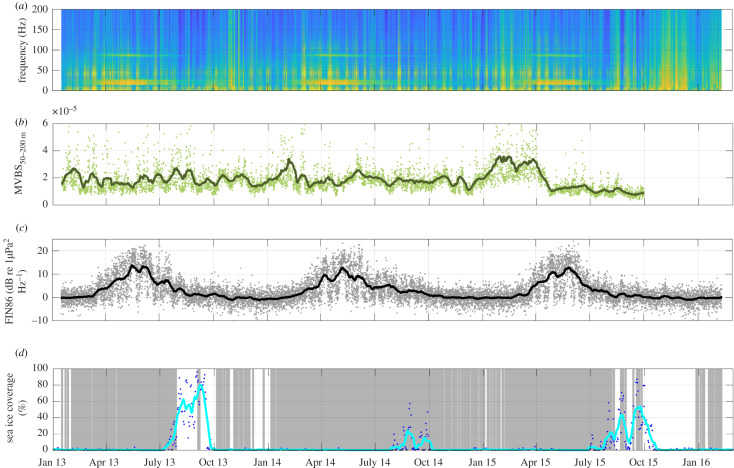
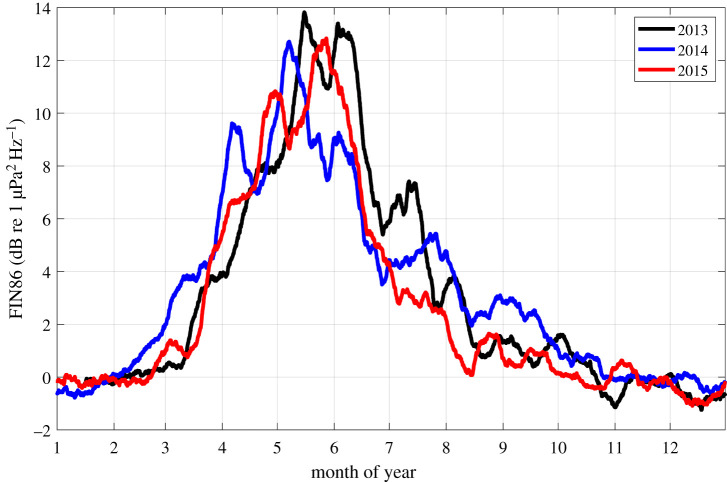
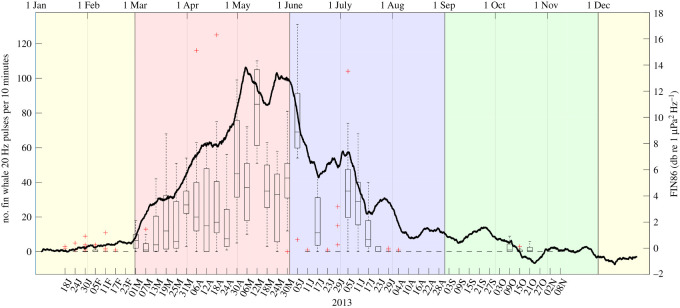
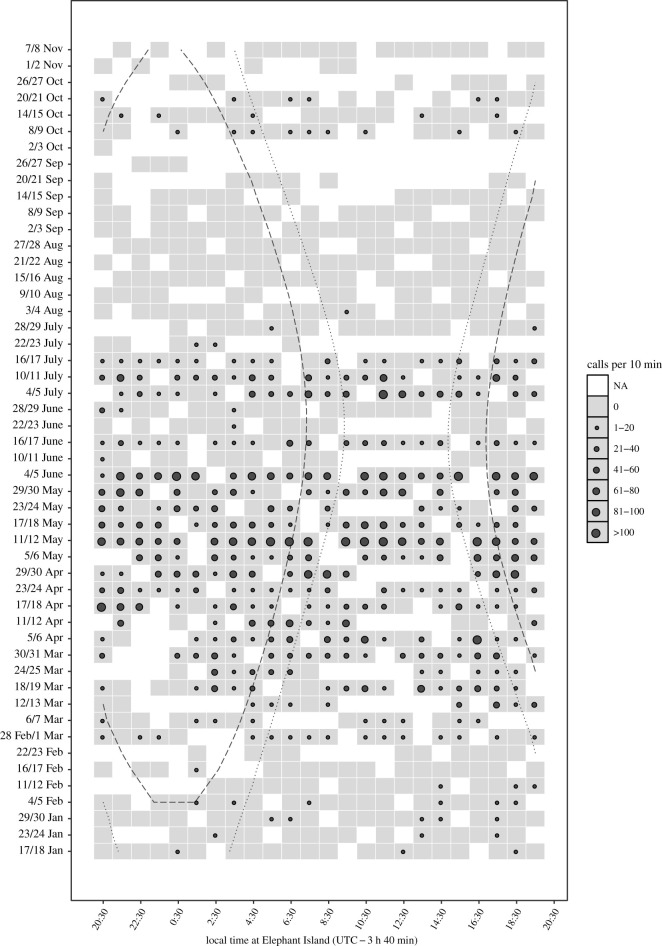
This study investigates the relevance of the Elephant Island (EI) region for Southern Hemisphere fin whales () in their annual life cycle. We collected 3 years of passive acoustic recordings (January 2013 to February 2016) northwest of EI to calculate time series of fin whale acoustic indices, daily acoustic occurrence, spectrograms, as well as the abundance of their 20 Hz pulses. Acoustic backscatter strength, sea ice concentration and chlorophyll-a composites provided concurrent environmental information for graphic comparisons. Acoustic interannual, seasonal and diel patterns together with visual information and literature resources were used to define the period of occupancy and to infer potential drivers for their behaviour. Spectral results suggest that these fin whales migrate annually to and from offshore central Chile. Acoustic data and visual information reveal their arrival at EI in December to feed without producing their typical 20 Hz pulse. For all 3 years, acoustic activity commences in February, peaks in May and decreases in August, in phase with the onset of their breeding season. Our results emphasize the importance of EI for fin whales throughout most of the year. Our recommendation is to consider EI for establishing a marine protected area to expedite the recovery of this vulnerable species.
本研究调查了大象岛(EI)区域对南半球长须鲸()年度生命周期的相关性。我们收集了2013年1月至2016年2月在EI西北海域3年的被动声学记录,以计算长须鲸声学指数的时间序列、每日声学出现情况、频谱图以及它们20赫兹脉冲的丰度。声学反向散射强度、海冰浓度和叶绿素a合成数据提供了用于图形比较的同期环境信息。声学年际、季节和昼夜模式以及视觉信息和文献资源被用于确定其占据期,并推断其行为的潜在驱动因素。频谱结果表明,这些长须鲸每年往返于智利中部近海。声学数据和视觉信息显示,它们于12月抵达EI觅食,且不发出其典型的20赫兹脉冲。在这3年中,声学活动均于2月开始,5月达到峰值,8月下降,与它们繁殖季节的开始同步。我们的结果强调了EI在一年中大部分时间对长须鲸的重要性。我们的建议是考虑将EI设立为海洋保护区,以加速这一濒危物种的恢复。