Azim Premji University, Bengaluru, India.
Indian Institute of Science, Bengaluru, India.
PLoS One. 2021 Jun 4;16(6):e0252579. doi: 10.1371/journal.pone.0252579. eCollection 2021.
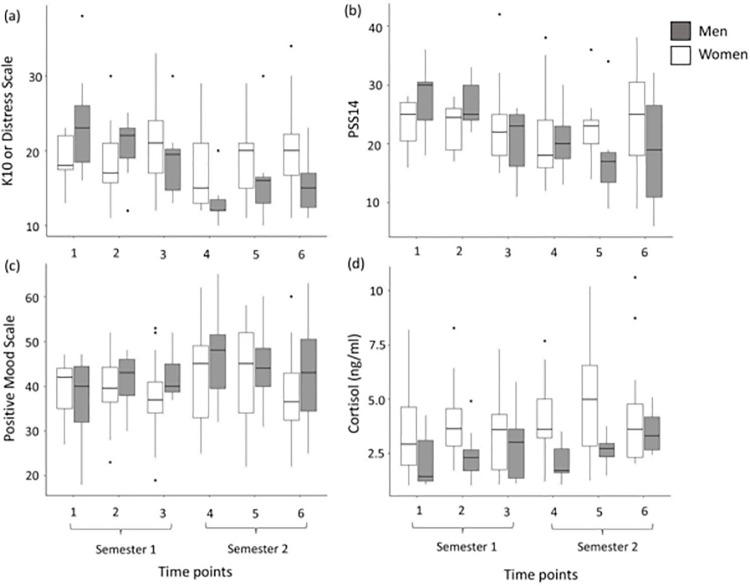
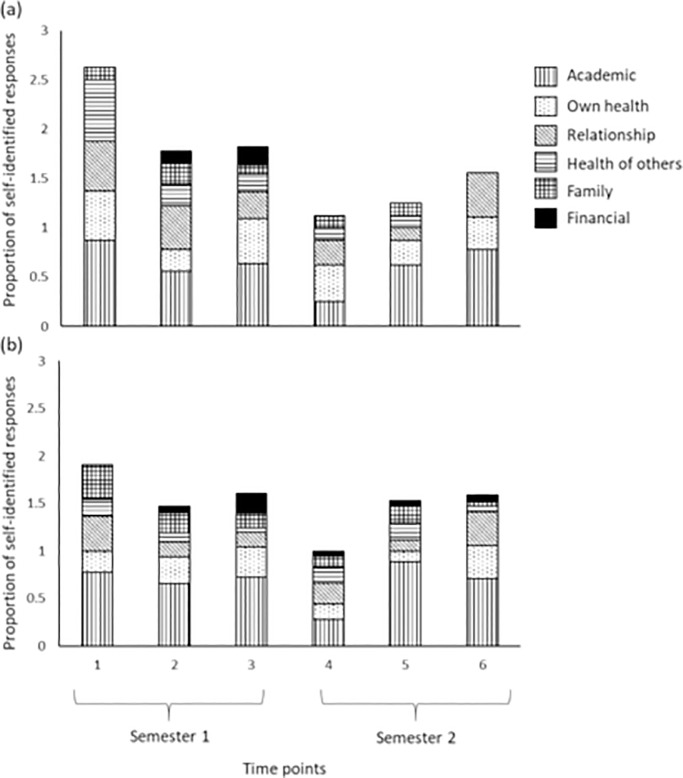
Young adults entering college experience immense shifts in personal and professional environments. Such a potentially stressful event may trigger multiple psychological and physiological effects. In a repeated-measures longitudinal survey (N = 6 time-points) of first year cohort of residential undergraduate students in India, this study evaluates multiple psychological parameters: PSS14 (Perceived Stress Scale), K10 (distress scale) and positive mood measures, along with salivary cortisol levels. We find that compared to women, men showed significantly lower levels of salivary cortisol and also a decrease in perceived stress (PSS14) and distress (K10) with time. By contrast, women reported similar perceived stress and distress levels over time but had higher cortisol levels at the end of the academic year. Academic stress was reported by the students to be the most important stressor. This study highlights notable gender-/sex-differences in psychological and physiological stress responses and adds a valuable longitudinal dataset from the Indian undergraduate student cohort which is lacking in literature.
年轻人进入大学后,个人和职业环境都会发生巨大的变化。这种潜在的压力事件可能会引发多种心理和生理影响。本研究对印度住宿本科生一年级队列进行了重复测量的纵向调查(N=6 个时间点),评估了多种心理参数:PSS14(感知压力量表)、K10(困扰量表)和积极情绪测量,以及唾液皮质醇水平。我们发现,与女性相比,男性的唾液皮质醇水平明显较低,而且随着时间的推移,感知压力(PSS14)和困扰(K10)也有所下降。相比之下,女性在整个学年中报告的感知压力和困扰水平相似,但皮质醇水平较高。学生们报告说,学业压力是最重要的压力源。本研究强调了心理和生理应激反应中的显著性别/性别差异,并为文献中缺乏的印度本科生队列提供了有价值的纵向数据集。