Division of Neuropsychology, Center of Neurology, Hertie-Institute for Clinical Brain Research, University of Tübingen, Tübingen, Germany.
Department of Psychology, Lancaster University, Lancaster, United Kingdom.
PLoS One. 2021 Jun 4;16(6):e0252596. doi: 10.1371/journal.pone.0252596. eCollection 2021.
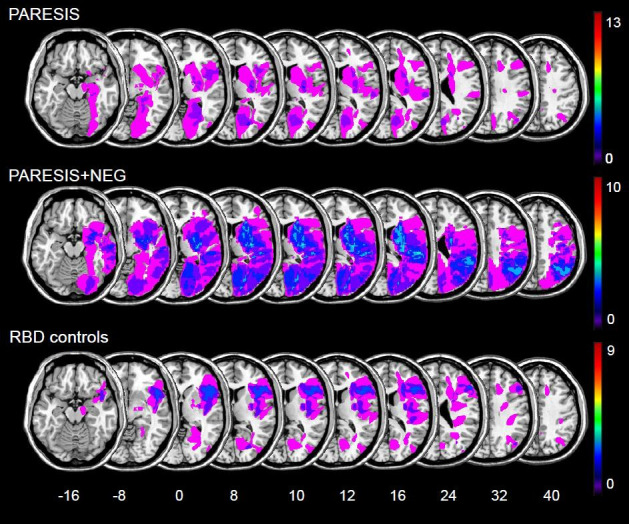
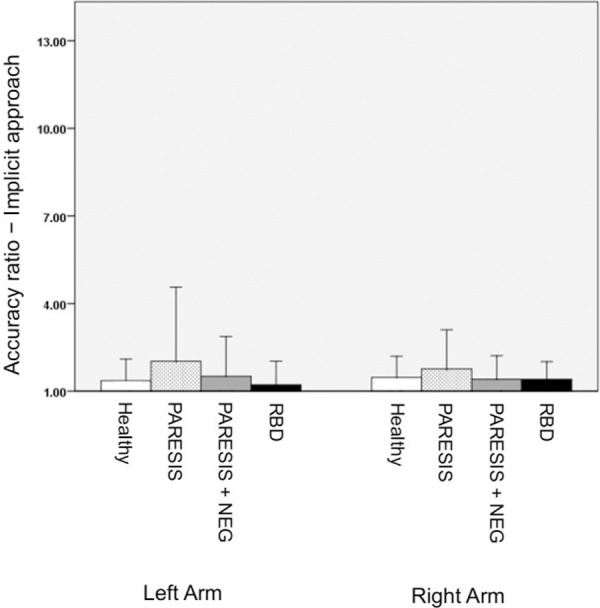
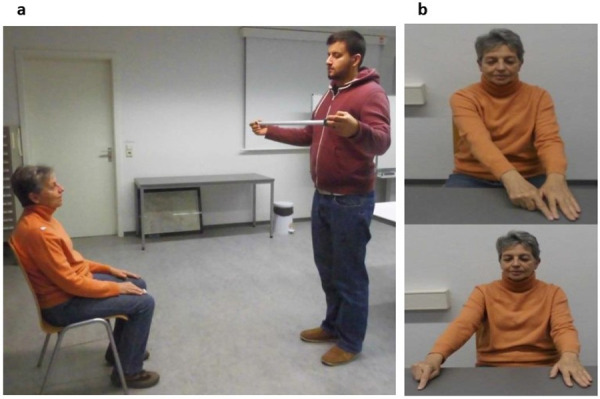
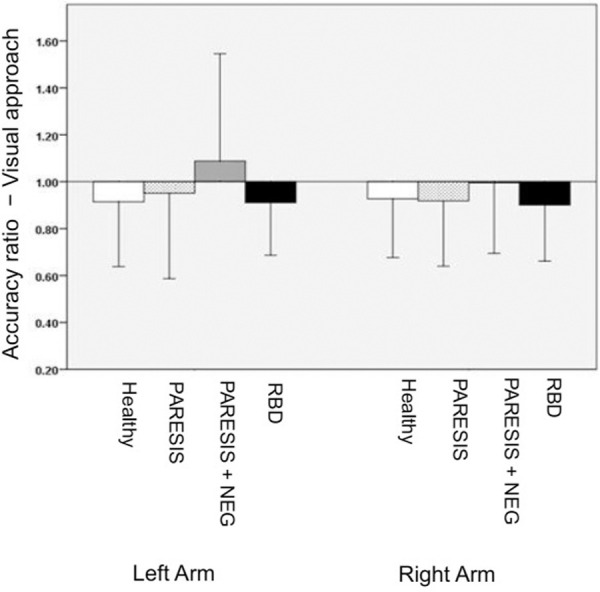
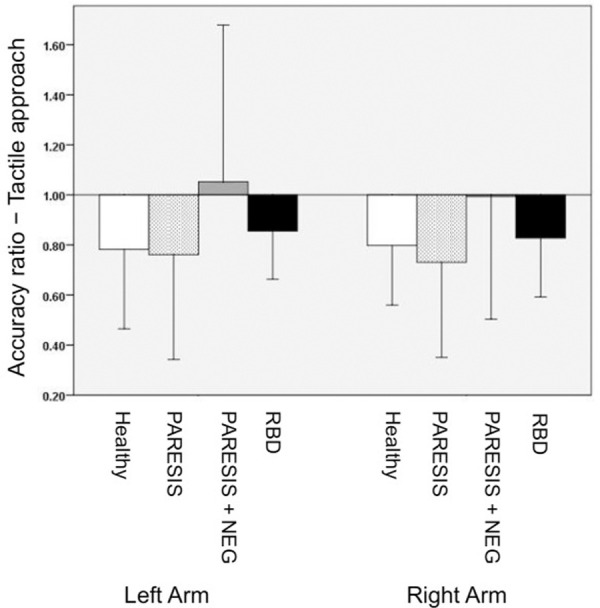
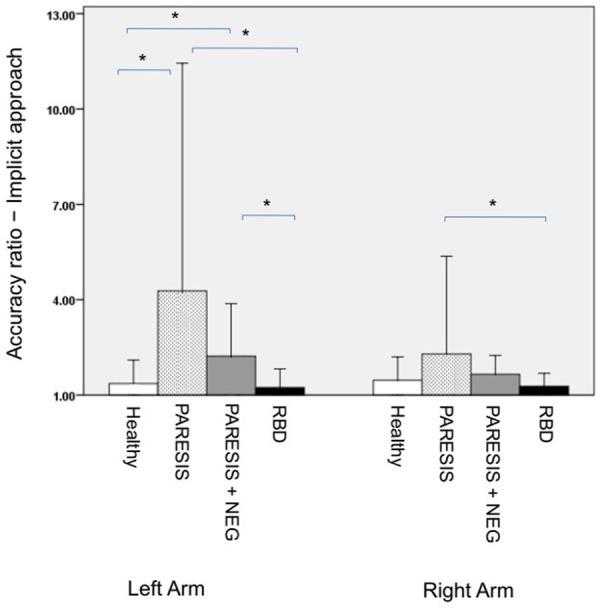
Recent studies have suggested that people's intent and ability to act also can influence their perception of their bodies' peripersonal space. Vice versa one could assume that the inability to reach toward and grasp an object might have an impact on the subject's perception of reaching distance. Here we tested this prediction by investigating body size and action capability perception of neurological patients suffering from arm paresis after stroke, comparing 32 right-brain-damaged patients (13 with left-sided arm paresis without additional spatial neglect, 10 with left-sided arm paresis and additional spatial neglect, 9 patients had neither arm paresis nor neglect) and 27 healthy controls. Nineteen of the group of right hemisphere stroke patients could be re-examined about five months after initial injury. Arm length was estimated in three different methodological approaches: explicit visual, explicit tactile/proprioceptive, and implicit reaching. Results fulfilled the working hypothesis. Patients with an arm paresis indeed perceived their bodies differently. We found a transient overestimation of the length of the contralesional, paretic arm after stroke. Body size and action capability perception for the extremities thus indeed seem to be tightly linked in humans.
最近的研究表明,人们的意图和行动能力也会影响他们对身体周围空间的感知。反之,人们可以假设无法伸向和抓住物体可能会对主体对伸展距离的感知产生影响。在这里,我们通过调查中风后手臂瘫痪的神经科患者的身体大小和行动能力感知来测试这一预测,比较了 32 名右脑损伤患者(13 名左侧手臂瘫痪且无额外空间忽视,10 名左侧手臂瘫痪且有额外空间忽视,9 名患者既无手臂瘫痪也无忽视)和 27 名健康对照者。19 名右半球中风患者可以在初次受伤后约五个月再次接受检查。手臂长度通过三种不同的方法进行估计:明确的视觉、明确的触觉/本体感觉和隐含的伸展。结果满足了工作假设。手臂瘫痪的患者确实对自己的身体有不同的感知。我们发现中风后对病变侧、瘫痪侧手臂的长度存在短暂的高估。因此,人体的肢体大小和行动能力感知似乎确实紧密相连。