Ahaduzzaman Md, Milan Luke, Morton Christine L, Gerber Priscilla F, Walkden-Brown Stephen W
Animal Science, School of Environmental and Rural Science, University of New England, Armidale, NSW 2351, Australia; Faculty of Veterinary Medicine, Chattogram Veterinary and Animal Sciences University, Chattogram, 4225, Bangladesh.
Earth Sciences, School of Environmental and Rural Science, University of New England, Armidale, NSW 2351, Australia.
Poult Sci. 2021 Jul;100(7):101188. doi: 10.1016/j.psj.2021.101188. Epub 2021 Apr 20.
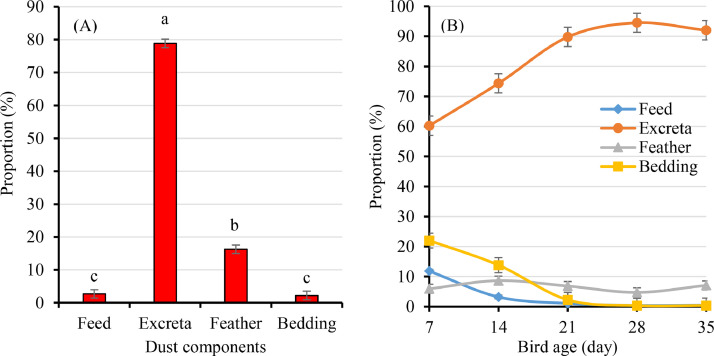
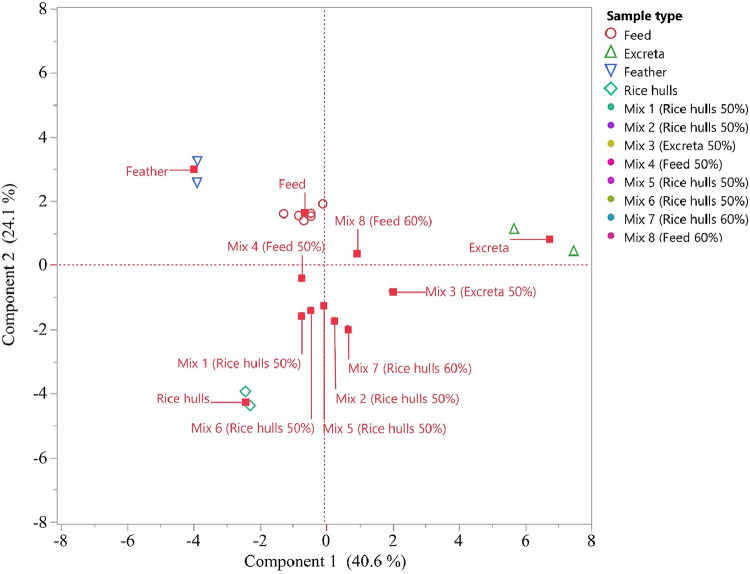
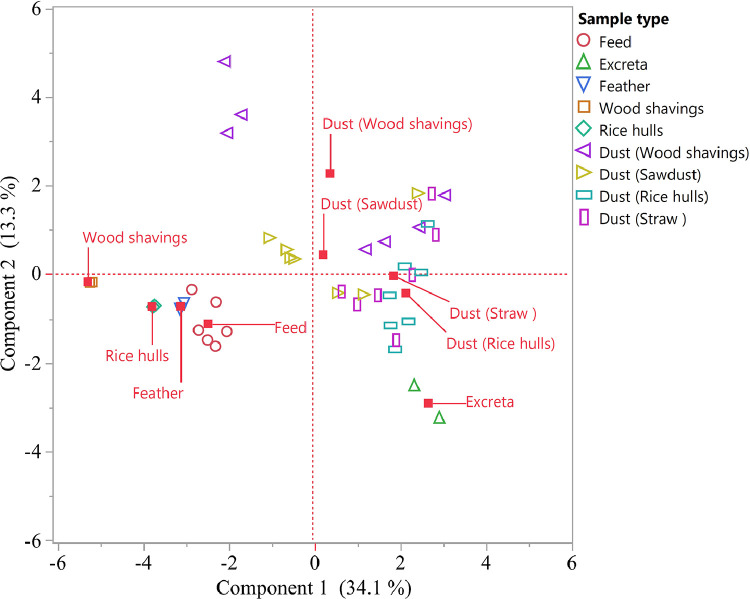
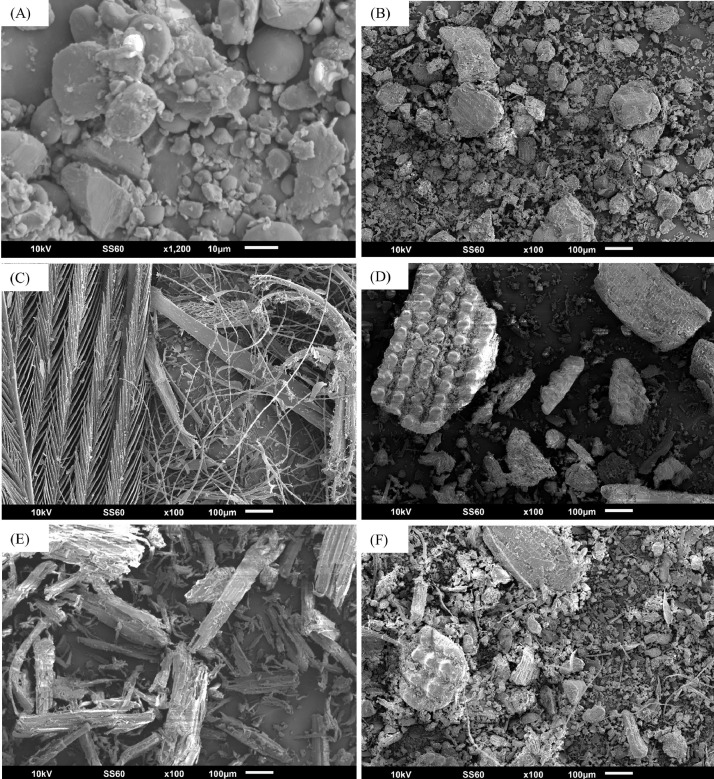
Poultry house dust is composed of fine particles which likely originate from a diverse range of materials such as feed, litter, excreta, and feathers. Little is known about the contribution of these sources to broiler house airborne dust so the present study was designed to identify the relative contributions of these sources. Samples of feed, excreta, feather, and bedding, known mixtures of these and settled dust from 28 broiler chicken flocks were tested for the concentration of 18 chemical elements. A chemometrics approach (the application of multivariate statistical techniques to chemical analysis data) was used to identify the primary source material in broiler chicken house dust samples. Scanning electron microscopy (SEM) was also used to analyze dust sample particulates based on examination of source materials. Excreta was found to be the main component of broiler chicken house dust, both by SEM and chemometric analysis. SEM of experimental flock dust between 7 and 35 days of age (d) revealed that the contribution of excreta to dust increased with age from 60% at 7 d to 95% at 28 d (P < 0.001). The proportion of bedding and feed in dust declined with age while the contribution of feather material remained low throughout. This study demonstrates that excreta provides the bulk of the material in poultry dust samples with bedding material, feed and feather material providing lower proportions. The relative contributions of these materials to dust varies with age of birds at dust collection. Additional research is required to determine the health and diagnostic implications of this variation.
禽舍灰尘由细颗粒组成,这些颗粒可能源自多种物质,如饲料、垫料、排泄物和羽毛。关于这些来源对肉鸡舍空气中灰尘的贡献知之甚少,因此本研究旨在确定这些来源的相对贡献。对饲料、排泄物、羽毛和垫料的样本、这些物质的已知混合物以及来自28个肉鸡群的沉降灰尘进行了18种化学元素浓度的检测。采用化学计量学方法(将多元统计技术应用于化学分析数据)来确定肉鸡舍灰尘样本中的主要来源物质。扫描电子显微镜(SEM)也用于基于对来源物质的检查来分析灰尘样本颗粒。通过扫描电子显微镜和化学计量分析发现,排泄物是肉鸡舍灰尘的主要成分。对7至35日龄实验鸡群灰尘的扫描电子显微镜观察显示,排泄物对灰尘的贡献随年龄增长而增加,从7日龄时的60%增至28日龄时的95%(P<0.001)。灰尘中垫料和饲料的比例随年龄下降,而羽毛物质的贡献在整个过程中一直较低。本研究表明,排泄物在禽舍灰尘样本中占大部分物质,垫料、饲料和羽毛物质所占比例较低。这些物质对灰尘的相对贡献随收集灰尘时鸡的年龄而变化。需要进一步研究来确定这种变化对健康和诊断的影响。