• 文献检索
  • 文档翻译
  • 深度研究
  • 学术资讯
  • Suppr Zotero 插件Zotero 插件
  • 邀请有礼
  • 套餐&价格
  • 历史记录
应用&插件
Suppr Zotero 插件Zotero 插件浏览器插件Mac 客户端Windows 客户端微信小程序
定价
高级版会员购买积分包购买API积分包
服务
文献检索文档翻译深度研究API 文档MCP 服务
关于我们
关于 Suppr公司介绍联系我们用户协议隐私条款
关注我们

Suppr 超能文献

核心技术专利:CN118964589B侵权必究
粤ICP备2023148730 号-1Suppr @ 2026

文献检索

告别复杂PubMed语法,用中文像聊天一样搜索,搜遍4000万医学文献。AI智能推荐,让科研检索更轻松。

立即免费搜索

文件翻译

保留排版,准确专业,支持PDF/Word/PPT等文件格式,支持 12+语言互译。

免费翻译文档

深度研究

AI帮你快速写综述,25分钟生成高质量综述,智能提取关键信息,辅助科研写作。

立即免费体验

小学生膳食补充剂使用情况:一项日本网络调查。

Dietary supplement use in elementary school children: a Japanese web-based survey.

机构信息

Medical Support Center for the Japan Environment and Children's Study, National Center for Child Health and Development, 2-10-1 Okura, Setagaya-ku, Tokyo, 157-8535, Japan.

Department of Social and Preventive Epidemiology, Graduate School of Medicine, The University of Tokyo, 7-3-1 Hongo, Bunkyo-ku, Tokyo, 113-8654, Japan.

出版信息

Environ Health Prev Med. 2021 Jun 5;26(1):63. doi: 10.1186/s12199-021-00985-7.

DOI:10.1186/s12199-021-00985-7
PMID:34090343
原文链接:https://pmc.ncbi.nlm.nih.gov/articles/PMC8180069/
Abstract

BACKGROUND

A variety of dietary supplements are commercially available. However, the efficacy and safety of dietary supplement use in children are not well established. Understanding dietary supplement use is important for developing public health policy regarding dietary supplements. This study aimed to investigate the types of dietary supplements used and characteristics of dietary supplement users among Japanese elementary school children.

METHOD

We conducted a cross-sectional web-based questionnaire study. Dietary supplement use, socio-demographics, and health-related behaviors were assessed through mother-reported questionnaire. Types of dietary supplements were identified based on ingredient using product barcodes and brand names. Multivariate logistic regression analysis was conducted to investigate the socio-demographics and health-related behaviors associated with supplement use.

RESULTS

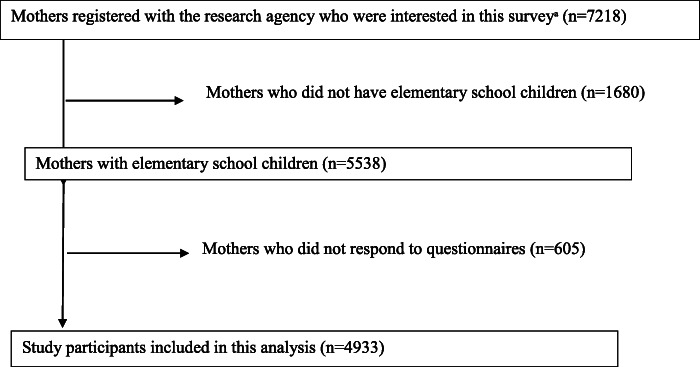
Among 4933 children, 333 (6.8%) were identified as dietary supplement users. The most common supplement was amino acids or protein (1.4%), followed by n-3 fatty acids or fish oil (1.0%), probiotics (1.0%), multivitamins (0.9%), multivitamin-minerals (0.8%), and botanicals (0.8%). Overall, any dietary supplement use was significantly associated with the highest frequency of sports participation (odds ratio [OR], 2.58; 95% confidence interval [CI], 1.65-4.02), highest household income (OR, 1.87; 95% CI, 1.13-3.10), highest maternal educational level (OR, 1.82; 95% CI, 1.31-2.52), and male sex (OR, 1.38; 95% CI, 1.09-1.75). The highest frequency of sports participation was significantly associated with higher odds of use of amino acids or protein (OR, 6.06; 95% CI, 1.78-20.6) and multivitamins (OR, 3.56; 95% CI, 1.11-11.5), compared to the lowest frequency of sports participation.

CONCLUSION

This study showed that Japanese children primarily use non-vitamin, non-mineral supplements. Non-vitamin, non-mineral supplements should thus be included in future studies aimed at monitoring dietary supplement use. We also found that dietary supplement use in children was associated with sports participation. Guidelines for dietary supplement use for children, in particular sport participants, are needed.

摘要

背景

市场上有多种膳食补充剂。然而,儿童使用膳食补充剂的疗效和安全性尚未得到充分证实。了解膳食补充剂的使用情况对于制定有关膳食补充剂的公共卫生政策很重要。本研究旨在调查日本小学生使用的膳食补充剂类型和使用者的特征。

方法

我们进行了一项基于网络的横断面问卷调查研究。通过母亲报告的问卷评估膳食补充剂的使用情况、社会人口统计学特征和与健康相关的行为。根据成分使用产品条码和品牌名称确定膳食补充剂的类型。采用多变量逻辑回归分析调查与补充剂使用相关的社会人口统计学特征和与健康相关的行为。

结果

在 4933 名儿童中,有 333 名(6.8%)被确定为膳食补充剂使用者。最常见的补充剂是氨基酸或蛋白质(1.4%),其次是 n-3 脂肪酸或鱼油(1.0%)、益生菌(1.0%)、多种维生素(0.9%)、多种维生素-矿物质(0.8%)和植物药(0.8%)。总体而言,任何膳食补充剂的使用均与最高运动参与频率显著相关(比值比[OR],2.58;95%置信区间[CI],1.65-4.02)、最高家庭收入(OR,1.87;95%CI,1.13-3.10)、最高母亲教育程度(OR,1.82;95%CI,1.31-2.52)和男性(OR,1.38;95%CI,1.09-1.75)。最高运动参与频率与更高的使用氨基酸或蛋白质(OR,6.06;95%CI,1.78-20.6)和多种维生素(OR,3.56;95%CI,1.11-11.5)的几率显著相关,而最低运动参与频率则无此关联。

结论

本研究表明,日本儿童主要使用非维生素、非矿物质补充剂。因此,在未来监测膳食补充剂使用情况的研究中应包括非维生素、非矿物质补充剂。我们还发现,儿童使用膳食补充剂与运动参与有关。需要为儿童,特别是运动参与者制定膳食补充剂使用指南。
https://cdn.ncbi.nlm.nih.gov/pmc/blobs/3bda/8180069/d0e67b25bdab/12199_2021_985_Fig1_HTML.jpg

相似文献

1
Dietary supplement use in elementary school children: a Japanese web-based survey.小学生膳食补充剂使用情况:一项日本网络调查。
Environ Health Prev Med. 2021 Jun 5;26(1):63. doi: 10.1186/s12199-021-00985-7.
2
The Prevalence of Dietary Supplement Use Among Elementary, Junior High, and High School Students: A Nationwide Survey in Japan.日本全国范围内的调查:中小学生饮食补充剂使用的流行率。
Nutrients. 2018 Aug 28;10(9):1176. doi: 10.3390/nu10091176.
3
Prevalence, Adverse Events, and Factors Associated with Dietary Supplement and Nutritional Supplement Use by US Navy and Marine Corps Personnel.美国海军和海军陆战队人员中膳食补充剂和营养补充剂使用的流行情况、不良事件以及相关因素。
J Acad Nutr Diet. 2016 Sep;116(9):1423-1442. doi: 10.1016/j.jand.2016.02.015. Epub 2016 Apr 12.
4
Usage patterns, health, and nutritional status of long-term multiple dietary supplement users: a cross-sectional study.长期多种膳食补充剂使用者的使用模式、健康状况和营养状况:一项横断面研究。
Nutr J. 2007 Oct 24;6:30. doi: 10.1186/1475-2891-6-30.
5
Dietary supplement usage among elementary school children in Taiwan: their school performance and emotional status.台湾小学生的膳食补充剂使用情况:他们的学业表现和情绪状况。
Asia Pac J Clin Nutr. 2007;16 Suppl 2:554-63.
6
Factors Associated with Dietary Supplement Use among Preschool Children: Results from a Nationwide Survey in Japan.日本全国性调查中与学龄前儿童膳食补充剂使用相关的因素:结果分析
J Nutr Sci Vitaminol (Tokyo). 2016;62(1):47-53. doi: 10.3177/jnsv.62.47.
7
Food and nutrient intake in dietary supplement users: a nationwide school-based study in Japan.膳食补充剂使用者的食物和营养素摄入量:日本全国性基于学校的研究。
J Nutr Sci. 2022 Apr 22;11:e29. doi: 10.1017/jns.2021.96. eCollection 2022.
8
Consumer usage and reasons for using dietary supplements: report of a series of surveys.消费者对膳食补充剂的使用情况及使用原因:一系列调查的报告
J Am Coll Nutr. 2014;33(2):176-82. doi: 10.1080/07315724.2013.875423.
9
Outcome Expectancies, Health Information Seeking, and Cancer Beliefs Associated with Multivitamin/Mineral Use in a National Sample, HINTS-FDA 2015.在全国样本中,与使用多种维生素/矿物质相关的结果预期、健康信息寻求和癌症信念,HINTS-FDA 2015。
J Acad Nutr Diet. 2020 Aug;120(8):1368-1376. doi: 10.1016/j.jand.2019.12.008. Epub 2020 Feb 13.
10
Use of dietary supplements in Denmark is associated with health and former smoking.丹麦膳食补充剂的使用与健康及既往吸烟情况相关。
Public Health Nutr. 2002 Jun;5(3):463-8. doi: 10.1079/phn2001276.

引用本文的文献

1
Teenagers with Obesity at the Gym: Recommendations for Physical Activity, Diet, and Supplementation-A Narrative Review.健身房中的肥胖青少年:体育活动、饮食及营养补充建议——一篇叙述性综述
Nutrients. 2025 May 26;17(11):1798. doi: 10.3390/nu17111798.
2
Insufficient Muscle Development Level Associated with Serum Zinc, Manganese and Cobalt Levels in Children Aged 6 to 9 Years in Shenzhen, China.中国深圳6至9岁儿童肌肉发育水平不足与血清锌、锰和钴水平的关系
Biol Trace Elem Res. 2024 Nov 23. doi: 10.1007/s12011-024-04458-0.
3
Predictors of Dietary Supplement Use Among Children Attending Care and Educational Institutions in Krakow, Poland.

本文引用的文献

1
Effect of Omega-3 Long Chain Polyunsaturated Fatty Acids (n-3 LCPUFA) Supplementation on Cognition in Children and Adolescents: A Systematic Literature Review with a Focus on n-3 LCPUFA Blood Values and Dose of DHA and EPA.ω-3 长链多不饱和脂肪酸(n-3 LCPUFA)补充对儿童和青少年认知的影响:一项关注 n-3 LCPUFA 血液水平和 DHA 与 EPA 剂量的系统文献综述
Nutrients. 2020 Oct 12;12(10):3115. doi: 10.3390/nu12103115.
2
Dietary Supplement Use among U.S. Children by Family Income, Food Security Level, and Nutrition Assistance Program Participation Status in 2011⁻2014.2011-2014 年美国家庭收入、食品安全状况和营养援助计划参与状况对儿童膳食补充剂使用的影响。
Nutrients. 2018 Sep 1;10(9):1212. doi: 10.3390/nu10091212.
3
波兰克拉科夫的儿童保健和教育机构中儿童补充剂使用的预测因素。
Nutrients. 2024 Oct 28;16(21):3662. doi: 10.3390/nu16213662.
4
Use of Health-Promoting Food and Supplements in Swiss Children.瑞士儿童对健康促进食品和补充剂的使用情况。
Children (Basel). 2022 Nov 28;9(12):1842. doi: 10.3390/children9121842.
5
Prevalence, correlates and common conditions associated with adolescent dietary supplement use: a cross-sectional survey in Bangladesh.青少年补充剂使用的流行率、相关因素和常见关联:孟加拉国的一项横断面调查。
Public Health Nutr. 2023 Jun;26(6):1143-1151. doi: 10.1017/S1368980022002634. Epub 2022 Dec 20.
6
Prevalence of Essential Nutrient Supplement Use and Assessment of the Knowledge and Attitudes of Lebanese Mothers towards Dietary Supplement Practices in Maternal, Infancy and Preschool Ages: Findings of a National Representative Cross-Sectional Study.黎巴嫩母亲在孕期、婴儿期和学龄前对膳食补充剂使用情况的基本营养素补充剂使用流行率及其知识和态度评估:一项全国代表性横断面研究的结果
Foods. 2022 Sep 27;11(19):3005. doi: 10.3390/foods11193005.
Prevalence of Dietary Supplement Use in US Children and Adolescents, 2003-2014.
2003-2014 年美国儿童和青少年膳食补充剂使用情况的流行率。
JAMA Pediatr. 2018 Aug 1;172(8):780-782. doi: 10.1001/jamapediatrics.2018.1008.
4
Consumption of plant food supplements in the Netherlands.荷兰的植物性食品补充剂消费情况。
Food Funct. 2018 Jan 24;9(1):179-190. doi: 10.1039/c6fo01174h.
5
The Prevalence and Predictors of Dietary Supplement Use in the Australian Population.澳大利亚人群中膳食补充剂使用的流行率及其预测因素。
Nutrients. 2017 Oct 21;9(10):1154. doi: 10.3390/nu9101154.
6
Adverse Effects of Nutraceuticals and Dietary Supplements.营养保健品和膳食补充剂的不良影响。
Annu Rev Pharmacol Toxicol. 2018 Jan 6;58:583-601. doi: 10.1146/annurev-pharmtox-010617-052844. Epub 2017 Oct 6.
7
Kidney toxicity related to herbs and dietary supplements: Online table of case reports. Part 3 of 5 series.与草药和膳食补充剂相关的肾毒性:病例报告在线表格。5 系列文章的第 3 部分。
Food Chem Toxicol. 2017 Sep;107(Pt A):502-519. doi: 10.1016/j.fct.2016.07.024.
8
Risk of Deficiency in Multiple Concurrent Micronutrients in Children and Adults in the United States.美国儿童和成人同时缺乏多种微量营养素的风险。
Nutrients. 2017 Jun 24;9(7):655. doi: 10.3390/nu9070655.
9
School lunches in Japan: their contribution to healthier nutrient intake among elementary-school and junior high-school children.日本的学校午餐:对小学生和初中生更健康的营养摄入所做的贡献。
Public Health Nutr. 2017 Jun;20(9):1523-1533. doi: 10.1017/S1368980017000374. Epub 2017 Mar 15.
10
Liver toxicity related to herbs and dietary supplements: Online table of case reports. Part 2 of 5 series.与草药和膳食补充剂相关的肝毒性:病例报告在线表格。5 系列文章的第 2 部分。
Food Chem Toxicol. 2017 Sep;107(Pt A):472-501. doi: 10.1016/j.fct.2016.07.001. Epub 2016 Jul 8.