Department of Pediatrics, University Medical Center Groningen, University of Groningen, Groningen, the Netherlands.
European Research Institute for the Biology of Ageing, University Medical Center Groningen, University of Groningen, Groningen, the Netherlands.
Mol Metab. 2021 Nov;53:101265. doi: 10.1016/j.molmet.2021.101265. Epub 2021 Jun 4.
Glycogen storage disease type 1a (GSD Ia) is a rare inherited metabolic disorder caused by mutations in the glucose-6-phosphatase (G6PC1) gene. When untreated, GSD Ia leads to severe fasting-induced hypoglycemia. Although current intensive dietary management aims to prevent hypoglycemia, patients still experience hypoglycemic events. Poor glycemic control in GSD Ia is associated with hypertriglyceridemia, hepatocellular adenoma and carcinoma, and also with an increased bleeding tendency of unknown origin.
To evaluate the effect of glycemic control on leukocyte levels and coagulation in GSD Ia, we employed hepatocyte-specific G6pc1 deficient (L-G6pc) mice under fed or fasted conditions, to match good or poor glycemic control in GSD Ia, respectively.
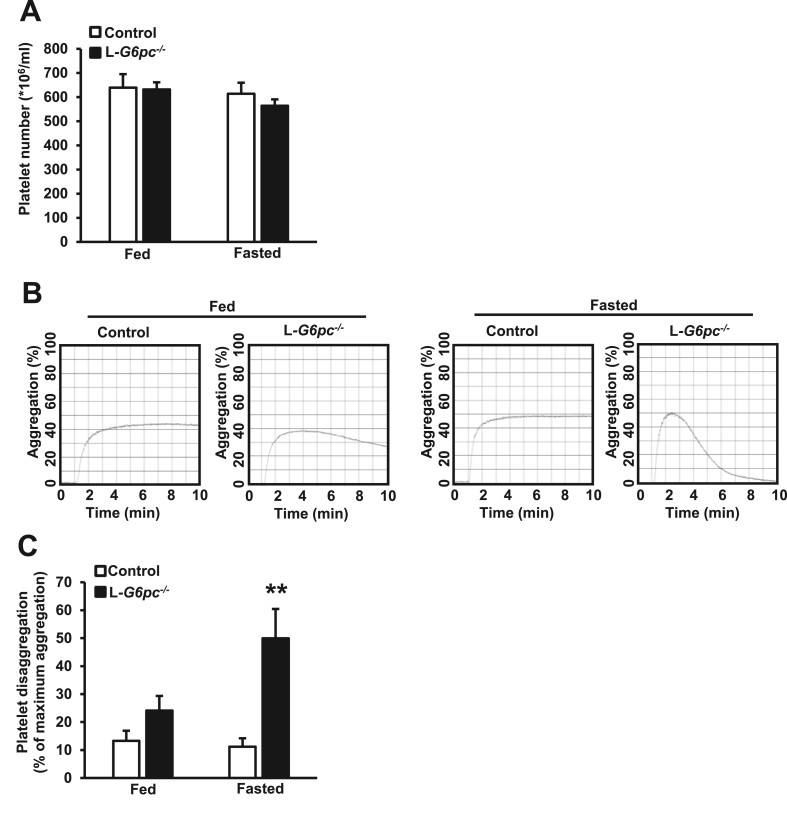
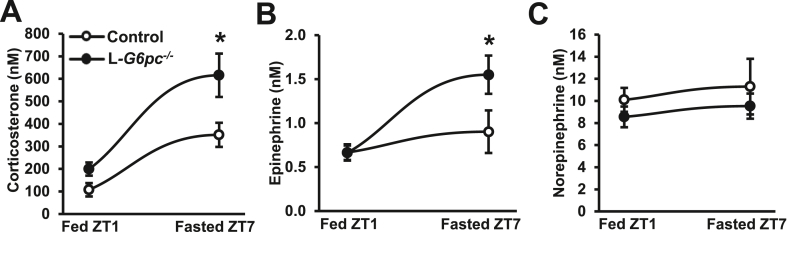
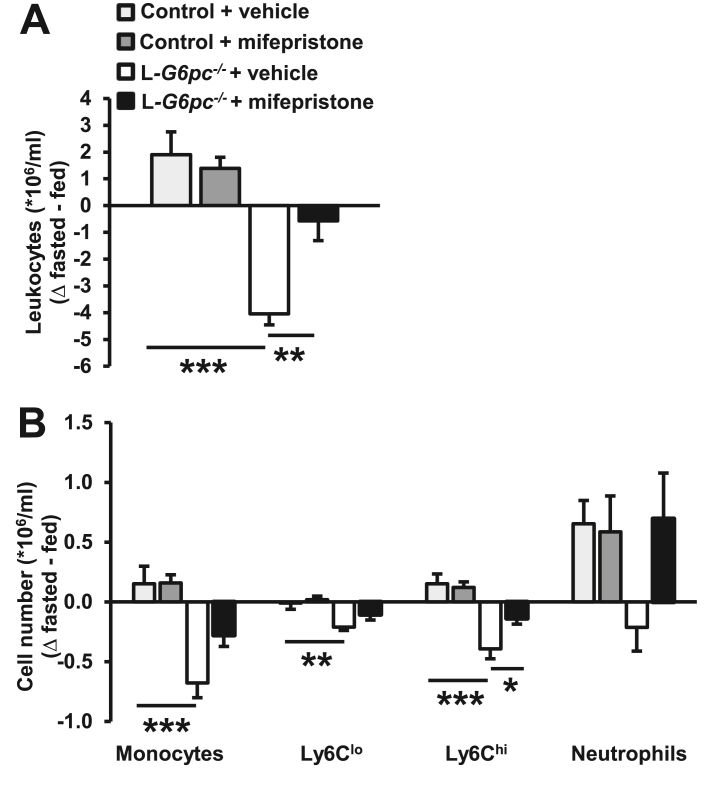
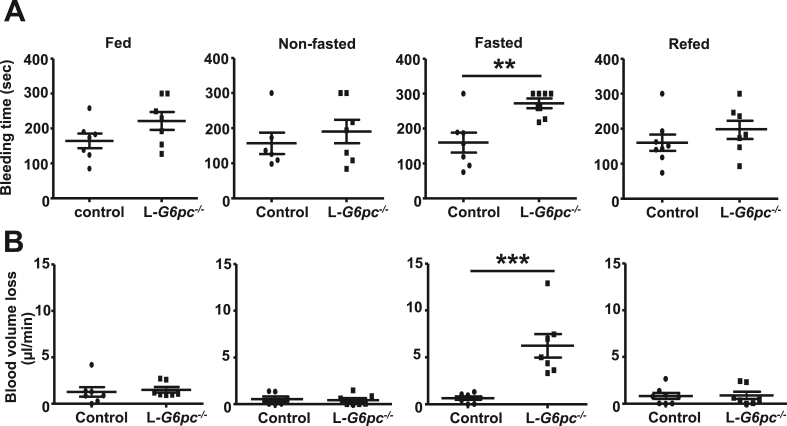
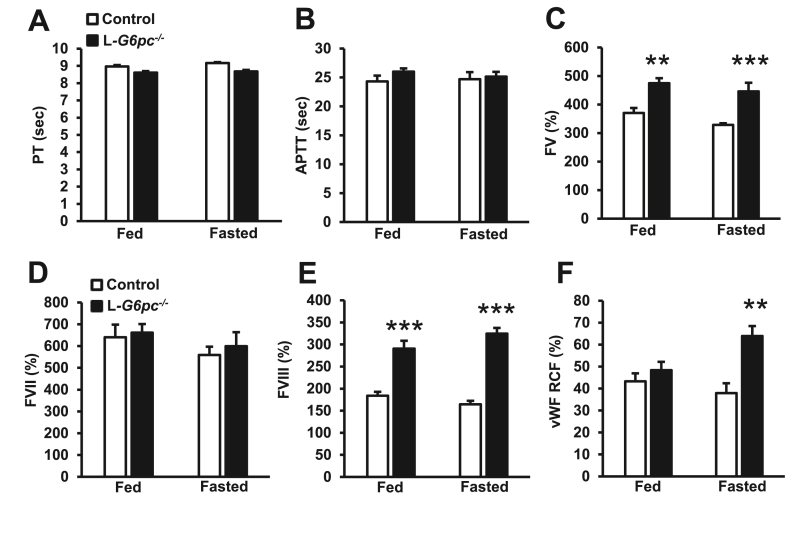
We found that fasting-induced hypoglycemia in L-G6pc mice decreased blood leukocytes, specifically proinflammatory Ly6C monocytes, compared to controls. Refeeding reversed this decrease. The decrease in Ly6C monocytes was accompanied by an increase in plasma corticosterone levels and was prevented by the glucocorticoid receptor antagonist mifepristone. Further, fasting-induced hypoglycemia in L-G6pc mice prolonged bleeding time in the tail vein bleeding assay, with reversal by refeeding. This could not be explained by changes in coagulation factors V, VII, or VIII, or von Willebrand factor. While the prothrombin and activated partial thromboplastin time as well as total platelet counts were not affected by fasting-induced hypoglycemia in L-G6pc mice, ADP-induced platelet aggregation was disturbed.
These studies reveal a relationship between fasting-induced hypoglycemia, decreased blood monocytes, and disturbed platelet aggregation in L-G6pc mice. While disturbed platelet aggregation likely accounts for the bleeding phenotype in GSD Ia, elevated plasma corticosterone decreases the levels of proinflammatory monocytes. These studies highlight the necessity of maintaining good glycemic control in GSD Ia.
糖原贮积病 1a 型(GSD Ia)是一种由葡萄糖-6-磷酸酶(G6PC1)基因突变引起的罕见遗传性代谢疾病。未经治疗,GSD Ia 可导致严重的空腹诱导性低血糖。尽管目前的强化饮食管理旨在预防低血糖,但患者仍会发生低血糖事件。GSD Ia 中的血糖控制不佳与高甘油三酯血症、肝细胞腺瘤和癌有关,也与不明原因的出血倾向增加有关。
为了评估血糖控制对 GSD Ia 中白细胞水平和凝血的影响,我们在喂食或禁食条件下使用肝细胞特异性 G6pc1 缺乏(L-G6pc)小鼠,分别模拟 GSD Ia 中的良好或不佳血糖控制。
我们发现,与对照组相比,L-G6pc 小鼠的禁食诱导性低血糖会降低血液白细胞,特别是促炎 Ly6C 单核细胞。再喂养可逆转这种减少。Ly6C 单核细胞的减少伴随着血浆皮质酮水平的增加,并用糖皮质激素受体拮抗剂米非司酮预防。此外,L-G6pc 小鼠的禁食诱导性低血糖会延长尾静脉出血试验中的出血时间,再喂养可逆转这种情况。这不能用凝血因子 V、VII 或 VIII 或血管性血友病因子的变化来解释。虽然 L-G6pc 小鼠的禁食诱导性低血糖不会影响凝血酶原和激活部分凝血活酶时间以及总血小板计数,但 ADP 诱导的血小板聚集受到干扰。
这些研究揭示了 L-G6pc 小鼠中禁食诱导性低血糖、血液单核细胞减少和血小板聚集紊乱之间的关系。虽然血小板聚集紊乱可能是 GSD Ia 出血表型的原因,但升高的血浆皮质酮会降低促炎单核细胞的水平。这些研究强调了在 GSD Ia 中保持良好血糖控制的必要性。