Department of Surgery, Duke University School of Medicine, Durham, NC, United States.
Human Vaccine Institute, Duke University School of Medicine, Durham, NC, United States.
Front Immunol. 2021 May 20;12:678511. doi: 10.3389/fimmu.2021.678511. eCollection 2021.
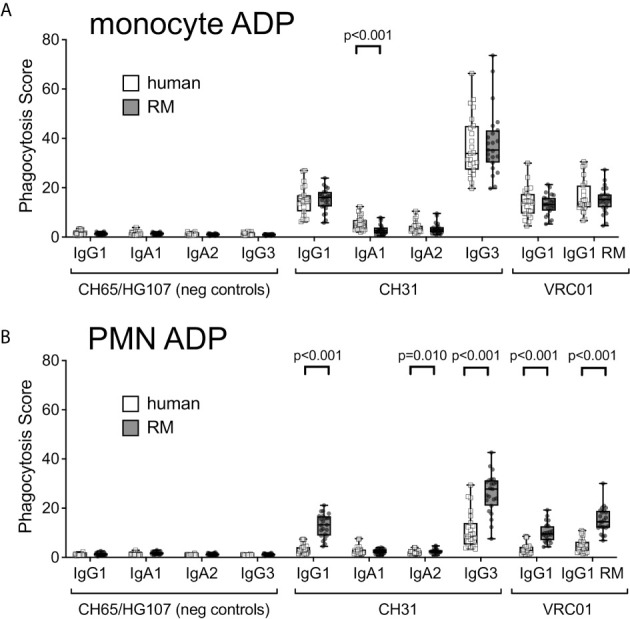
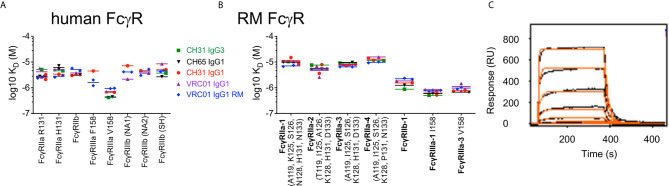
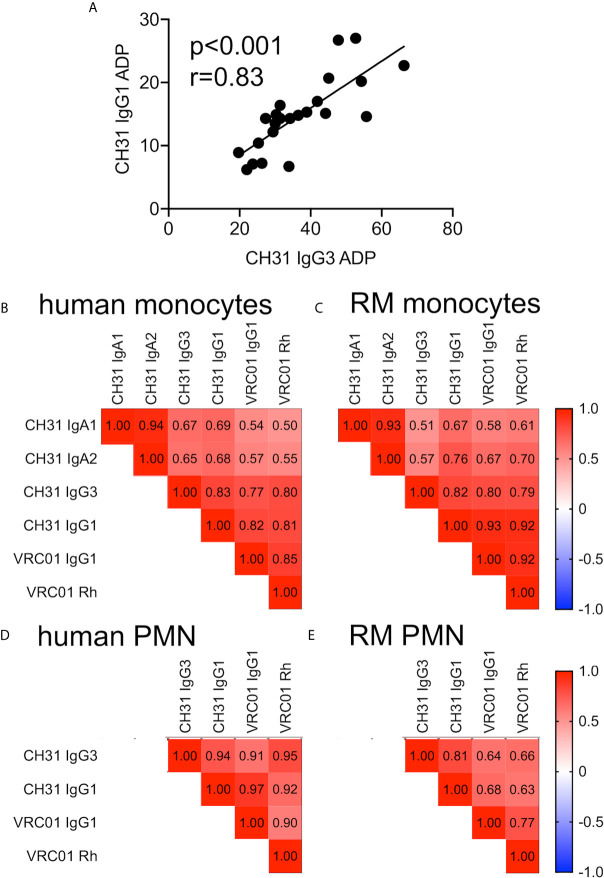
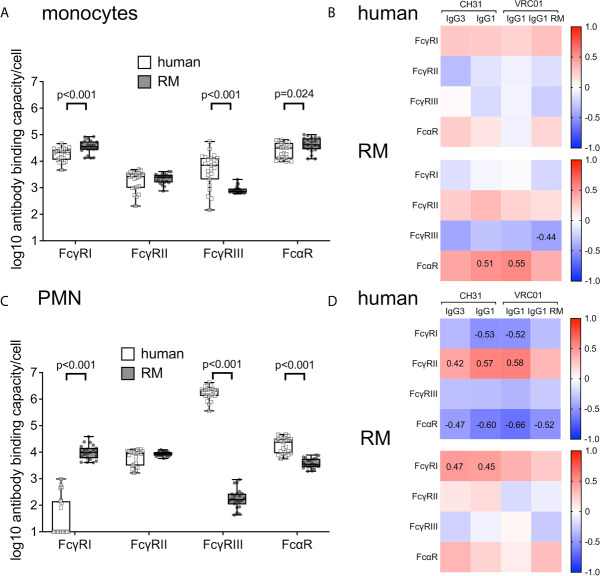
Analyses of human clinical HIV-1 vaccine trials and preclinical vaccine studies performed in rhesus macaque (RM) models have identified associations between non-neutralizing Fc Receptor (FcR)-dependent antibody effector functions and reduced risk of infection. Specifically, antibody-dependent phagocytosis (ADP) has emerged as a common correlate of reduced infection risk in multiple RM studies and the human HVTN505 trial. This recurrent finding suggests that antibody responses with the capability to mediate ADP are most likely a desirable component of vaccine responses aimed at protecting against HIV-1 acquisition. As use of RM models is essential for development of the next generation of candidate HIV-1 vaccines, there is a need to determine how effectively ADP activity observed in RMs translates to activity in humans. In this study we compared ADP activity of human and RM monocytes and polymorphonuclear leukocytes (PMN) to bridge this gap in knowledge. We observed considerable variability in the magnitude of monocyte and PMN ADP activity across individual humans and RM that was not dependent on FcR alleles, and only modestly impacted by cell-surface levels of FcRs. Importantly, we found that for both human and RM phagocytes, ADP activity of antibodies targeting the CD4 binding site was greatest when mediated by human IgG3, followed by RM and human IgG1. These results demonstrate that there is functional homology between antibody and FcRs from these two species for ADP. We also used novel RM IgG1 monoclonal antibodies engineered with elongated hinge regions to show that hinge elongation augments RM ADP activity. The RM IgGs with engineered hinge regions can achieve ADP activity comparable to that observed with human IgG3. These novel modified antibodies will have utility in passive immunization studies aimed at defining the role of IgG3 and ADP in protection from virus challenge or control of disease in RM models. Our results contribute to a better translation of human and macaque antibody and FcR biology, and may help to improve testing accuracy and evaluations of future active and passive prevention strategies.
对人类 HIV-1 疫苗临床试验和恒河猴(RM)模型中进行的临床前疫苗研究的分析表明,非中和 Fc 受体(FcR)依赖性抗体效应功能与感染风险降低之间存在关联。具体而言,抗体依赖性吞噬作用(ADP)已成为多个 RM 研究和人类 HVTN505 试验中降低感染风险的常见相关性。这一再发发现表明,具有介导 ADP 能力的抗体反应很可能是针对 HIV-1 获得性保护的疫苗反应的理想组成部分。由于 RM 模型的使用对于开发下一代候选 HIV-1 疫苗至关重要,因此需要确定在 RM 中观察到的 ADP 活性在多大程度上转化为人类的活性。在这项研究中,我们比较了人类和 RM 单核细胞和多形核白细胞(PMN)的 ADP 活性,以弥补这一知识空白。我们观察到个体人类和 RM 中单核细胞和 PMN ADP 活性的幅度存在相当大的差异,这种差异不依赖于 FcR 等位基因,并且仅受到细胞表面 FcR 水平的适度影响。重要的是,我们发现,对于人类和 RM 吞噬细胞,针对 CD4 结合位点的抗体介导的 ADP 活性最大时,由人 IgG3 介导,其次是 RM 和人 IgG1。这些结果表明,这两种物种的抗体和 FcR 之间存在 ADP 的功能同源性。我们还使用新型 RM IgG1 单克隆抗体进行了工程改造,这些抗体具有延长的铰链区,以显示铰链延长增强了 RM 的 ADP 活性。具有工程铰链区的 RM IgGs 可以实现与观察到的人 IgG3 相当的 ADP 活性。这些新型修饰抗体将在旨在定义 IgG3 和 ADP 在 RM 模型中预防病毒挑战或控制疾病中的作用的被动免疫研究中具有实用性。我们的研究结果有助于更好地翻译人类和猕猴的抗体和 FcR 生物学,并可能有助于提高测试准确性和评估未来的主动和被动预防策略。