Pan Zongfu, He Ying, Zhu Wenjuan, Xu Tong, Hu Xiaoping, Huang Ping
Department of Pharmacy, Zhejiang Provincial People's Hospital, People's Hospital of Hangzhou Medical College, Hangzhou, China.
Central Laboratory, First Affiliated Hospital, Huzhou University, The First People's Hospital of Huzhou, Huzhou, China.
Front Oncol. 2021 May 21;11:597447. doi: 10.3389/fonc.2021.597447. eCollection 2021.
Colorectal carcinoma (CRC) often arises from benign adenoma after a stepwise accumulation of genetic alterations. Here, we profiled the dynamic landscapes of transcription factors (TFs) in the mucosa-adenoma-carcinoma progression sequence.
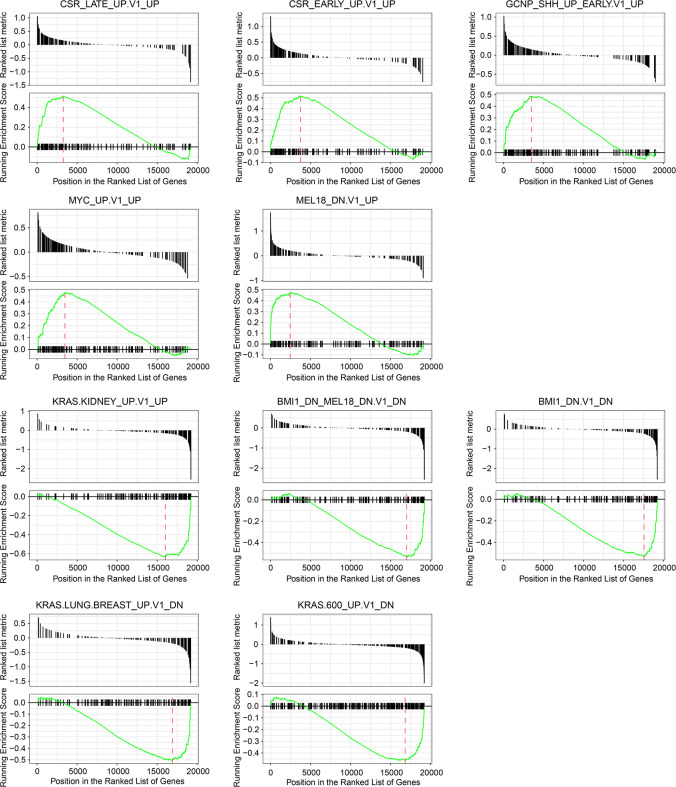
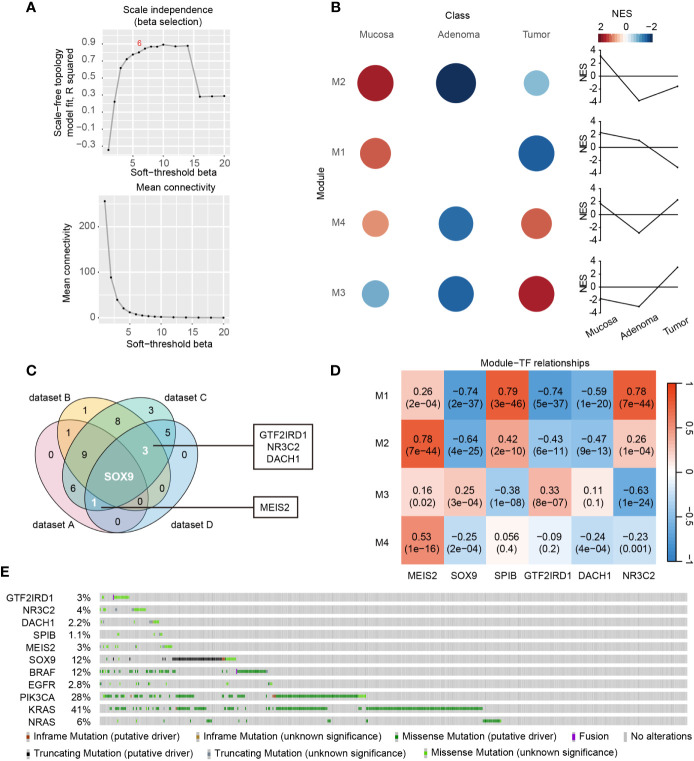
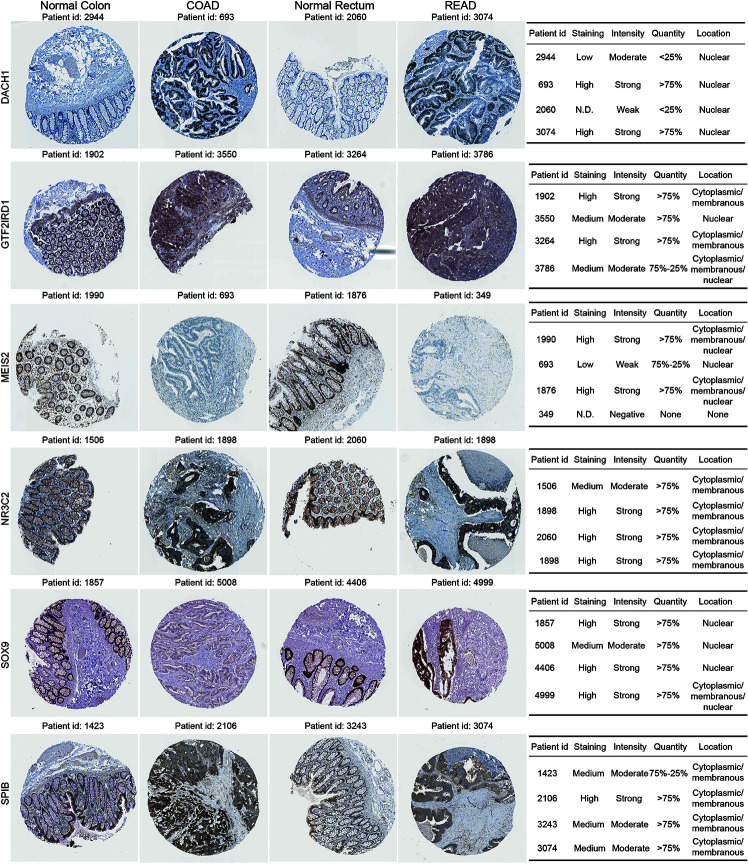
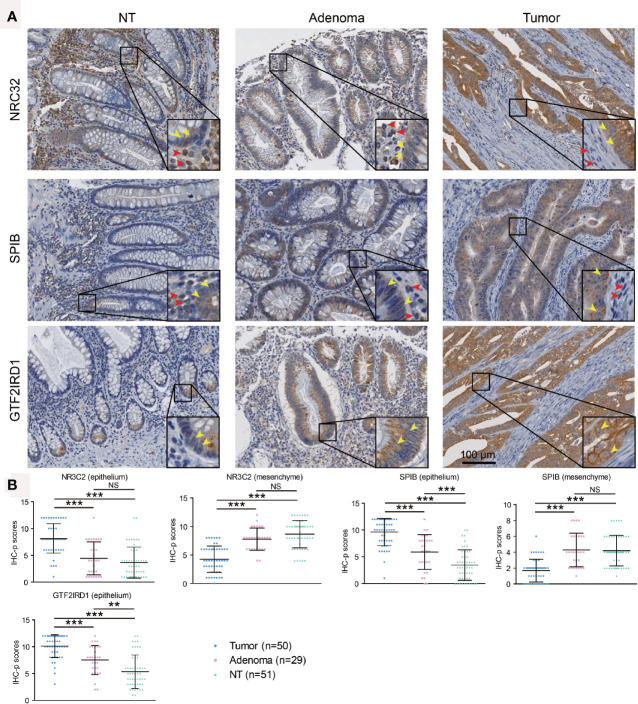
The transcriptome data of co-occurrent adenoma, carcinoma, and normal mucosa samples were obtained from GSE117606. Identification of differentially expressed TFs (DE-TFs) and subsequent function annotation were conducted in R software. Expression patterns of DE-TFs were clustered by Short Time-series Expression Miner software. Thereafter, modular co-expression analysis, Kaplan-Meier survival analysis, mutation profiling, and gene set enrichment analysis were conducted to investigate TF dynamics in colorectal tumorigenesis. Finally, tissue microarrays, including 51 tumors, 32 adenomas, and 53 normal tissues, were employed to examine the expression of significant candidates by immunohistochemistry staining.
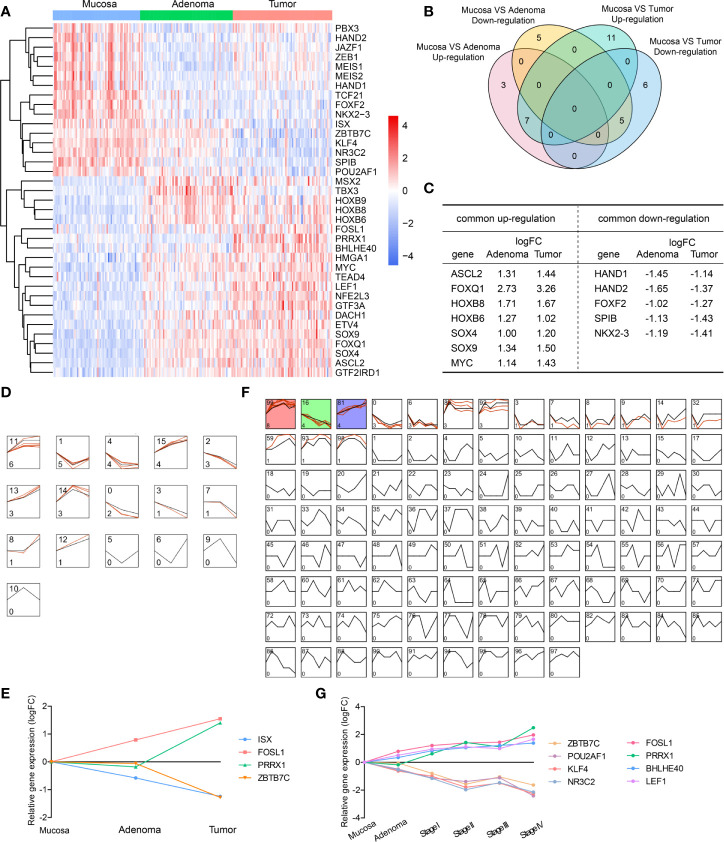
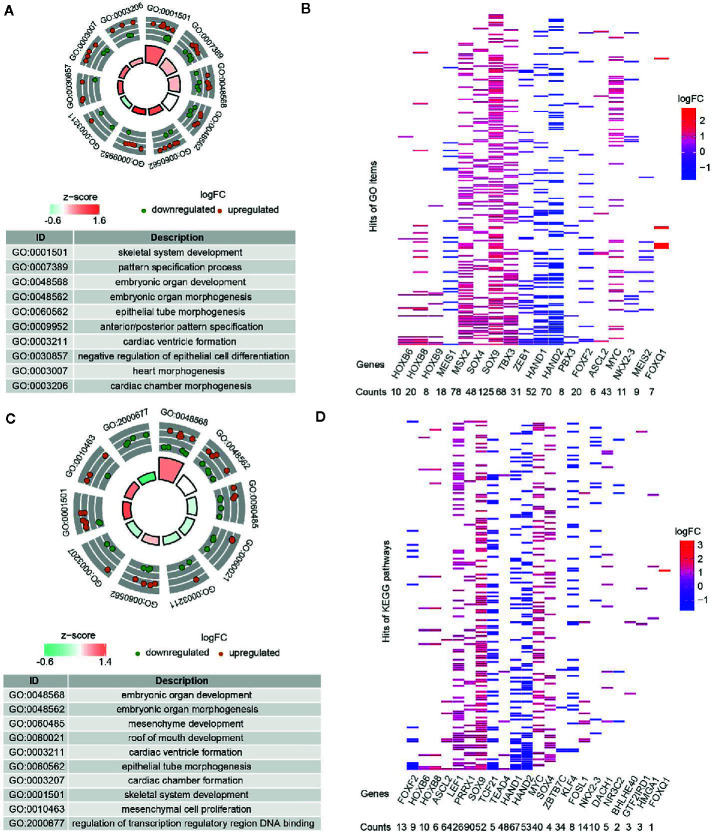
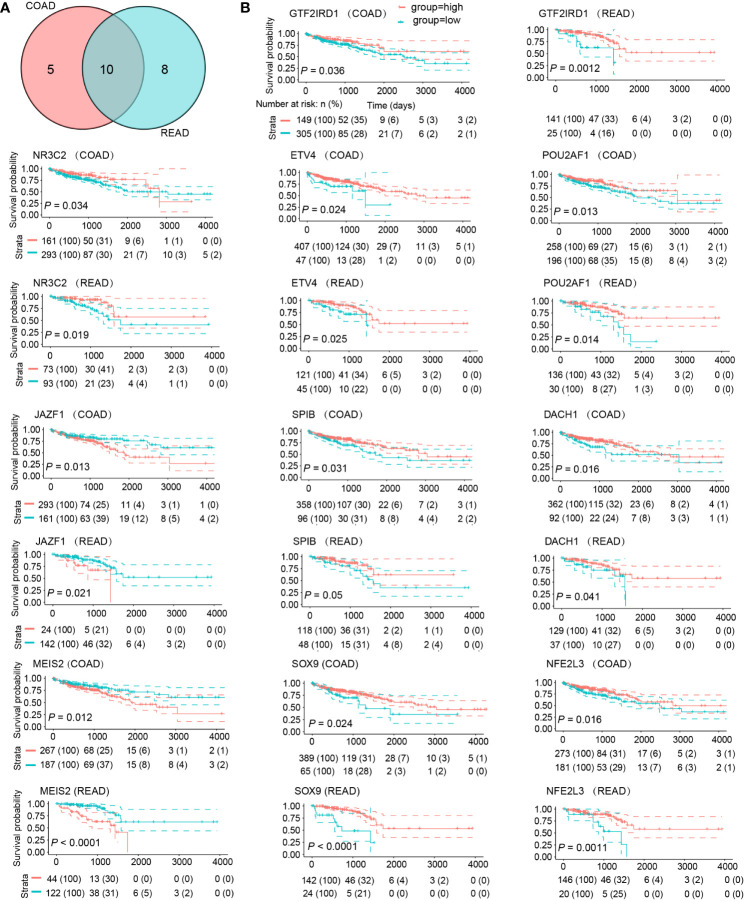
Compared to normal tissues, 20 (in adenoma samples) and 29 (in tumor samples) DE-TFs were identified. During the disease course, 28 expression patterns for DE-TFs and four co-expression modules were clustered. Notably, six DE-TFs, DACH1, GTF2IRD1, MEIS2, NR3C2, SOX9, and SPIB, were identified as having a dynamic signature along the colorectal adenoma-carcinoma sequence. The dynamic signature was of significance in GO enrichment, prognosis, and co-expression analysis. Among the 6-TF signature, the roles of GTF2IRD1, SPIB and NR3C2 in CRC progression are unclear. Immunohistochemistry validation showed that GTF2IRD1 enhanced significantly throughout the mucosa-adenoma-carcinoma sequence, while SPIB and NR3C2 kept decreasing in stroma during the disease course.
Our study provided a dynamic 6-TF signature throughout the course of colorectal mucosa-adenoma-carcinoma. These findings deepened the understanding of colorectal cancer pathogenesis.
结直肠癌(CRC)通常由良性腺瘤经一系列基因改变逐步累积发展而来。在此,我们剖析了转录因子(TFs)在黏膜-腺瘤-癌进展序列中的动态图谱。
从GSE117606获取同时存在的腺瘤、癌和正常黏膜样本的转录组数据。在R软件中进行差异表达TFs(DE-TFs)的鉴定及后续功能注释。使用短时序列表达挖掘软件对DE-TFs的表达模式进行聚类。此后,进行模块共表达分析、Kaplan-Meier生存分析、突变谱分析和基因集富集分析,以研究结直肠癌发生过程中的TF动态变化。最后,采用包含51个肿瘤、32个腺瘤和53个正常组织的组织芯片,通过免疫组织化学染色检测重要候选基因的表达。
与正常组织相比,在腺瘤样本中鉴定出20个DE-TFs,在肿瘤样本中鉴定出29个DE-TFs。在疾病进程中,对DE-TFs的28种表达模式和4个共表达模块进行了聚类。值得注意的是,6个DE-TFs,即DACH1、GTF2IRD1、MEIS2、NR3C2、SOX9和SPIB,被鉴定为在结直肠腺瘤-癌序列中具有动态特征。该动态特征在基因本体(GO)富集、预后和共表达分析中具有重要意义。在这6个TF特征中,GTF2IRD1、SPIB和NR3C2在CRC进展中的作用尚不清楚。免疫组织化学验证表明,GTF2IRD1在整个黏膜-腺瘤-癌序列中显著增强,而SPIB和NR3C2在疾病进程中在基质中持续下降。
我们的研究提供了贯穿结直肠黏膜-腺瘤-癌全过程的动态6-TF特征。这些发现加深了对结直肠癌发病机制的理解。