Okuno Keisuke, Naito Yoshiro, Asakura Masanori, Sugahara Masataka, Horimatsu Tetsuo, Yasumura Seiki, Tahara Saki, Nagai Toshiyuki, Saito Yoshihiko, Yoshikawa Tsutomu, Masuyama Tohru, Ishihara Masaharu, Anzai Toshihisa
Department of Cardiovascular and Renal Medicine, Hyogo College of Medicine, Nishinomiya, Japan.
Department of Cardiovascular Medicine, Hokkaido University Graduate School of Medicine, Sapporo, Japan.
Int J Cardiol Heart Vasc. 2021 May 20;34:100796. doi: 10.1016/j.ijcha.2021.100796. eCollection 2021 Jun.
Anemia and chronic kidney disease (CKD) are common in patients with heart failure with preserved left ventricular fraction (HFpEF). However, it is entirely unknown about the impact of anemia on prognosis in HFpEF patients with CKD. In this study, we investigated the impact of anemia on prognosis and the optimal hemoglobin (Hb) levels to predict prognosis in HFpEF patients with CKD.
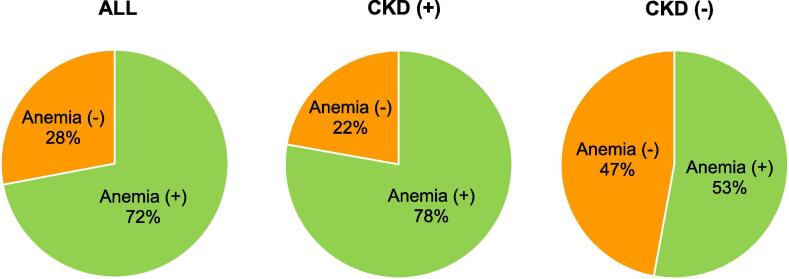
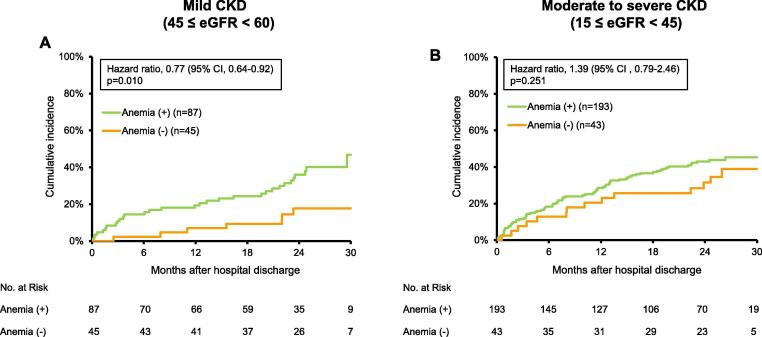
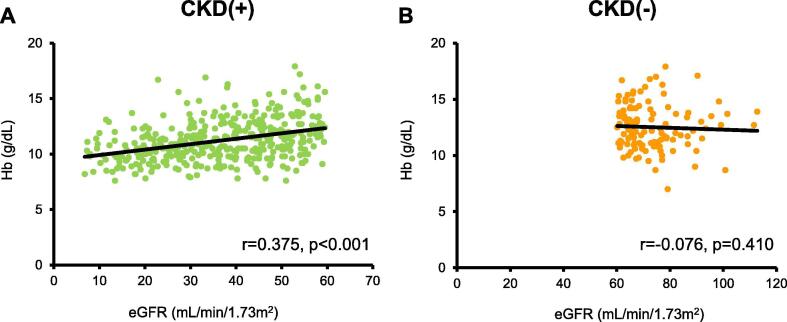
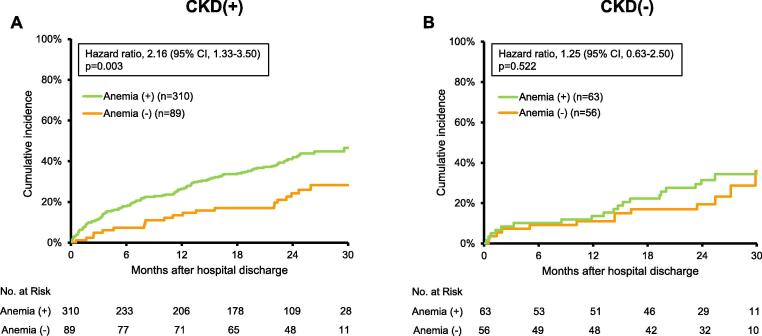
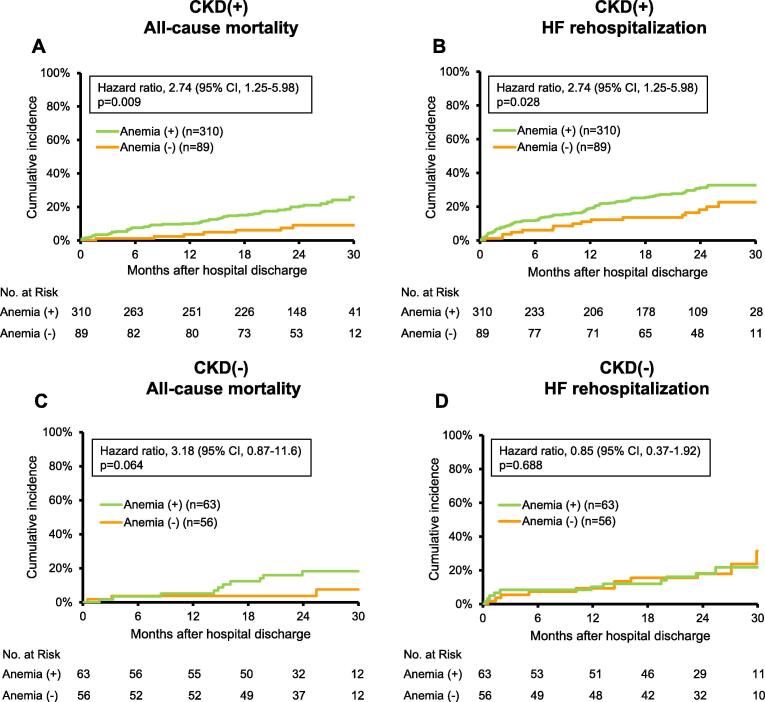
We prospectively examined 523 consecutive HFpEF patients enrolled in Japanese heart failure syndrome with preserved ejection fraction registry. CKD was defined as an estimated glomerular filtration rate (eGFR) of <60 mL /min/1.73 m. The prevalence rate of anemia was 78% in HFpEF patients with CKD by using the World Health Organization criteria. Kaplan-Meier analysis for all-cause mortality and heart failure rehospitalization demonstrated that anemic patients had poor prognosis compared with non-anemic patients in HFpEF patients with CKD, but not those without CKD. According to the degree of CKD, anemia affected prognosis in HFpEF patients with mild CKD (45 ≤ eGFR < 60), but not those with moderate to severe CKD (15 ≤ eGFR < 45). Additionally, multivariate analysis revealed that anemia and Hb levels were independent predictors of composite outcomes in HFpEF patients with mild CKD, but not those with moderate to severe CKD. Finally, survival classification and regression tree analysis showed that the optimal Hb levels to predict composite outcomes were 10.7 g/dL in those with mild CKD.
Anemia has an impact on prognosis in HFpEF patients, especially among those with mild CKD.
贫血和慢性肾脏病(CKD)在射血分数保留的心力衰竭(HFpEF)患者中很常见。然而,贫血对合并CKD的HFpEF患者预后的影响尚完全未知。在本研究中,我们调查了贫血对合并CKD的HFpEF患者预后的影响以及预测预后的最佳血红蛋白(Hb)水平。
我们前瞻性地检查了523例连续纳入日本射血分数保留的心力衰竭综合征登记处的HFpEF患者。CKD定义为估计肾小球滤过率(eGFR)<60 mL/min/1.73 m²。根据世界卫生组织标准,合并CKD的HFpEF患者贫血患病率为78%。对全因死亡率和心力衰竭再住院进行的Kaplan-Meier分析表明,合并CKD的HFpEF患者中,贫血患者的预后比非贫血患者差,但在未合并CKD的患者中并非如此。根据CKD的程度,贫血影响轻度CKD(45≤eGFR<60)的HFpEF患者的预后,但不影响中度至重度CKD(15≤eGFR<45)的患者。此外,多变量分析显示,贫血和Hb水平是轻度CKD的HFpEF患者复合结局的独立预测因素,但在中度至重度CKD的患者中并非如此。最后,生存分类和回归树分析表明,预测轻度CKD患者复合结局的最佳Hb水平为10.7 g/dL。
贫血对HFpEF患者的预后有影响,尤其是在轻度CKD患者中。