Geisel School of Medicine, Dartmouth College, Center for Technology and Behavioral Health.
Exp Clin Psychopharmacol. 2022 Dec;30(6):918-927. doi: 10.1037/pha0000501. Epub 2021 Jun 7.
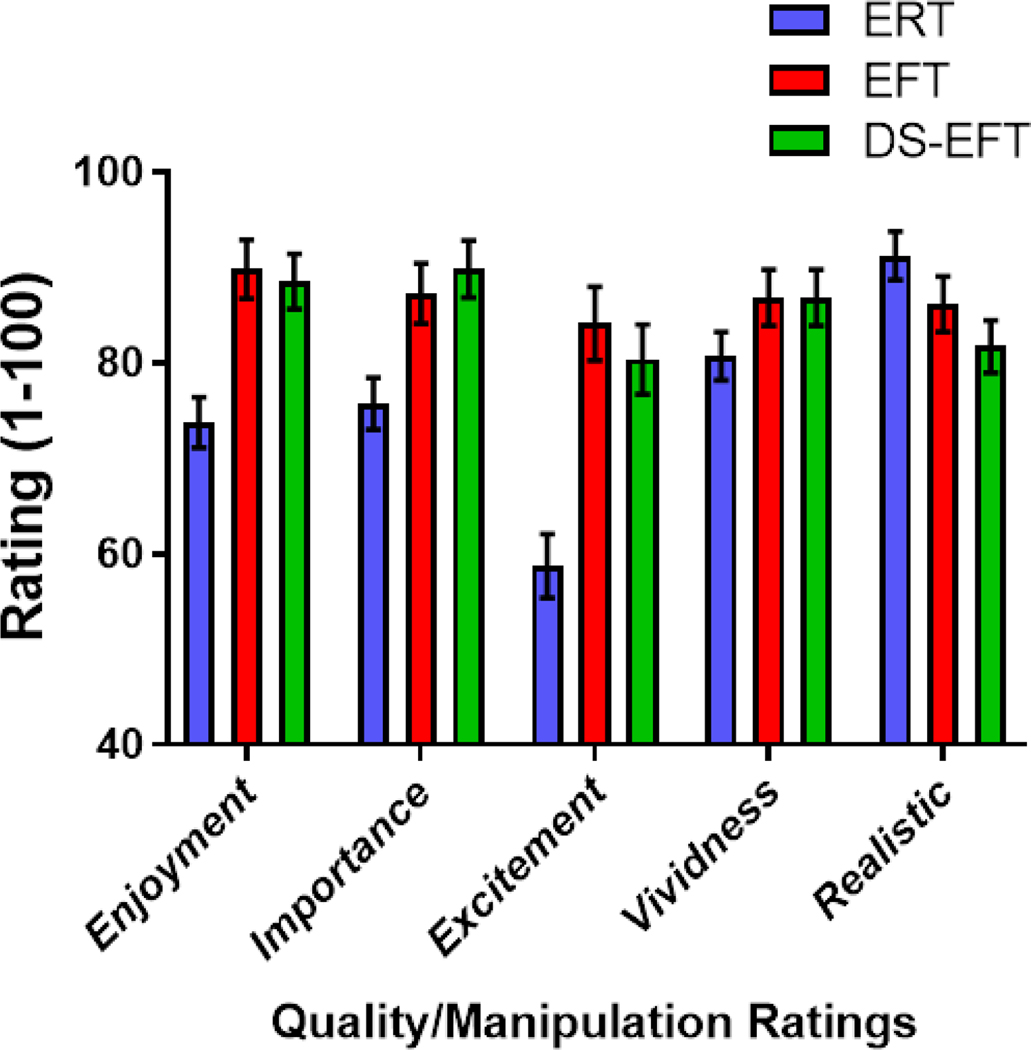
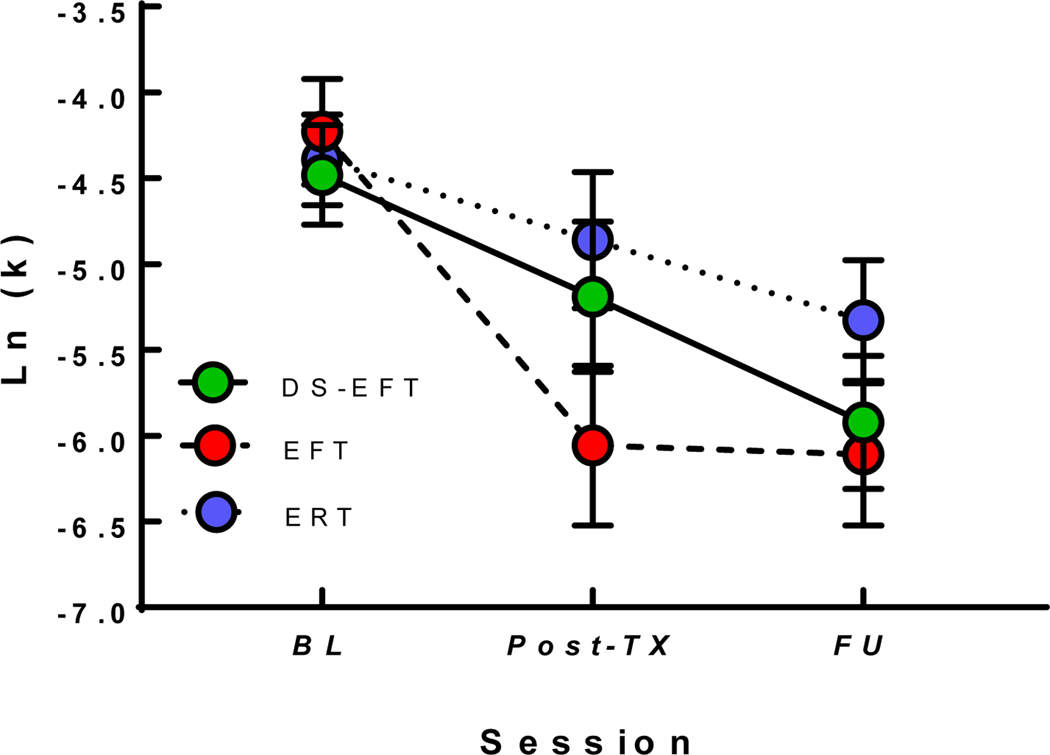
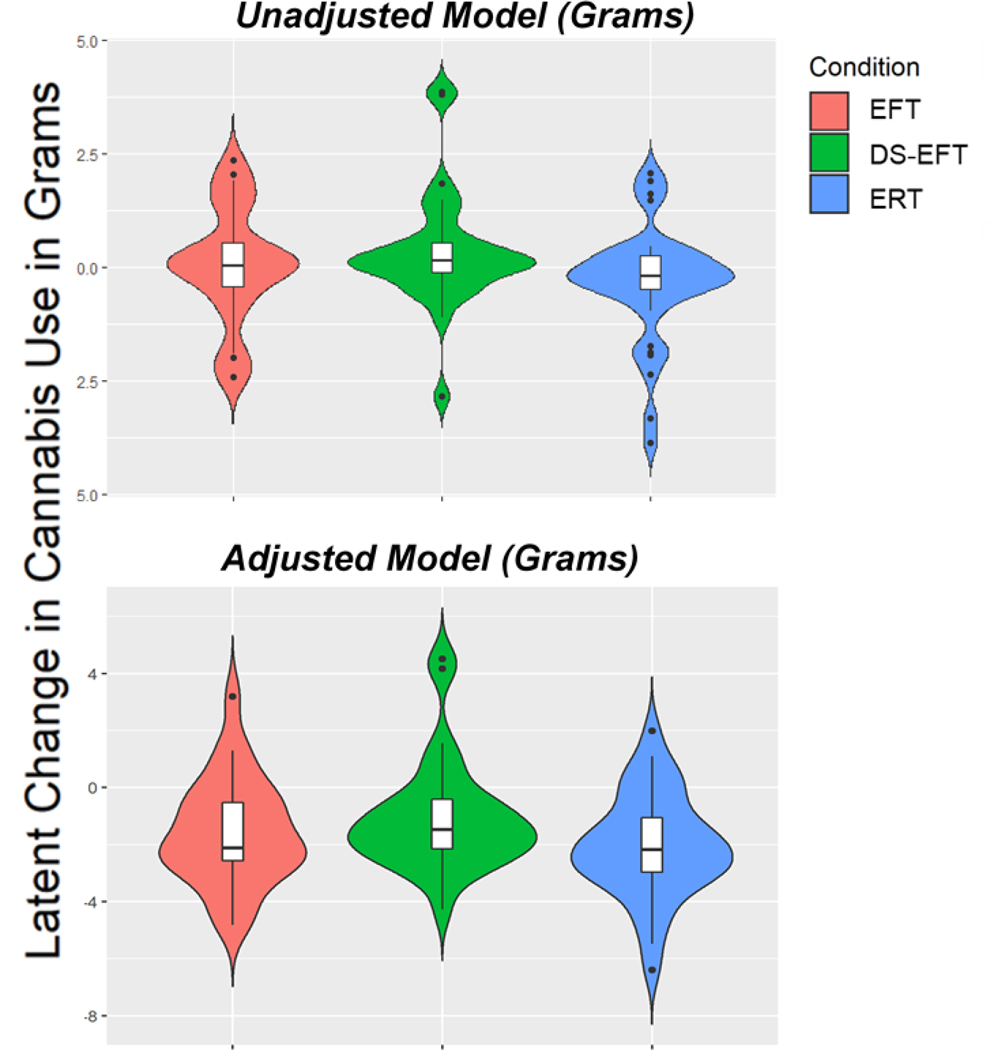
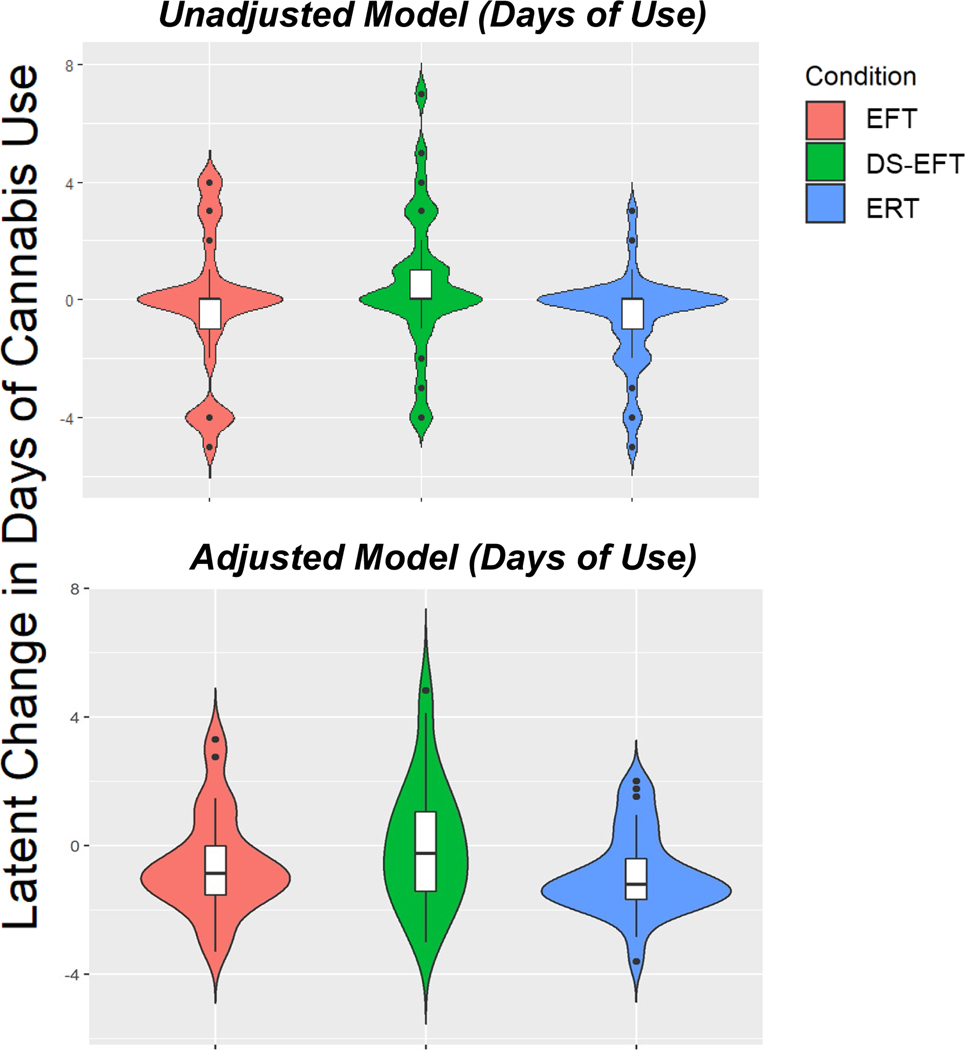
Episodic Future Thinking (EFT), mental simulation of personally relevant and positive future events, may modulate delay discounting (DD) in cannabis users. Whether EFT impacts cannabis use, whether DD mediates this effect, and whether EFT can be enhanced by prompting future events across specific life domains is unknown. Active, adult cannabis users (n = 90) recruited from Amazon mTurk and Qualtrics Panels were administered an Episodic Specificity Induction (ESI) to enhance quality of imagined events before being randomized to EFT, domain-specific-EFT (DS-EFT), or Episodic Recent Thinking (ERT). All participants created four, positive life events; DS-EFT participants imagined social, leisure, health, and financial events. Event-quality ratings were assessed (e.g., enjoyment). DD was assessed at baseline (Day 1), post-intervention (Days 2-4), and follow-up (Days 9-12). Cannabis use was assessed at baseline and follow-up. Differences in change in days and grams of cannabis use between conditions and mediation of changes in use by DD were examined. No differences in DD were observed between conditions. DS-EFT, but not EFT, showed significantly greater reductions in grams (d = .54) and days of cannabis use (d = .50) than ERT. DS-EFT and EFT demonstrated significantly greater event-quality ratings than ERT (ds > .55). EFT-based interventions showed potential for reducing cannabis use. Unexpectedly, effects on DD did not mediate this effect. Further testing with larger samples of cannabis users is needed to better understand EFT's mechanisms of action and determine optimal implementation strategies. (PsycInfo Database Record (c) 2022 APA, all rights reserved).
情节性未来思维(EFT),即对个人相关和积极的未来事件的心理模拟,可能会调节大麻使用者的延迟折扣(DD)。EFT 是否会影响大麻使用,DD 是否会介导这种影响,以及是否可以通过提示特定生活领域的未来事件来增强 EFT 尚不清楚。从亚马逊 mTurk 和 Qualtrics 小组招募的活跃成年大麻使用者(n = 90)接受了情节特异性诱导(ESI),以增强想象事件的质量,然后随机分配到 EFT、特定领域 EFT(DS-EFT)或情节性近期思维(ERT)组。所有参与者都创造了四个积极的生活事件;DS-EFT 参与者想象了社交、休闲、健康和财务事件。评估了事件质量评分(例如,享受程度)。在基线(第 1 天)、干预后(第 2-4 天)和随访(第 9-12 天)评估 DD。在基线和随访时评估大麻使用情况。检查了条件之间使用天数和克数变化的差异以及 DD 变化对使用变化的中介作用。在 DD 方面,各组之间没有差异。DS-EFT 而非 EFT 显示出大麻使用克数(d =.54)和天数(d =.50)显著减少,明显优于 ERT。DS-EFT 和 EFT 表现出明显更高的事件质量评分,明显优于 ERT(ds >.55)。基于 EFT 的干预措施显示出减少大麻使用的潜力。出乎意料的是,DD 对该效果没有中介作用。需要对更大的大麻使用者样本进行进一步测试,以更好地了解 EFT 的作用机制并确定最佳实施策略。(PsycInfo 数据库记录(c)2022 APA,保留所有权利)。