Weldon School of Biomedical Engineering, Purdue University, West Lafayette, IN, USA; Medical Scientist Training Program, Indiana University School of Medicine, Indianapolis, IN, USA.
Medical Scientist Training Program, Indiana University School of Medicine, Indianapolis, IN, USA; Paul and Carole Stark Neurosciences Research Institute, Indiana University School of Medicine, Indianapolis, IN, USA; Program in Medical Neuroscience, Indiana University School of Medicine, Indianapolis, IN, USA.
Behav Brain Res. 2021 Aug 27;412:113405. doi: 10.1016/j.bbr.2021.113405. Epub 2021 Jun 23.
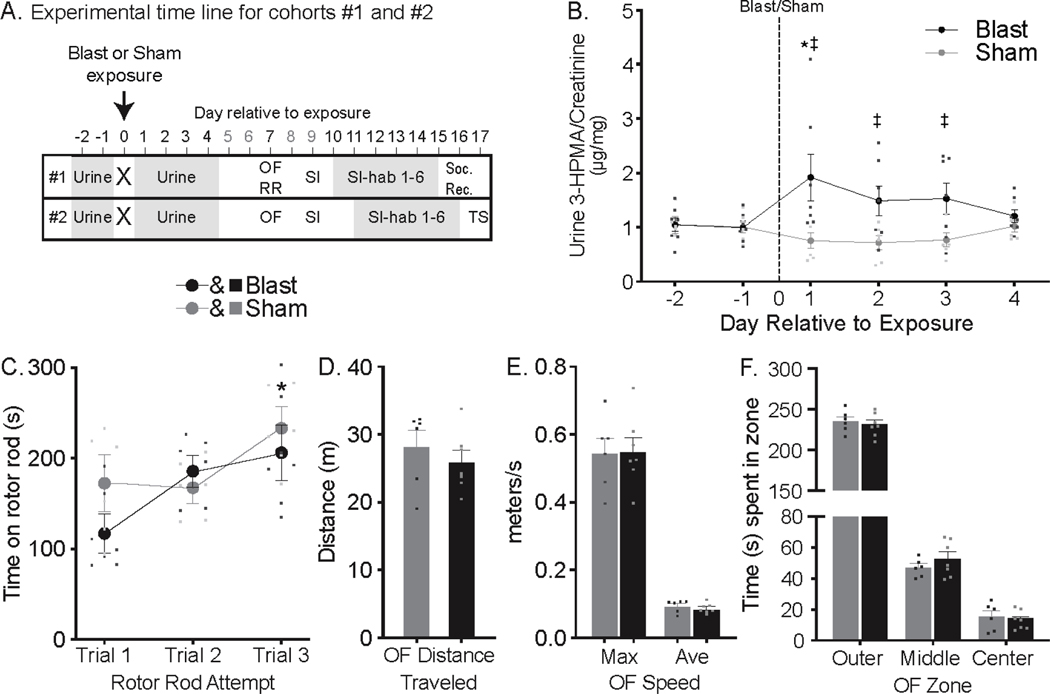
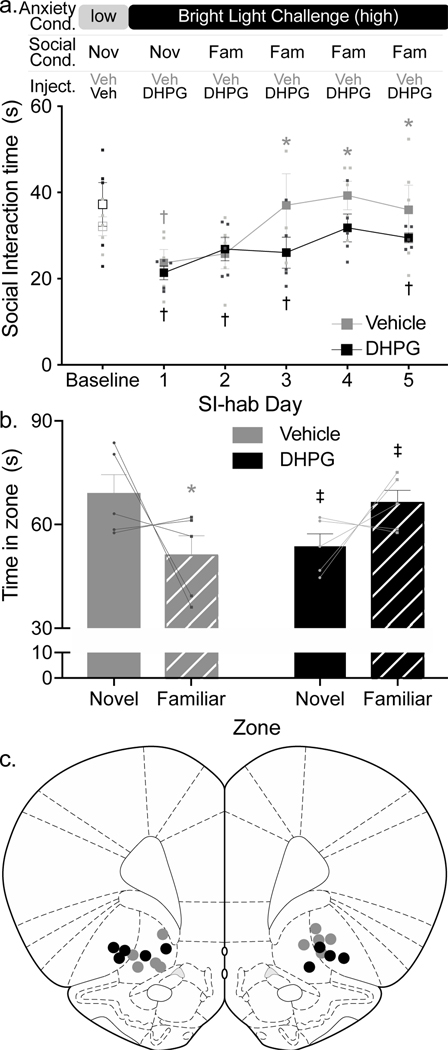
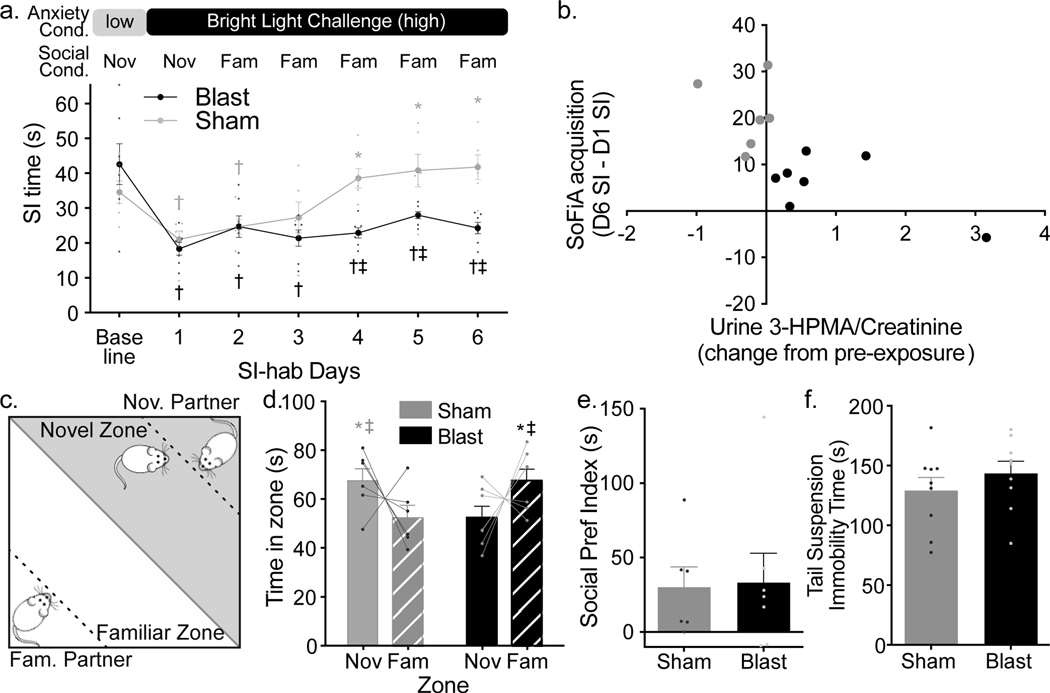
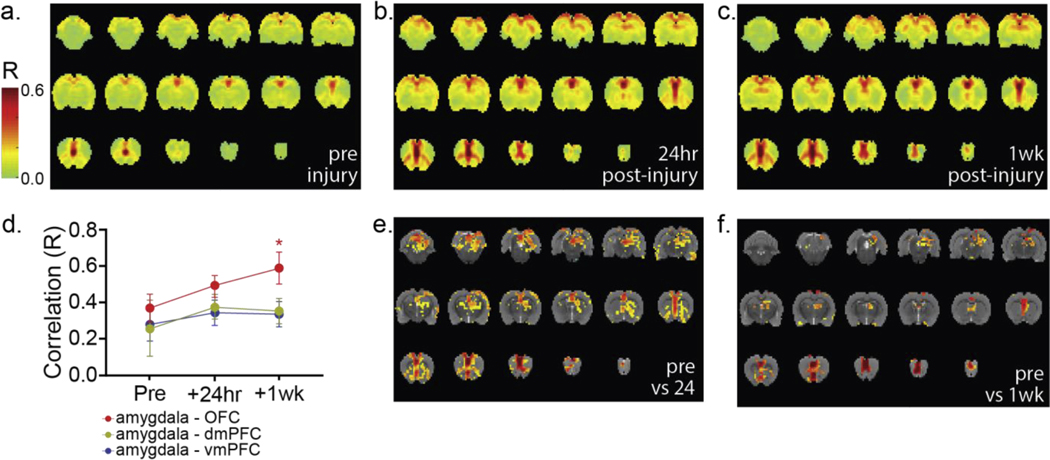
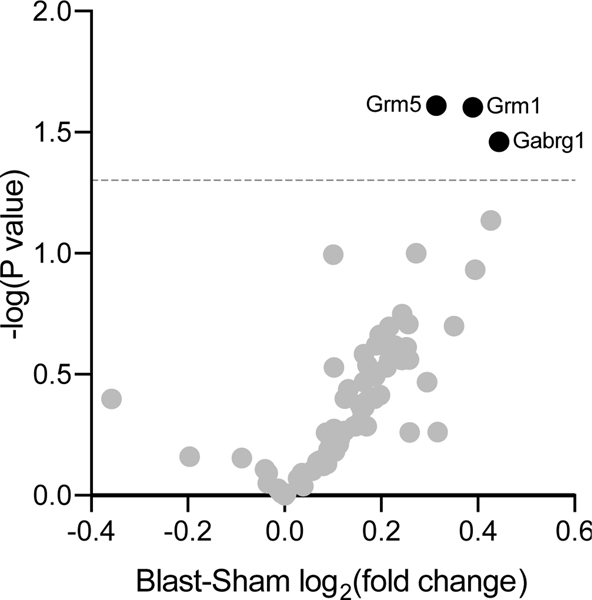
Traumatic brain injury (TBI) is associated with increased risk for mental health disorders, impacting post-injury quality of life and societal reintegration. TBI is also associated with deficits in psychosocial processing, defined as the cognitive integration of social and emotional behaviors, however little is known about how these deficits manifest and their contributions to post-TBI mental health. In this pre-clinical investigation using rats, a single mild blast TBI (mbTBI) induced impairment of psychosocial processing in the absence of confounding physical polytrauma, post-injury motor deficits, affective abnormalities, or deficits in non-social behavior. Impairment severity correlated with acute upregulations of a known oxidative stress metabolite, 3-hydroxypropylmercapturic acid (3-HPMA), in urine. Resting state fMRI alterations in the acute post-injury period implicated key brain regions known to regulate psychosocial behavior, including orbitofrontal cortex (OFC), which is congruent with our previous report of elevated acrolein, a marker of neurotrauma and 3-HPMA precursor, in this region following mbTBI. OFC of mbTBI-exposed rats demonstrated elevated mRNA expression of metabotropic glutamate receptors 1 and 5 (mGluR1/5) and injection of mGluR1/5-selective agonist in OFC of uninjured rats approximated mbTBI-induced psychosocial processing impairment, demonstrating a novel role for OFC in this psychosocial behavior. Furthermore, OFC may serve as a hotspot for TBI-induced disruption of psychosocial processing and subsequent mental health disorders.
创伤性脑损伤(TBI)与心理健康障碍的风险增加有关,影响受伤后的生活质量和社会重新融入。TBI 还与心理社会处理缺陷有关,定义为社会和情感行为的认知整合,但对于这些缺陷如何表现及其对 post-TBI 心理健康的贡献知之甚少。在这项使用大鼠的临床前研究中,单次轻度爆炸性 TBI(mbTBI)在没有混杂性物理性多处创伤、受伤后运动缺陷、情感异常或非社交行为缺陷的情况下,导致心理社会处理受损。损伤严重程度与尿液中已知氧化应激代谢物 3-羟丙基硫尿酸(3-HPMA)的急性上调相关。急性损伤后静息状态 fMRI 的改变提示了调节心理社会行为的关键大脑区域,包括眶额皮层(OFC),这与我们之前的报告一致,即 mbTBI 后该区域的丙烯醛升高,丙烯醛是神经创伤和 3-HPMA 前体的标志物。mbTBI 暴露大鼠的 OFC 表现出代谢型谷氨酸受体 1 和 5(mGluR1/5)的 mRNA 表达升高,并且将 mGluR1/5 选择性激动剂注射到未受伤大鼠的 OFC 中,模拟了 mbTBI 诱导的心理社会处理损伤,证明了 OFC 在这种心理社会行为中的新作用。此外,OFC 可能是 TBI 引起的心理社会处理障碍和随后的心理健康障碍的热点。