Griffith Centre of Biomedical and Rehabilitation Engineering (GCORE), Menzies Health Institute Queensland, Griffith University, Gold Coast, QLD, 4222, Australia.
Queensland Children's Motion Analysis Service, Queensland Children's Hospital, Brisbane, QLD, 4101, Australia.
BMC Musculoskelet Disord. 2021 Jun 7;22(1):521. doi: 10.1186/s12891-021-04364-9.
Typical gait is often considered to be highly symmetrical, with gait asymmetries typically associated with pathological gait. Whilst gait symmetry is often expressed in symmetry ratios, measures of symmetry do not provide insight into how these asymmetries affect gait variables. To fully understand changes caused by gait asymmetry, we must first develop a normative database for comparison. Therefore, the aim of this study was to describe normative reference values of regional plantar load and present comparisons with two pathological case studies.
A descriptive study of the load transfer of plantar pressures in typically developed children was conducted to develop a baseline for comparison of the effects of gait asymmetry in paediatric clinical populations. Plantar load and 3D kinematic data was collected for 17 typically developed participants with a mean age of 9.4 ± 4.0 years. Two case studies were also included; a 10-year-old male with clubfoot and an 8-year-old female with a flatfoot deformity. Data was analysed using a kinematics-pressure integration technique for anatomical masking into 5 regions of interest; medial and lateral forefoot, midfoot, and medial and lateral hindfoot.
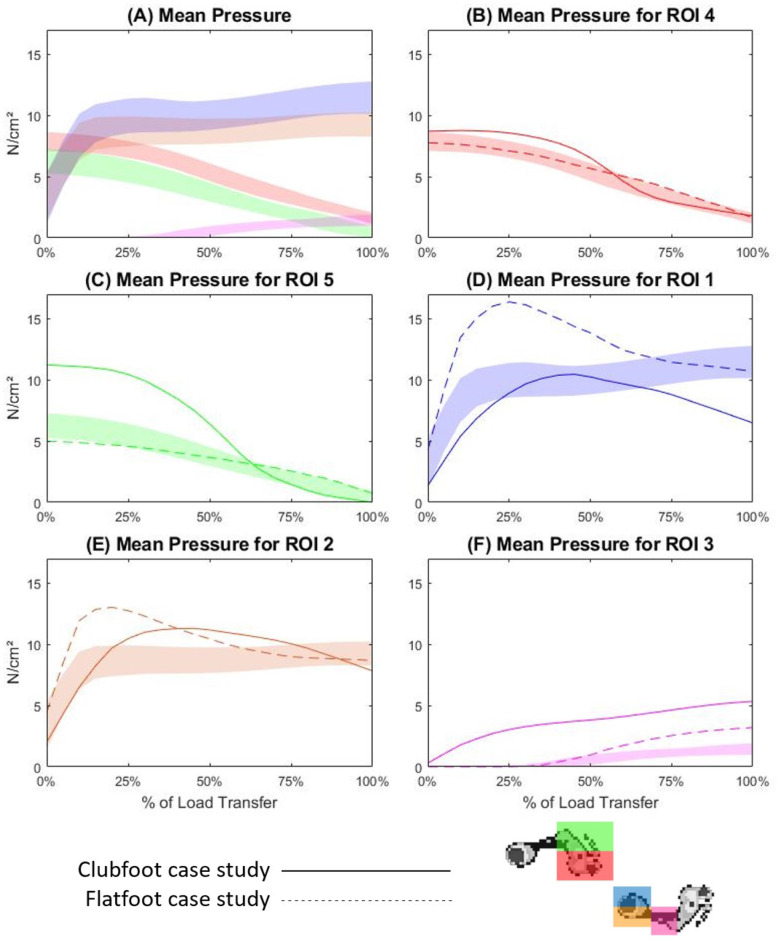
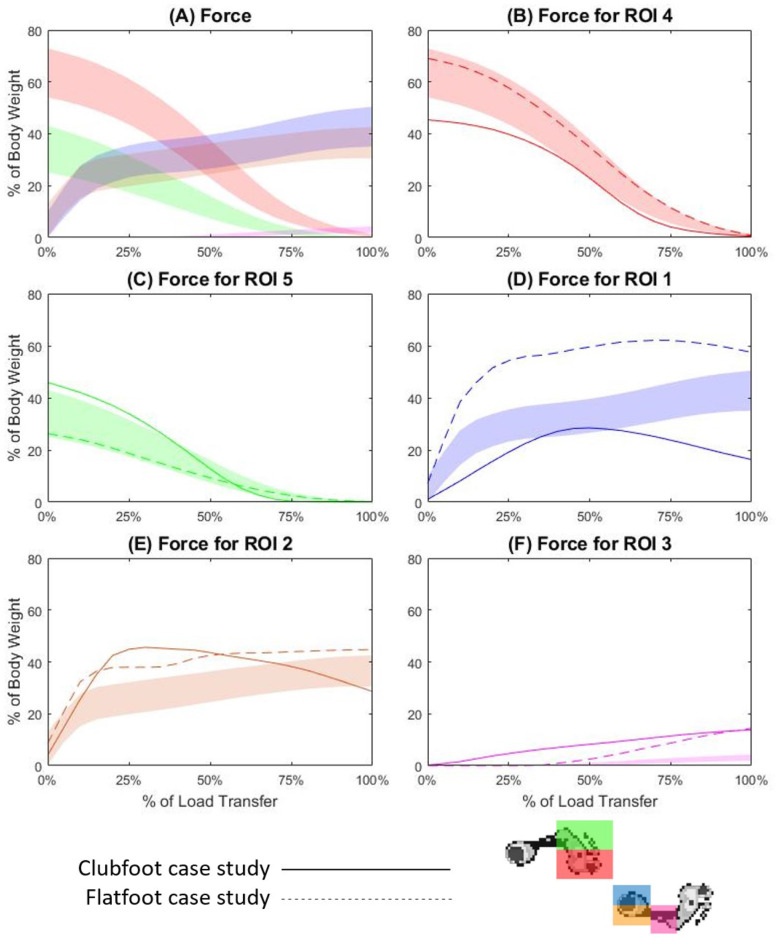
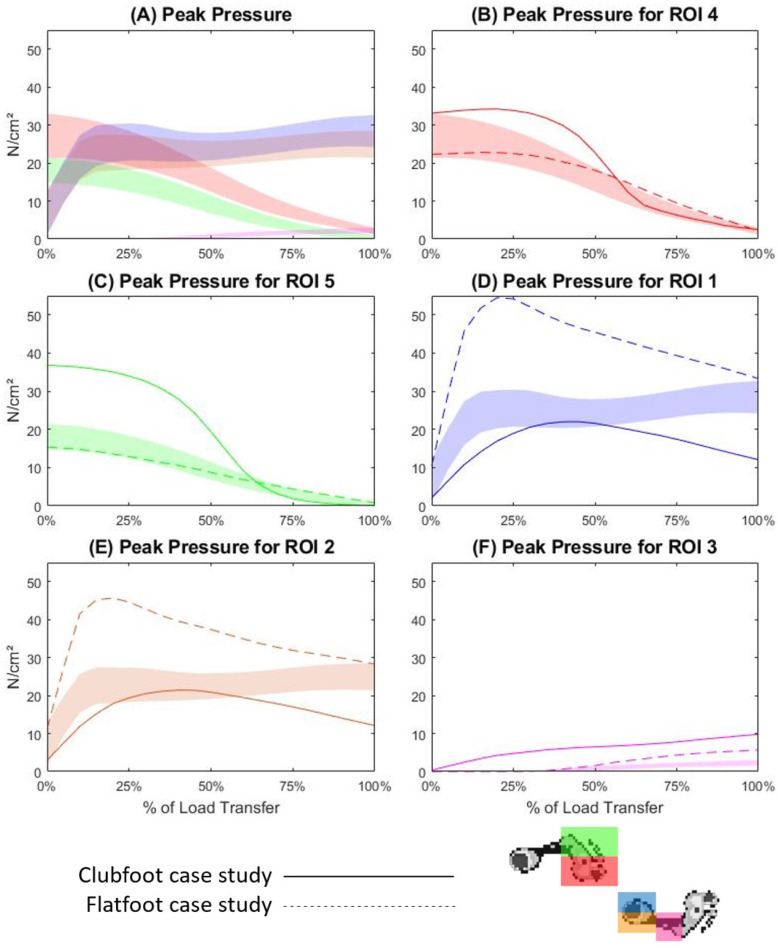
Clear differences between the two case studies and the typical dataset were seen for the load transfer phase of gait. For case study one, lateral bias was seen in the forefoot of the trailing foot across all variables, as well as increases in contact area, force and mean pressure in the lateral hindfoot of the leading foot. For case study two, the forefoot of the trailing foot produced results very similar to the typical dataset across all variables. In the hindfoot of the leading foot, medial bias presents most notably in the force and mean pressure graphs.
This study highlights the clinical significance of the load transfer phase of gait, providing meaningful information for intervention planning.
典型步态通常被认为具有高度对称性,而步态不对称通常与病理性步态有关。虽然步态对称性通常以对称比来表示,但对称度量并不能深入了解这些不对称如何影响步态变量。为了全面了解步态不对称引起的变化,我们必须首先建立一个规范的数据库进行比较。因此,本研究的目的是描述正常参考值的足底负荷,并与两个病理性病例研究进行比较。
本研究对典型发育儿童的足底压力负荷传递进行了描述性研究,为比较儿科临床人群中步态不对称的影响建立了基线。收集了 17 名典型发育儿童的足底负荷和三维运动学数据,平均年龄为 9.4±4.0 岁。还包括两个病例研究,一个 10 岁男性患有马蹄足,一个 8 岁女性患有扁平足畸形。使用运动学-压力集成技术对数据进行分析,对 5 个感兴趣区域进行解剖掩蔽:内侧和外侧前足、中足和内侧和外侧后足。
在步态的负荷传递阶段,两个病例研究与典型数据集之间存在明显差异。对于病例研究 1,在所有变量中,滞后脚的外侧出现了明显的外侧偏差,同时,在领先脚的外侧后足的接触面积、力和平均压力也增加了。对于病例研究 2,滞后脚的前足在所有变量中与典型数据集的结果非常相似。在领先脚的后足中,内侧偏差在力和平均压力图中最为明显。
本研究强调了步态负荷传递阶段的临床意义,为干预计划提供了有意义的信息。