Center for Learning and Memory, The University of Texas at Austin, Austin, TX, USA.
Department of Neuroscience, The University of Texas at Austin, Austin, TX, USA.
Nat Commun. 2021 Jun 7;12(1):3373. doi: 10.1038/s41467-021-23765-x.
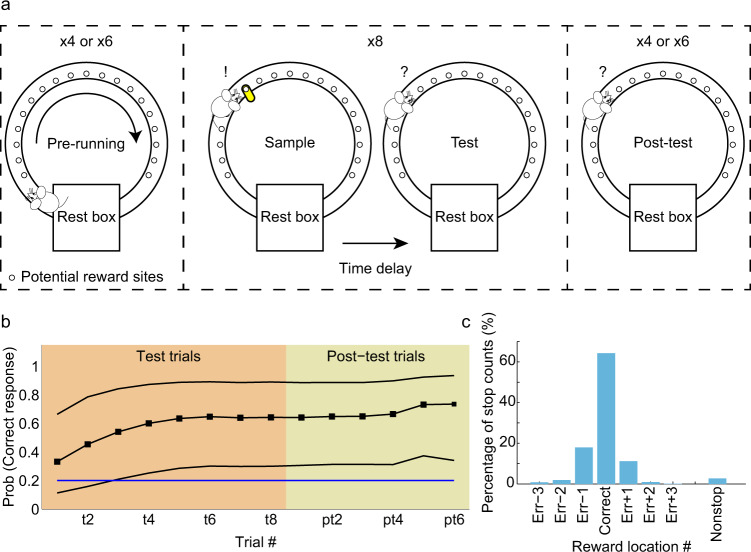
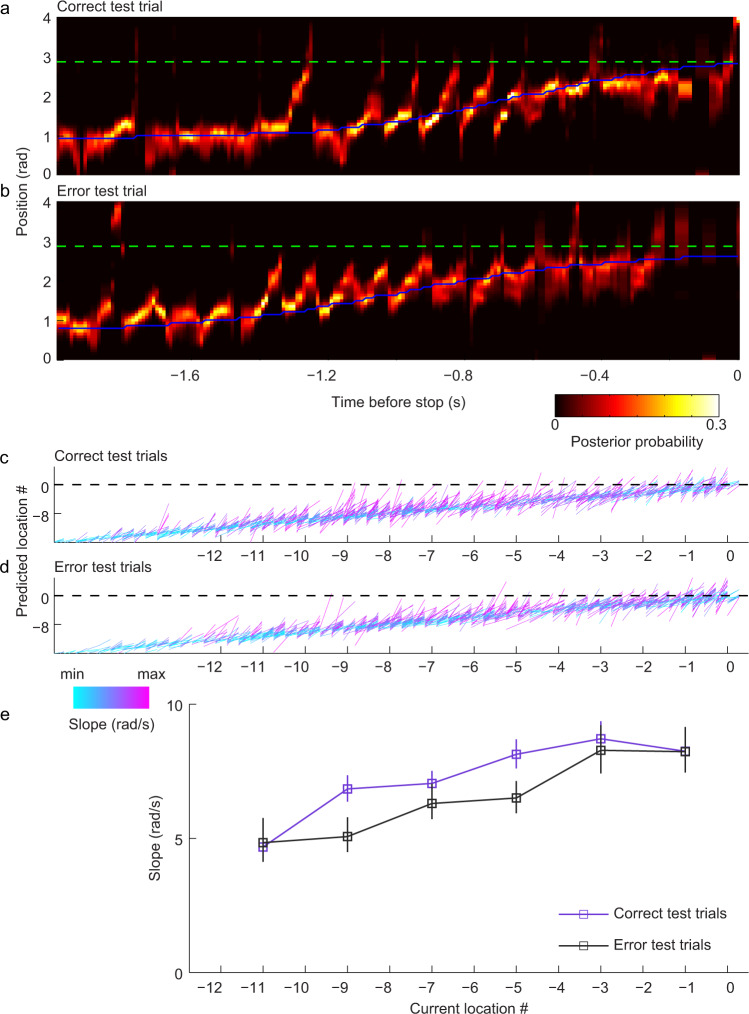
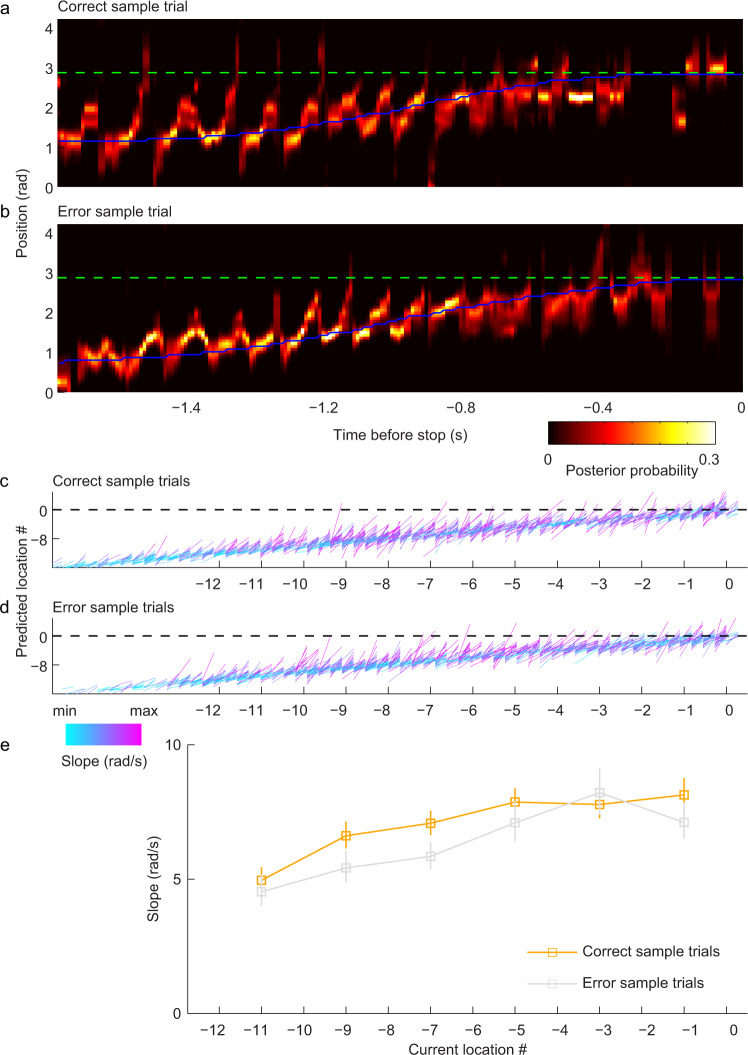
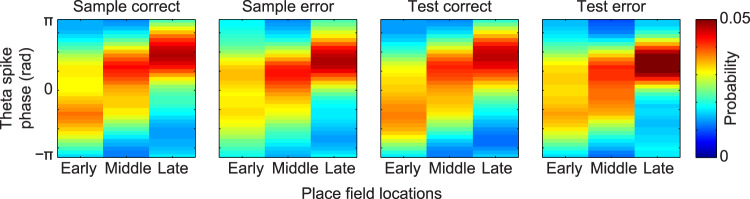
Theta rhythms temporally coordinate sequences of hippocampal place cell ensembles during active behaviors, while sharp wave-ripples coordinate place cell sequences during rest. We investigated whether such coordination of hippocampal place cell sequences is disrupted during error trials in a delayed match-to-place task. As a reward location was learned across trials, place cell sequences developed that represented temporally compressed paths to the reward location during the approach to the reward location. Less compressed paths were represented on error trials as an incorrect stop location was approached. During rest periods of correct but not error trials, place cell sequences developed a bias to replay representations of paths ending at the correct reward location. These results support the hypothesis that coordination of place cell sequences by theta rhythms and sharp wave-ripples develops as a reward location is learned and may be important for the successful performance of a spatial memory task.
θ 节律在动物进行主动行为时,对海马体位置细胞群的序列进行时间协调,而锐波-涟漪则在动物休息时对位置细胞序列进行协调。我们研究了在延迟匹配到位置任务的错误试验中,这种海马体位置细胞序列的协调是否会被打乱。随着试验的进行,动物学会了寻找奖励位置,位置细胞序列的发展代表了在接近奖励位置时,时间上被压缩的路径。在错误试验中,代表的是较短的路径,因为动物接近的是错误的停止位置。在正确但非错误试验的休息期间,位置细胞序列发展出了对以正确奖励位置结束的路径的重播偏向。这些结果支持了这样一种假设,即θ 节律和锐波-涟漪对位置细胞序列的协调是随着奖励位置的学习而发展的,这可能对成功执行空间记忆任务很重要。