Yang Yao-Cheng, Wang Jun-Jie, Huang Yun, Cai Wei-Xin, Tao Qian
Department of Oral and Maxillofacial Surgery, Hospital of Stomatology, Guanghua School of Stomatology, Sun Yat-sen University, Guangzhou, 510055, People's Republic of China.
Guangdong Provincial Key Laboratory of Stomatology, Sun Yat-sen University, Guangzhou, 510086, People's Republic of China.
Cancer Manag Res. 2021 Jun 1;13:4403-4416. doi: 10.2147/CMAR.S307517. eCollection 2021.
Ameloblastoma is a benign odontogenic neoplasm with a high local recurrence rate if the operation is not thorough. However, a useful clinical tool for the quantitative assessment of the prognosis and risk of postoperative recurrence of ameloblastoma has not yet been constructed. This study aims to develop a prognostic nomogram model for ameloblastoma of the jaw to assist surgeons in surgical decision-making.
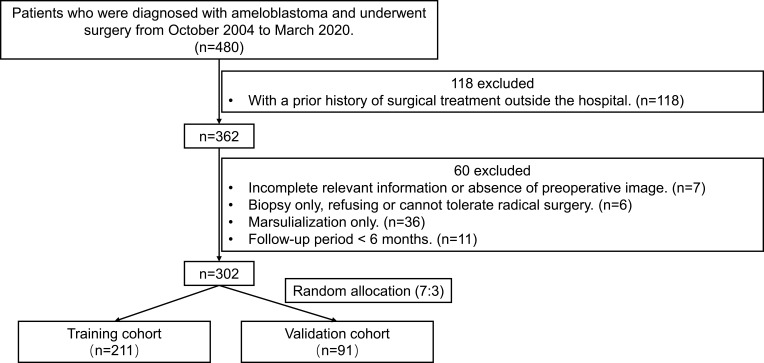
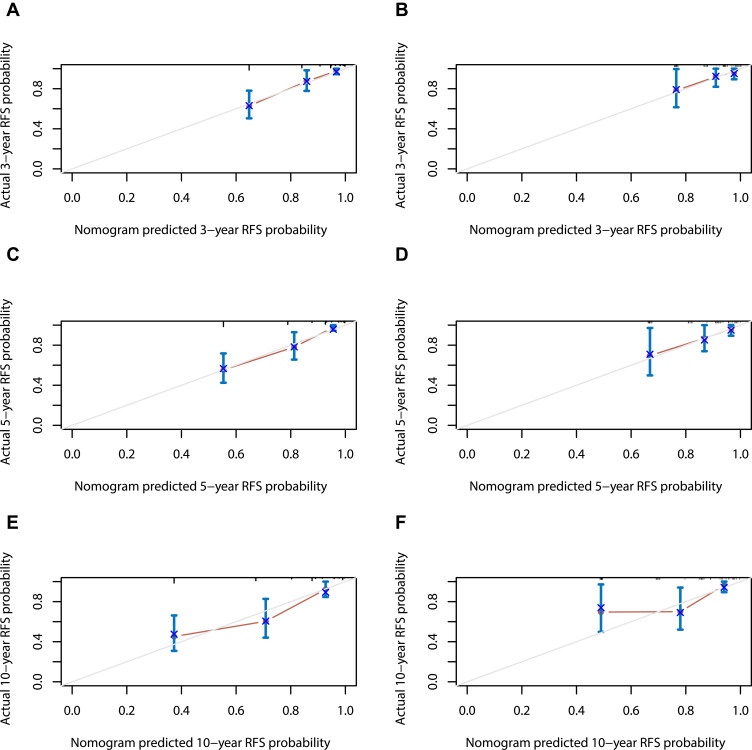
Patients who underwent initial surgery for ameloblastoma in our department from October 2004 to March 2020 were enrolled and randomly divided into training and validation sets. Univariate and multivariate Cox proportional hazards regression analyses were performed to identify the independent prognostic factors, from which a nomogram for predicting 3-, 5- and 10-year recurrence-free survival (RFS) of ameloblastoma was constructed using the training set and internally validated using the validation set. The model performance was assessed by Harrell's concordance index (C-index) and calibration curves.
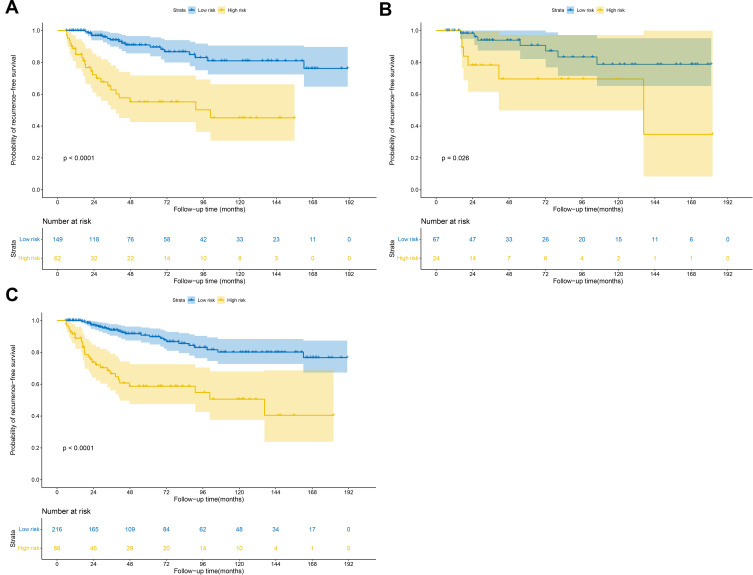
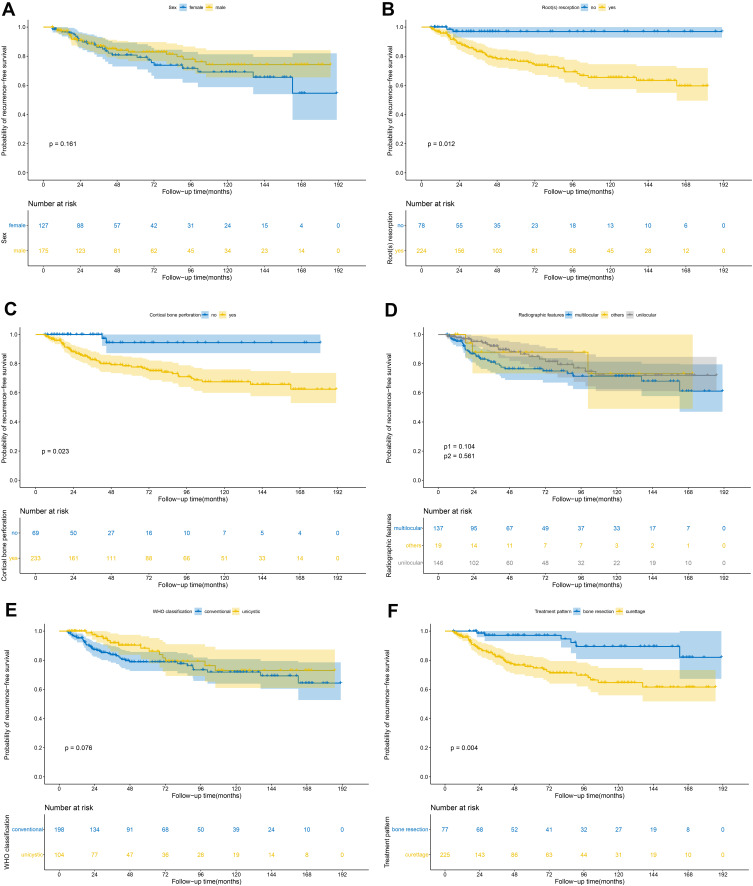
A total of 302 eligible patients with ameloblastoma were enrolled, 54 of whom were confirmed to relapse during the follow-up period of 6 to 191 months. Four independent predictors, including cortical bone perforation, root(s) resorption, WHO classification, and treatment pattern, were identified and included in the construction of a nomogram for recurrence-free survival (RFS), which showed promising calibration performance and discrimination in the training set (C-index 0.790, 95% confidence interval [CI] 0.735-0.845) and the validation set (C-index 0.734, 95% CI 0.599-0.869).
A favorable nomogram was developed that accurately predicted the RFS of patients with ameloblastoma based on individual characteristics. Risk stratification using the nomogram could optimize tailored therapy and follow-up.
成釉细胞瘤是一种良性牙源性肿瘤,如果手术不彻底,局部复发率很高。然而,尚未构建出一种用于定量评估成釉细胞瘤预后和术后复发风险的实用临床工具。本研究旨在开发一种用于颌骨成釉细胞瘤的预后列线图模型,以协助外科医生进行手术决策。
纳入2004年10月至2020年3月在我科接受成釉细胞瘤初次手术的患者,并随机分为训练集和验证集。进行单因素和多因素Cox比例风险回归分析以确定独立预后因素,据此使用训练集构建预测成釉细胞瘤3年、5年和10年无复发生存率(RFS)的列线图,并使用验证集进行内部验证。通过Harrell一致性指数(C指数)和校准曲线评估模型性能。
共纳入302例符合条件的成釉细胞瘤患者,其中54例在6至191个月的随访期内被证实复发。确定了四个独立预测因素,包括皮质骨穿孔、牙根吸收、世界卫生组织分类和治疗模式,并将其纳入无复发生存率(RFS)列线图的构建中,该列线图在训练集(C指数0.790,95%置信区间[CI] 0.735 - 0.845)和验证集(C指数0.734,95% CI 0.599 - 0.869)中显示出良好的校准性能和区分能力。
开发出了一种良好的列线图,可根据个体特征准确预测成釉细胞瘤患者的RFS。使用该列线图进行风险分层可优化个体化治疗和随访。