Zhang Lingli, Sun Lihua
College of Business Administration, Shenyang Pharmaceutical University, Shenyang, People's Republic of China.
Department of Pharmacy, Jinling Hospital, Nanjing, People's Republic of China.
Risk Manag Healthc Policy. 2021 Jun 1;14:2263-2276. doi: 10.2147/RMHP.S308183. eCollection 2021.
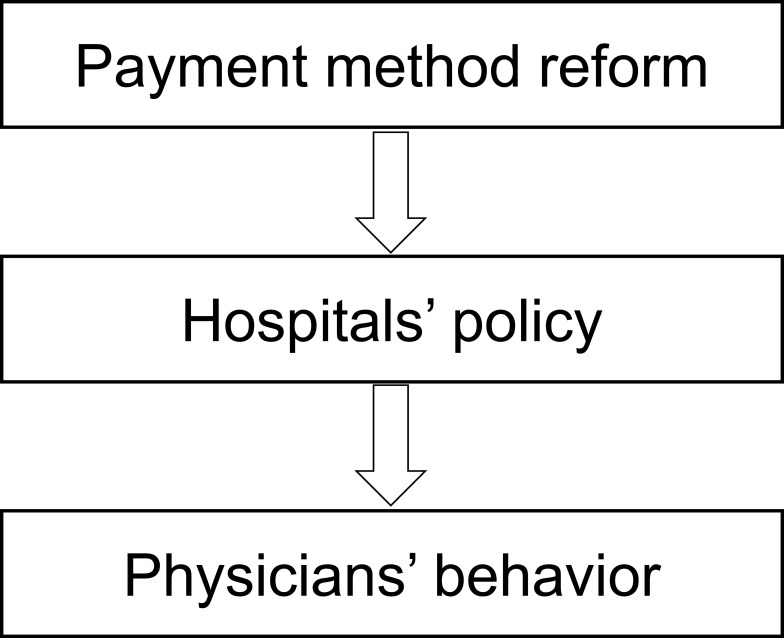
Currently, China is piloting diagnosis-related groups (DRG) payment system in 30 cities. The main aim of this study was to explore the respondents' impressions regarding the hospitals' policies and physicians' behavior change brought by the DRG payment system, and investigate whether and how the hospitals' policies affect the physicians' behavior.
We distributed questionnaires designed for this study to 200 physicians. Data analysis consisted of descriptive statistics, -test, and network analysis.
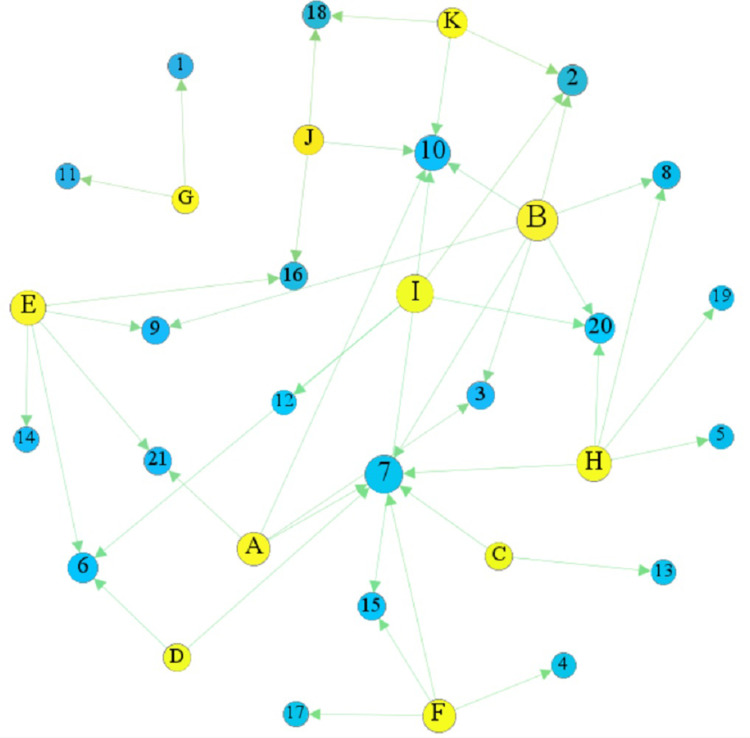
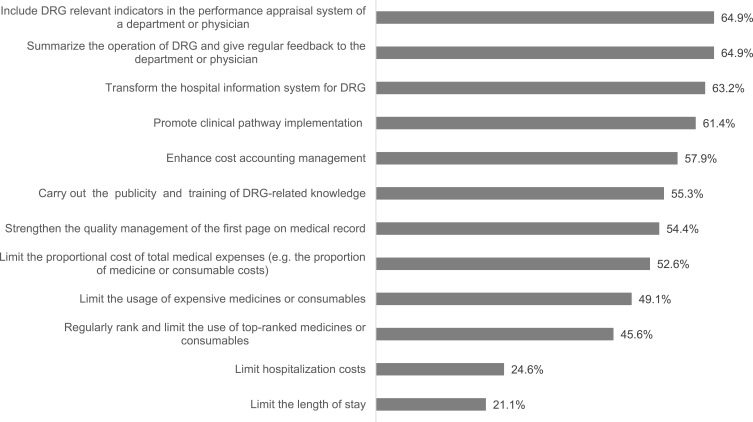
Respondents stated that the hospitals had adopted several policies in response to DRG payment and DRG payment could reduce overtreatment and improve efficiency. However, it also led to several negative effects including an increased explanation to the patients, hindering new technologies, case splitting, and cherry picking. In addition, there was no evidence that harmful effects such as refusing patients and premature discharge existed. Overall, the benefits outweighed the drawbacks of DRG. Moreover, the hospitals' policies could effectively change physician behaviors. Our results indicated that promoting the implementation of clinical pathways had the most positive impact, while limiting costs and length of stay is not recommended.
In general, Chinese physicians who participated in the questionnaire possessed relatively positive attitudes towards the DRG payment system. Nevertheless, some of the negative impacts cannot be ignored. Meanwhile, the hospitals' policies should be implemented with adequate consideration of the impact on physicians' behavior.
目前,中国正在30个城市试点疾病诊断相关分组(DRG)支付系统。本研究的主要目的是探讨受访者对DRG支付系统给医院政策和医生行为带来的变化的看法,并调查医院政策是否以及如何影响医生行为。
我们向200名医生发放了为本研究设计的问卷。数据分析包括描述性统计、t检验和网络分析。
受访者表示,医院针对DRG支付采取了多项政策,DRG支付可以减少过度治疗并提高效率。然而,它也导致了一些负面影响,包括对患者解释增加、阻碍新技术应用、病例拆分和挑拣。此外,没有证据表明存在拒绝收治患者和过早出院等有害影响。总体而言,DRG的好处大于弊端。而且,医院政策可以有效改变医生行为。我们的结果表明,促进临床路径的实施产生的积极影响最大,而不建议限制成本和住院时间。
总体而言,参与问卷调查的中国医生对DRG支付系统持相对积极的态度。然而,一些负面影响不容忽视。同时,医院政策的实施应充分考虑对医生行为的影响。