Yan Jianzhou, Lin Hui-Heng, Zhao Dan, Hu Yuanjia, Shao Rong
School of International Pharmaceutical Business, China Pharmaceutical University, Nanjing, Jiangsu, People's Republic of China.
The Research Center of National Drug Policy and Ecosystem, China Pharmaceutical University, Nanjing, Jiangsu, 211198, People's Republic of China.
BMC Health Serv Res. 2019 Feb 1;19(1):84. doi: 10.1186/s12913-019-3921-8.
The increasing cost on healthcare exposes China's healthcare budgets and system to financial crisis. To control the excessive growth of healthcare expenditure, China's healthcare reforms emphasize the control of the global budget for healthcare, which leads to the release of relevant policy and a series of cost-control actions implemented by different hospitals. This work aims to identify the effects brought by the cost-control policy and actions via surveying and analysing feedback from clinicians.
Questionnaires on the cost-control policy and actions were designed for surveying 110 clinicians in hospitals from different regions of China. The data on the implementation of the cost-control actions and doctors' feedback on these actions were analysed using descriptive statistics. Pearson's chi-squared tests were performed to detect associations between doctors' opinions and specific cost-control actions. A value of p < 0.05 was considered statistically significant. Association relationships between doctors' opinions and cost-control actions were modelled into network models, and key factors were identified in a multi-variate framework. Last, we visualized our resultant data using a network model, and further multi-variate analysis was performed.
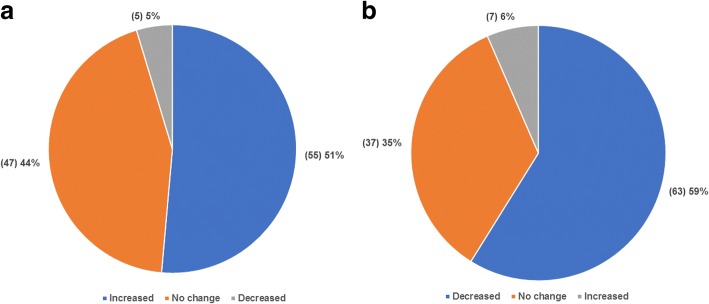
There were three main findings. (1) The cost-control policy has been widely implemented in the sampled hospitals in different regions of China, with more than 80% of those surveyed acknowledging that their hospitals take actions of reducing average prescription fees for outpatients, drug costs, and in-hospitalization durations. (2) Most doctors have a negative view of some cost-control actions; this is mainly due to concerns about the effects of these actions on the doctors' own healthcare performance and patient satisfaction. (3) Cost-control actions that had a significant impact on doctors' performance included limiting average prescription fees for outpatients and limiting the use of examinations/drugs/surgeries. Decreased patient satisfaction was associated with fewer admissions of critically ill patients, reduced use of brand-name drugs, and increased total costs to patients due to increased frequencies of visits to the hospitals.
Cost-control actions implemented in hospitals in response to the government's policy to reduce its national healthcare budget affect both doctors and patients in several ways. Moreover, the cost-control policy and actions can be improved.
医疗保健费用的不断增加使中国的医疗保健预算和体系面临金融危机。为控制医疗保健支出的过度增长,中国的医疗保健改革强调控制医疗保健的总体预算,这导致了相关政策的出台以及不同医院实施的一系列成本控制行动。这项工作旨在通过调查和分析临床医生的反馈来确定成本控制政策和行动所带来的影响。
设计了关于成本控制政策和行动的调查问卷,以对中国不同地区医院的110名临床医生进行调查。使用描述性统计分析成本控制行动的实施数据以及医生对这些行动的反馈。进行Pearson卡方检验以检测医生意见与特定成本控制行动之间的关联。p值<0.05被认为具有统计学意义。将医生意见与成本控制行动之间的关联关系建模为网络模型,并在多变量框架中确定关键因素。最后,我们使用网络模型对所得数据进行可视化,并进行进一步的多变量分析。
有三个主要发现。(1)成本控制政策已在中国不同地区的抽样医院中广泛实施,超过80%的受访者承认他们的医院采取了降低门诊平均处方费用、药品成本和住院时间的行动。(2)大多数医生对一些成本控制行动持负面看法;这主要是由于担心这些行动对医生自身的医疗绩效和患者满意度的影响。(3)对医生绩效有重大影响的成本控制行动包括限制门诊平均处方费用以及限制检查/药品/手术的使用。患者满意度下降与重症患者入院人数减少、品牌药使用减少以及患者因就诊频率增加而导致的总费用增加有关。
医院为响应政府降低国家医疗保健预算的政策而实施的成本控制行动在多个方面影响了医生和患者。此外,成本控制政策和行动可以得到改进。