
通过多组学分析鉴定胸腺瘤的分子特征和新的预后靶点
Identification of Molecular Characteristics and New Prognostic Targets for Thymoma by Multiomics Analysis.
作者信息
Liu Dazhong, Zhang Pengfei, Zhao Jiaying, Yang Lei, Wang Wei
机构信息
Department of Thoracic Surgery, Second Affiliated Hospital of Harbin Medical University, Harbin 150086, China.
出版信息
Biomed Res Int. 2021 May 19;2021:5587441. doi: 10.1155/2021/5587441. eCollection 2021.
BACKGROUND
Thymoma is a heterogeneous tumor originated from thymic epithelial cells. The molecular mechanism of thymoma remains unclear.
METHODS
The expression profile, methylation, and mutation data of thymoma were obtained from TCGA database. The coexpression network was constructed using the variance of gene expression through WGCNA. Enrichment analysis using clusterProfiler R package and overall survival (OS) analysis by Kaplan-Meier method were carried out for the intersection of differential expression genes (DEGs) screened by limma R package and important module genes. PPI network was constructed based on STRING database for genes with significant impact on survival. The impact of key genes on the prognosis of thymoma was evaluated by ROC curve and Cox regression model. Finally, the immune cell infiltration, methylation modification, and gene mutation were calculated.
RESULTS
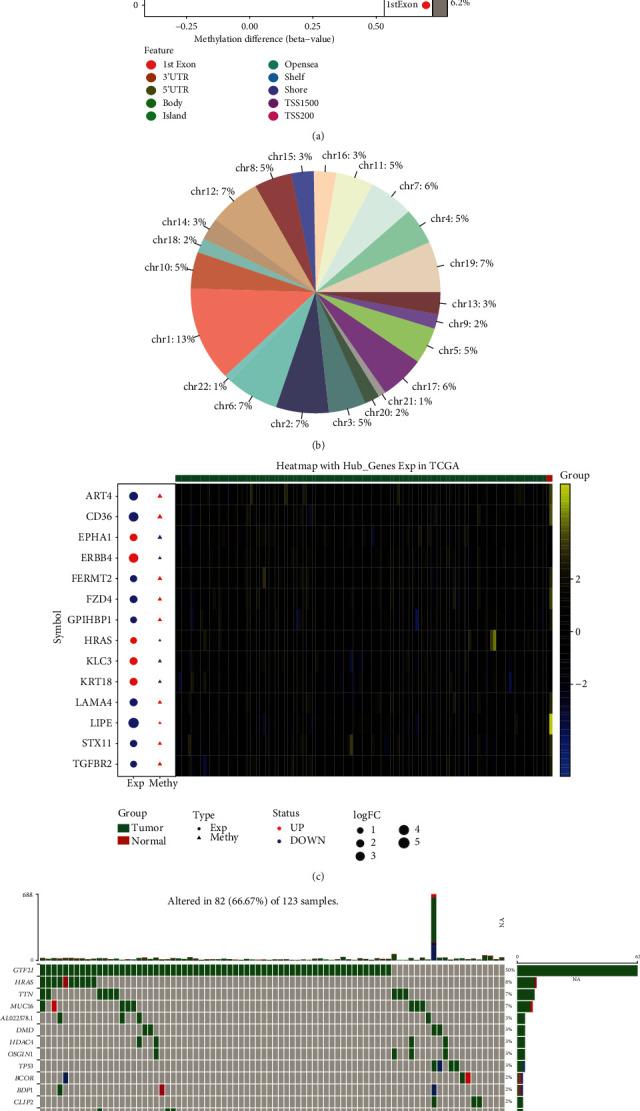
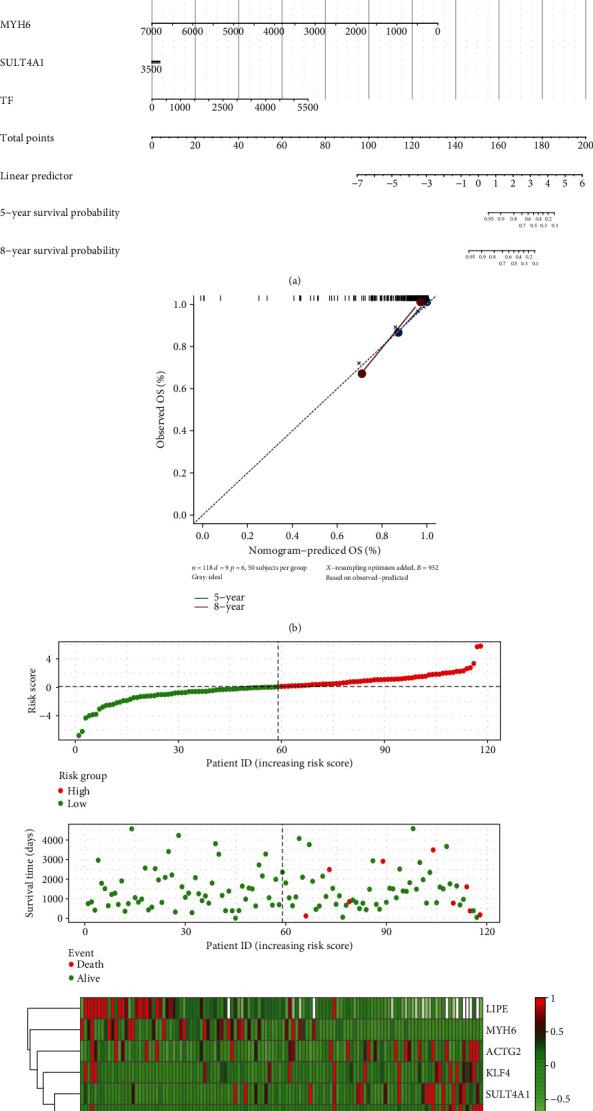
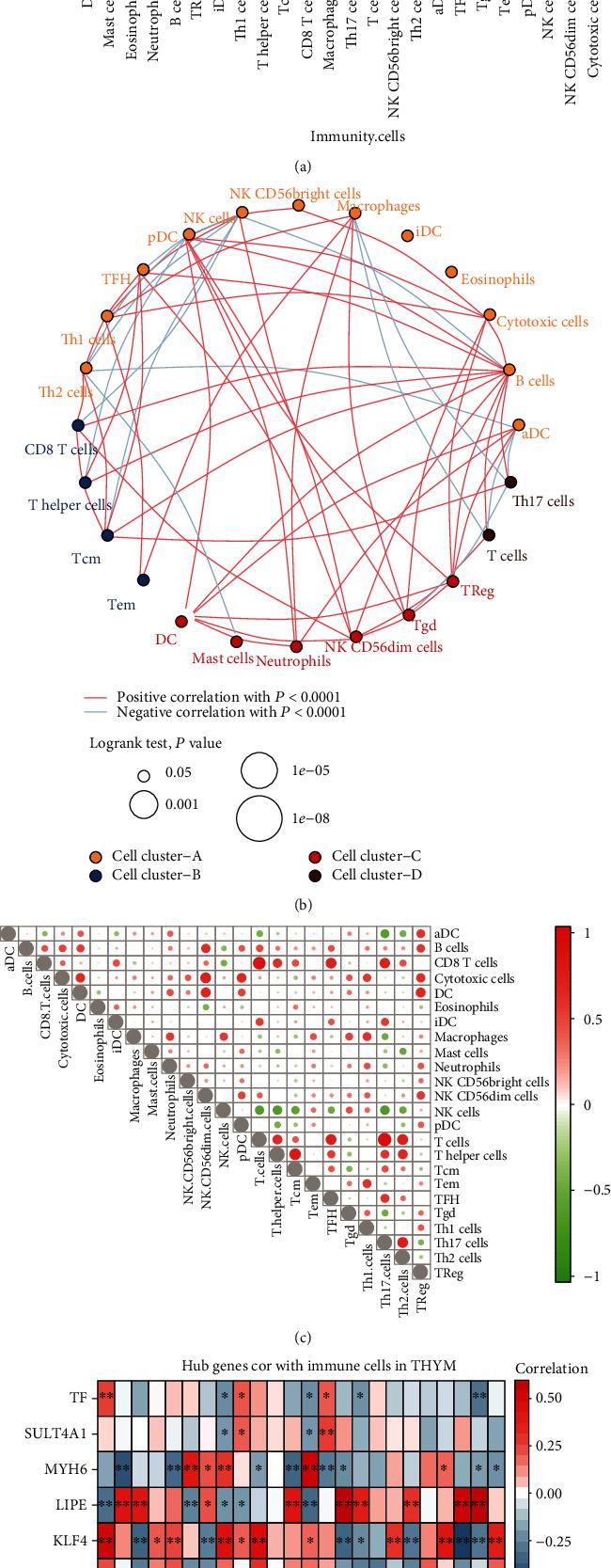
We obtained eleven coexpression modules, and three of them were higher positively correlated with thymoma. DEGs in these three modules mainly involved in MAPK cascade and PPAR pathway. LIPE, MYH6, ACTG2, KLF4, SULT4A1, and TF were identified as key genes through the PPI network. AUC values of LIPE were the highest. Cox regression analysis showed that low expression of LIPE was a prognostic risk factor for thymoma. In addition, there was a high correlation between LIPE and T cells. Importantly, the expression of LIPE was modified by methylation. Among all the mutated genes, GTF2I had the highest mutation frequency.
CONCLUSION
These results suggested that the molecular mechanism of thymoma may be related to immune inflammation. LIPE may be the key genes affecting prognosis of thymoma. Our findings will help to elucidate the pathogenesis and therapeutic targets of thymoma.
背景
胸腺瘤是一种起源于胸腺上皮细胞的异质性肿瘤。胸腺瘤的分子机制仍不清楚。
方法
从TCGA数据库获取胸腺瘤的表达谱、甲基化和突变数据。通过加权基因共表达网络分析(WGCNA)利用基因表达方差构建共表达网络。对limma R包筛选出的差异表达基因(DEGs)与重要模块基因的交集进行基于clusterProfiler R包的富集分析和Kaplan-Meier法的总生存期(OS)分析。基于STRING数据库构建对生存有显著影响的基因的蛋白质-蛋白质相互作用(PPI)网络。通过ROC曲线和Cox回归模型评估关键基因对胸腺瘤预后的影响。最后,计算免疫细胞浸润、甲基化修饰和基因突变情况。
结果
我们获得了11个共表达模块,其中3个与胸腺瘤呈高度正相关。这三个模块中的DEGs主要涉及丝裂原活化蛋白激酶(MAPK)级联反应和过氧化物酶体增殖物激活受体(PPAR)途径。通过PPI网络鉴定出脂蛋白酯酶(LIPE)、肌球蛋白重链6(MYH6)、平滑肌肌动蛋白γ2(ACTG2)、 Kruppel样因子4(KLF4)、磺基转移酶家族4A成员1(SULT4A1)和转录因子(TF)为关键基因。LIPE的曲线下面积(AUC)值最高。Cox回归分析表明LIPE低表达是胸腺瘤的预后危险因素。此外,LIPE与T细胞之间存在高度相关性。重要的是,LIPE的表达受到甲基化修饰。在所有突变基因中,通用转录因子2I(GTF2I)的突变频率最高。
结论
这些结果表明胸腺瘤的分子机制可能与免疫炎症有关。LIPE可能是影响胸腺瘤预后的关键基因。我们的研究结果将有助于阐明胸腺瘤的发病机制和治疗靶点。


 Zotero 插件