Division of Nephrology and Hypertension, Department of Medicine, Mayo Clinic, Jacksonville, Florida, USA.
Division of Nephrology and Hypertension, Department of Medicine, Mayo Clinic, Rochester, Minnesota, USA.
Stem Cells Transl Med. 2021 Sep;10(9):1304-1319. doi: 10.1002/sctm.19-0419. Epub 2021 Jun 9.
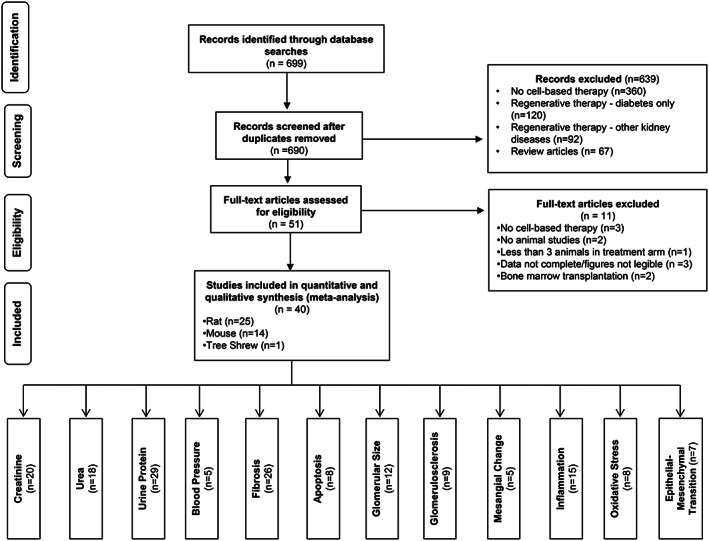
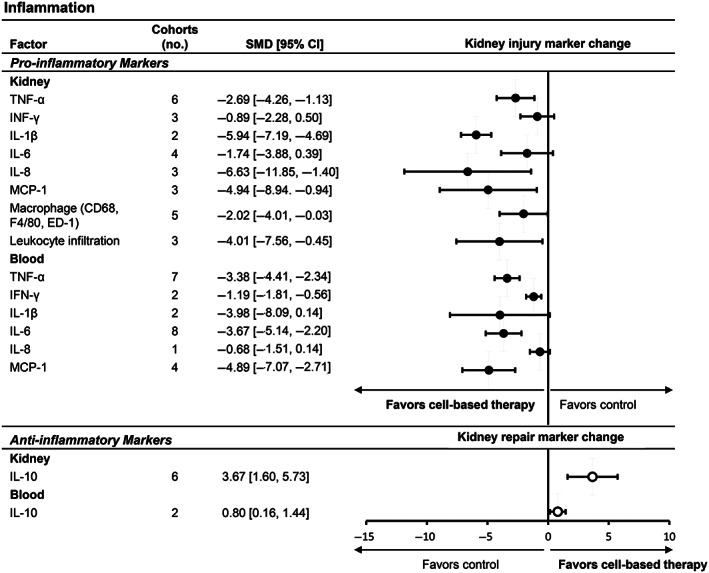
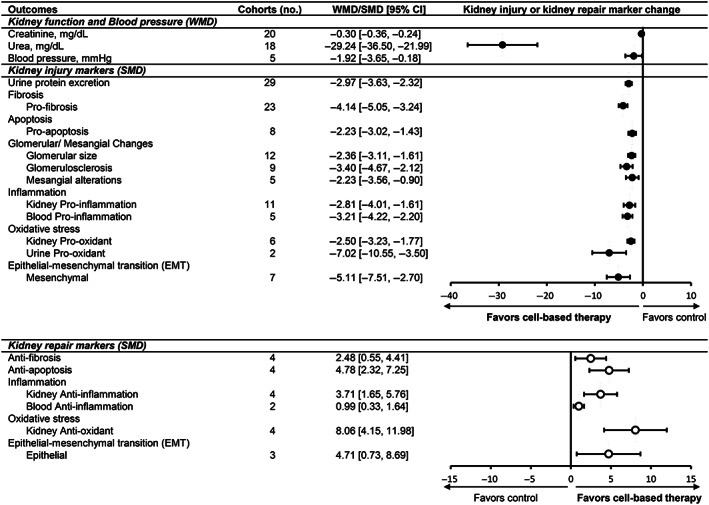
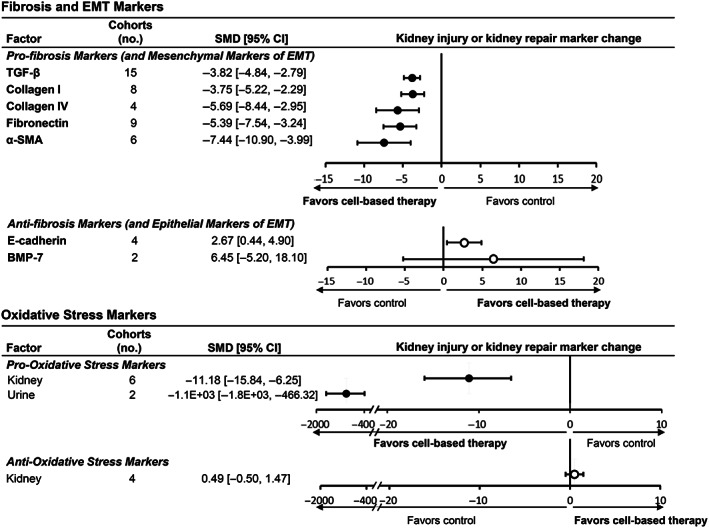
Regenerative, cell-based therapy is a promising treatment option for diabetic kidney disease (DKD), which has no cure. To prepare for clinical translation, this systematic review and meta-analysis summarized the effect of cell-based interventions in DKD animal models and treatment-related factors modifying outcomes. Electronic databases were searched for original investigations applying cell-based therapy in diabetic animals with kidney endpoints (January 1998-May 2019). Weighted or standardized mean differences were estimated for kidney outcomes and pooled using random-effects models. Subgroup analyses tested treatment-related factor effects for outcomes (creatinine, urea, urine protein, fibrosis, and inflammation). In 40 studies (992 diabetic rodents), therapy included mesenchymal stem/stromal cells (MSC; 61%), umbilical cord/amniotic fluid cells (UC/AF; 15%), non-MSC (15%), and cell-derived products (13%). Tissue sources included bone marrow (BM; 65%), UC/AF (15%), adipose (9%), and others (11%). Cell-based therapy significantly improved kidney function while reducing injury markers (proteinuria, histology, fibrosis, inflammation, apoptosis, epithelial-mesenchymal-transition, oxidative stress). Preconditioning, xenotransplantation, and disease-source approaches were effective. MSC and UC/AF cells had greater effect on kidney function while cell products improved fibrosis. BM and UC/AF tissue sources more effectively improved kidney function and proteinuria vs adipose or other tissues. Cell dose, frequency, and administration route also imparted different benefits. In conclusion, cell-based interventions in diabetic animals improved kidney function and reduced injury with treatment-related factors modifying these effects. These findings may aid in development of optimal repair strategies through selective use of cells/products, tissue sources, and dose administrations to allow for successful adaptation of this novel therapeutic in human DKD.
再生细胞疗法是治疗糖尿病肾病(DKD)的一种很有前途的方法,目前尚无治愈方法。为了准备临床转化,本系统综述和荟萃分析总结了细胞干预在糖尿病动物模型中的作用,以及改变治疗结果的与治疗相关的因素。对应用细胞疗法治疗有肾脏终点的糖尿病动物的原始研究进行了电子数据库检索(1998 年 1 月至 2019 年 5 月)。使用随机效应模型对肾脏结局进行加权或标准化均数差估计,并进行合并。亚组分析测试了与治疗相关的因素对结局(肌酐、尿素、尿蛋白、纤维化和炎症)的影响。在 40 项研究(992 只糖尿病啮齿动物)中,治疗包括间充质干细胞/基质细胞(MSC;61%)、脐带/羊水细胞(UC/AF;15%)、非 MSC(15%)和细胞衍生产品(13%)。组织来源包括骨髓(BM;65%)、UC/AF(15%)、脂肪(9%)和其他(11%)。细胞疗法显著改善了肾功能,同时降低了损伤标志物(蛋白尿、组织学、纤维化、炎症、细胞凋亡、上皮-间充质转化、氧化应激)。预处理、异种移植和疾病源方法是有效的。MSC 和 UC/AF 细胞对肾功能的影响更大,而细胞产物则改善了纤维化。BM 和 UC/AF 组织来源较脂肪或其他组织更有效地改善了肾功能和蛋白尿。细胞剂量、频率和给药途径也带来了不同的益处。总之,糖尿病动物的细胞干预改善了肾功能,减少了损伤,而与治疗相关的因素改变了这些效果。这些发现可能有助于通过选择性使用细胞/产物、组织来源和剂量给药来制定最佳修复策略,从而使这种新的治疗方法在人类 DKD 中得以成功应用。