Department of Hematology, Oncology and Pneumology, University Medical Centre of the Johannes Gutenberg University Mainz, Mainz, Germany.
Department of Internal Medicine V, University of Heidelberg, Heidelberg, Germany.
J Immunother Cancer. 2021 Jun;9(6). doi: 10.1136/jitc-2020-001846.
Tumor microenvironment-associated T cell senescence is a key limiting factor for durable effective cancer immunotherapy. A few studies have demonstrated the critical role of the tumor suppressor TP53-derived p53 isoforms in cellular senescence process of non-immune cells. However, their role in lymphocytes, in particular tumor-antigen (TA) specific T cells remain largely unexplored.
Human T cells from peripheral blood were retrovirally engineered to coexpress a TA-specific T cell receptor and the Δ133p53α-isoform, and characterized for their cellular phenotype, metabolic profile and effector functions.
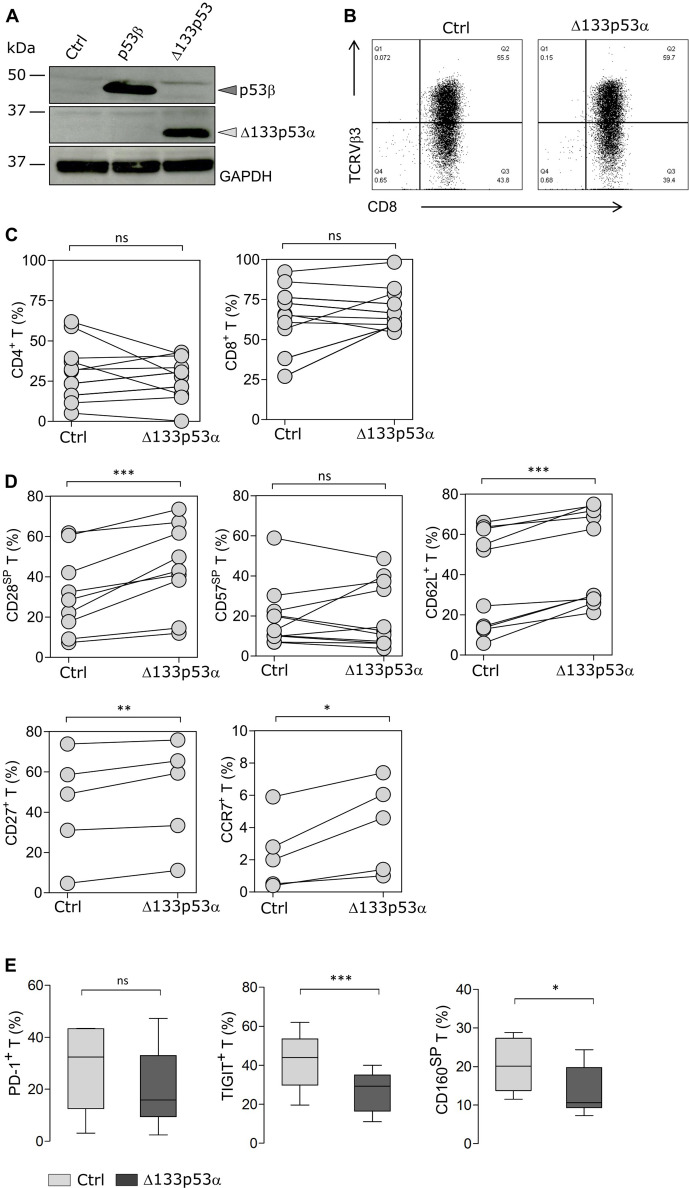
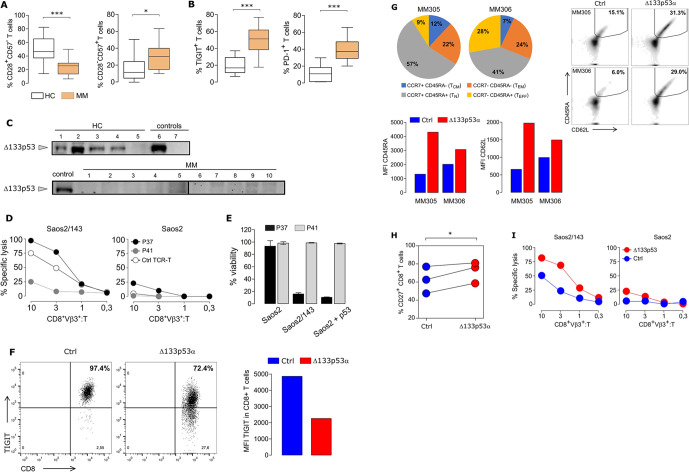
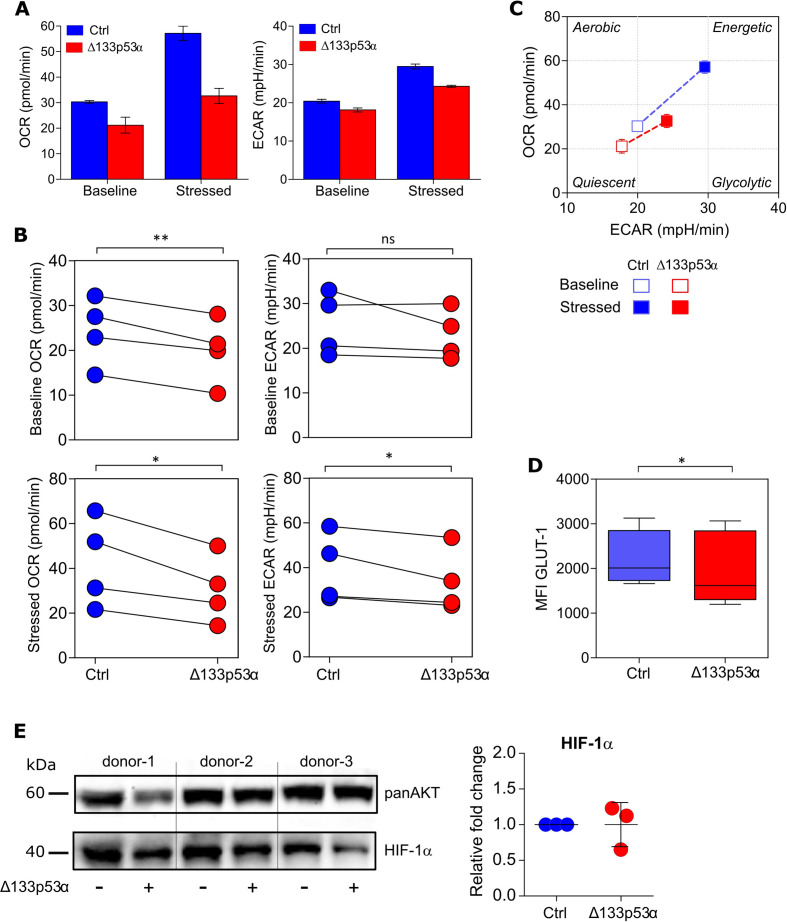
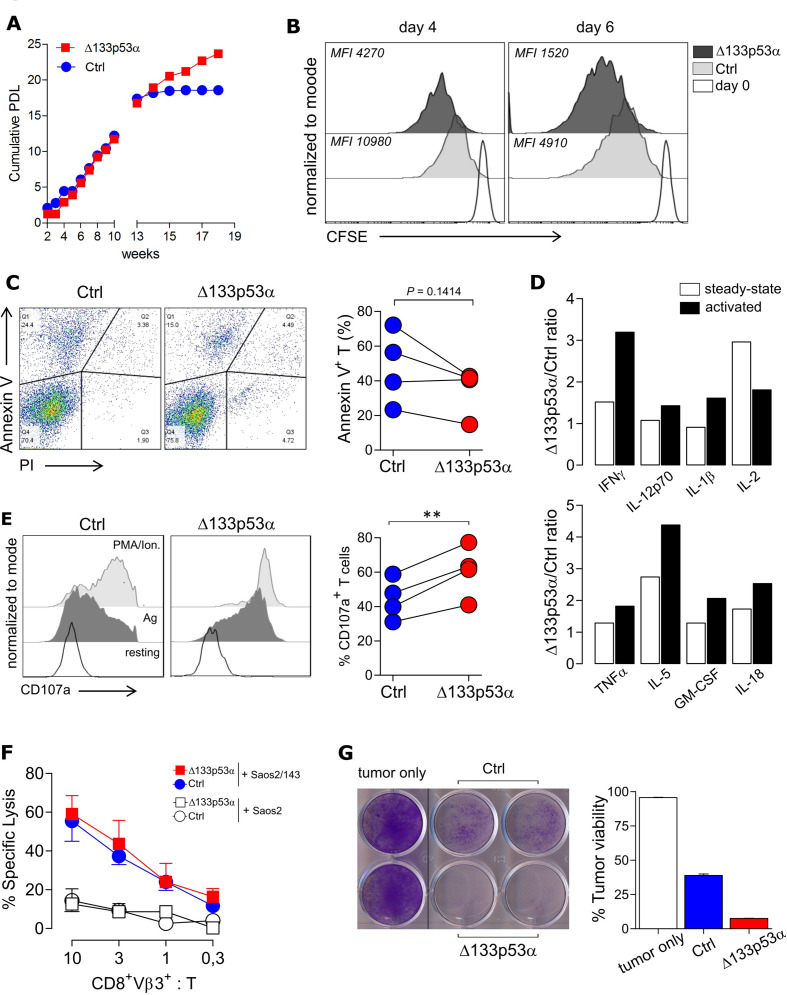
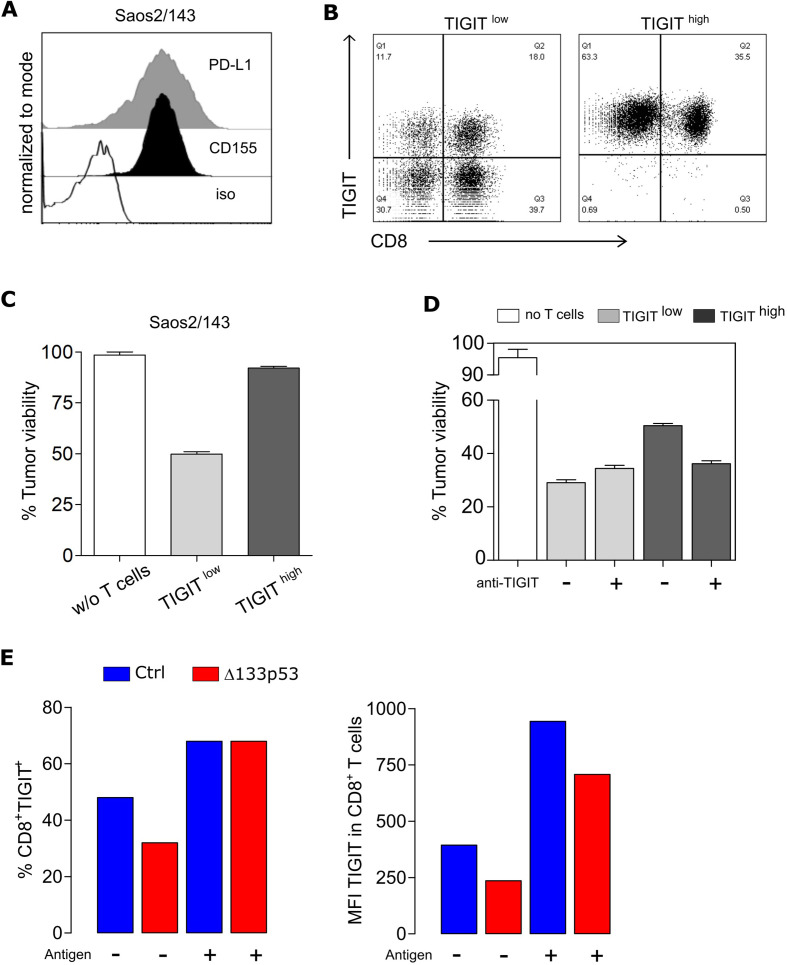
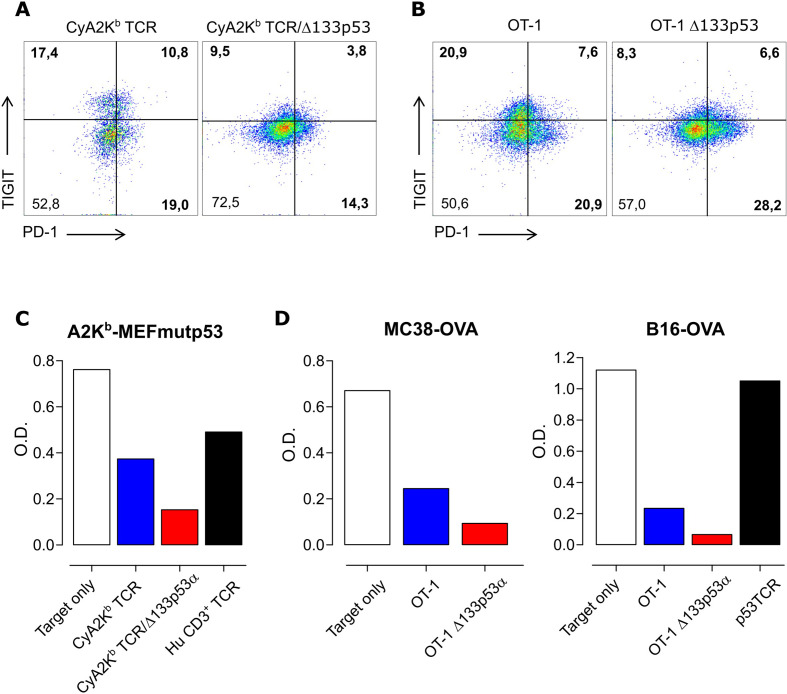
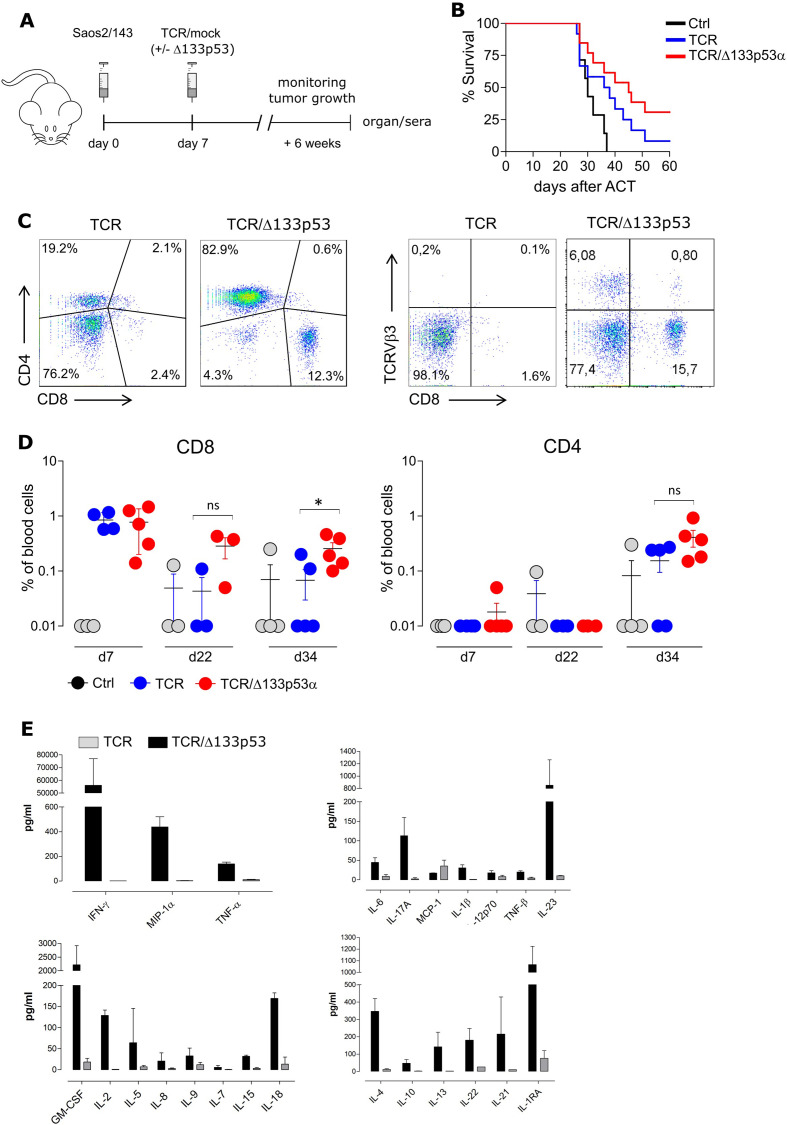
Phenotypic analysis of Δ133p53α-modified T cells revealed a marked reduction of the T-cell inhibitory molecules (ie, CD160 and TIGIT), a lower frequency of senescent-like CD57 and CD160 CD8 T cell populations, and an increased number of less differentiated CD28 T cells. Consistently, we demonstrated changes in the cellular metabolic program toward a quiescent T cell state. On a functional level, Δ133p53α-expressing T cells acquired a long-term proliferative capacity, showed superior cytokine secretion and enhanced tumor-specific killing in vitro and in mouse tumor model. Finally, we demonstrated the capacity of Δ133p53α to restore the antitumor response of senescent T cells isolated from multiple myeloma patients.
This study uncovered a broad effect of Δ133p53α isoform in regulating T lymphocyte function. Enhancing fitness and effector functions of senescent T cells by modulation of p53 isoforms could be exploited for future translational research to improve cancer immunotherapy and immunosenescence-related diseases.
肿瘤微环境相关 T 细胞衰老,是持久有效癌症免疫治疗的关键限制因素。少数研究表明,肿瘤抑制因子 TP53 衍生的 p53 异构体在非免疫细胞的细胞衰老过程中起着关键作用。然而,它们在淋巴细胞,尤其是肿瘤抗原(TA)特异性 T 细胞中的作用在很大程度上仍未得到探索。
通过逆转录病毒工程将人外周血 T 细胞共表达 TA 特异性 T 细胞受体和 Δ133p53α 异构体,并对其细胞表型、代谢谱和效应功能进行了表征。
Δ133p53α 修饰的 T 细胞的表型分析显示,T 细胞抑制分子(即 CD160 和 TIGIT)明显减少,衰老样 CD57 和 CD160 CD8 T 细胞群体的频率降低,以及较少分化的 CD28 T 细胞数量增加。一致地,我们证明了细胞代谢程序向静止 T 细胞状态的变化。在功能水平上,表达 Δ133p53α 的 T 细胞获得了长期增殖能力,表现出更好的细胞因子分泌能力,并在体外和小鼠肿瘤模型中增强了肿瘤特异性杀伤能力。最后,我们证明了 Δ133p53α 能够恢复从多发性骨髓瘤患者中分离出的衰老 T 细胞的抗肿瘤反应。
本研究揭示了 Δ133p53α 异构体在调节 T 淋巴细胞功能方面的广泛作用。通过调节 p53 异构体来增强衰老 T 细胞的适应性和效应功能,可以被用于未来的转化研究,以改善癌症免疫治疗和与免疫衰老相关的疾病。