Zhang Kai, Tao Changcheng, Wu Fan, Siqin Tana, Wu Jianxiong, Rong Weiqi
Department of Hepatobiliary Surgery, National Cancer Center/National Clinical Research Center for Cancer/Cancer Hospital, Chinese Academy of Medical Sciences (CAMS) and Peking Union Medical College (PUMC), Beijing, 100021, People's Republic of China.
Int J Gen Med. 2021 Jun 3;14:2259-2274. doi: 10.2147/IJGM.S303896. eCollection 2021.
The present study aimed to identify the risk factors for early postoperative recurrence of hepatocellular carcinoma (HCC) in patients with microvascular invasion (MVI) and develop a predictive model.
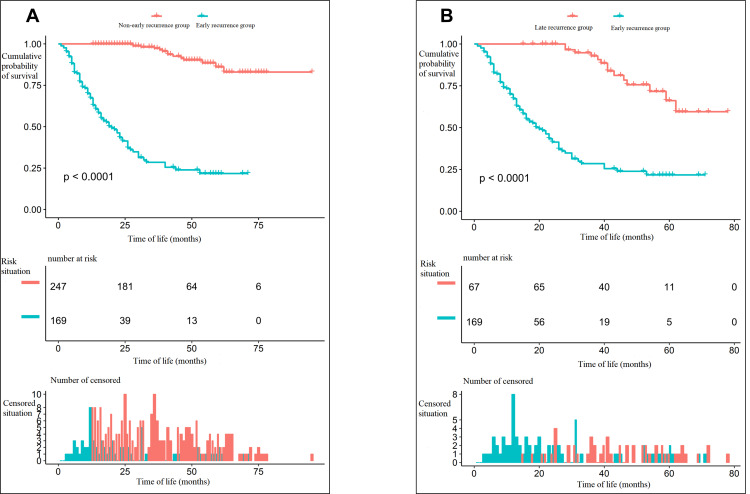
Patients who underwent surgery for HCC with pathological identification of MVI at the Cancer Hospital of the Chinese Academy of Medical Sciences from January 2014 to June 2019 were consecutively enrolled in this study. A total of 416 patients were included, divided into an early recurrence group (N = 169) and a non-early recurrence group (N = 247), taking 12 months as the cut-off point for early recurrence. Univariate and multivariate Cox analysis was adopted to screen for risk factors for recurrence, and independence of risk factors was determined by logistic regression analysis. All variables were included in the logistic regression analysis. As previous studies have shown that tumor diameter is a risk factor for recurrence, this was also included in the analyses. A predictive model for early recurrence was established and evaluated.
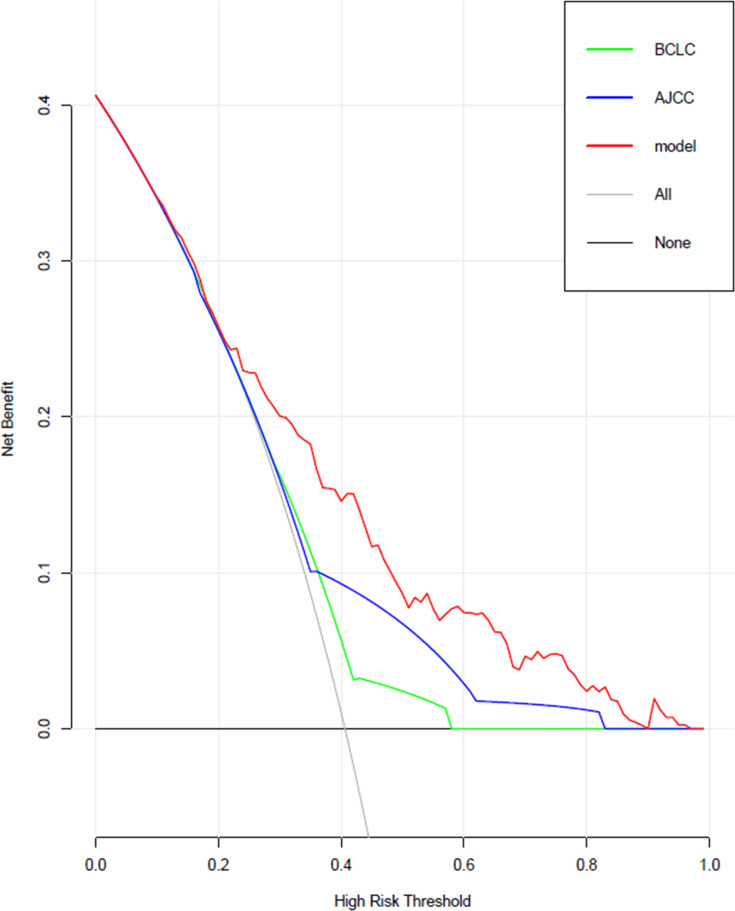
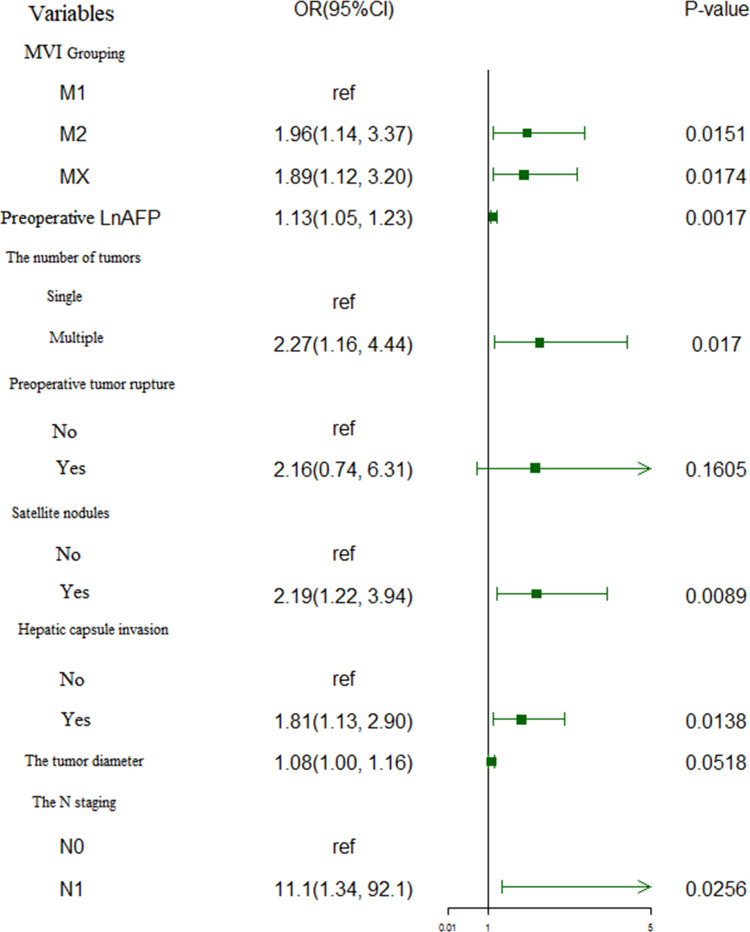
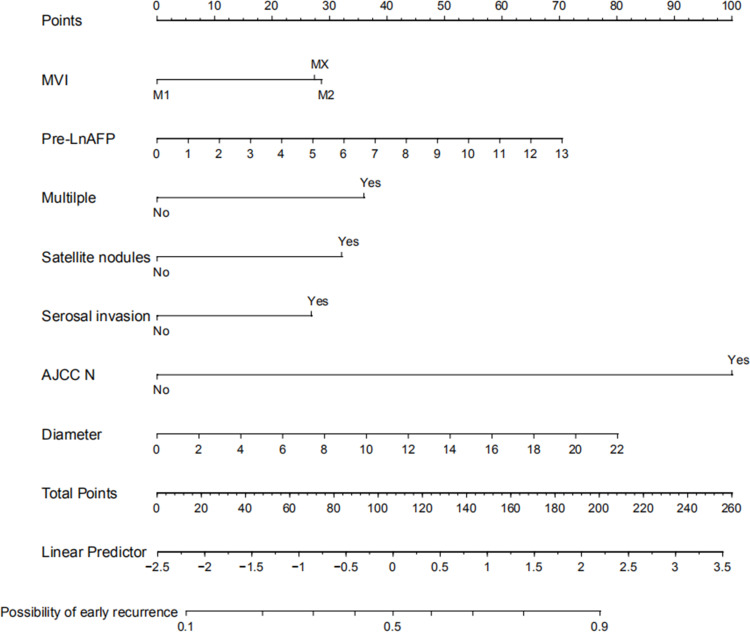
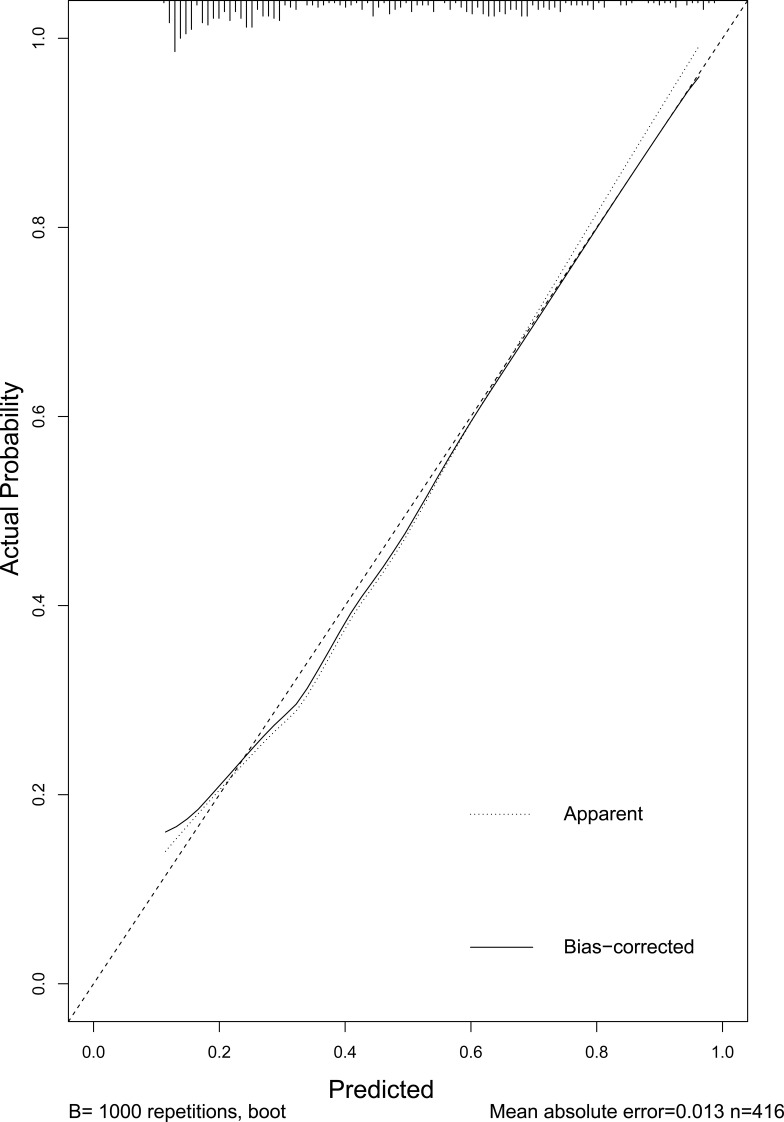
The results indicate that MVI grouping, preoperative serum AFP, number of tumors, satellite nodules, hepatic capsule invasion, tumor diameter, and lymph node metastasis are independent risk factors for early postoperative recurrence. The above factors were adopted to develop a predictive model. The model had good discrimination and calibration in predicting early postoperative recurrence. Decision curve analysis demonstrated good clinical utility.
MVI grouping, preoperative serum AFP, number of tumors, satellite nodules, hepatic capsule invasion, tumor diameter, and lymph node metastasis were shown to be independent risk factors for early postoperative recurrence. The predictive model developed by applying the above risk factors had good predictive value in patients with early postoperative recurrence.
本研究旨在确定微血管侵犯(MVI)患者肝细胞癌(HCC)术后早期复发的危险因素,并建立预测模型。
2014年1月至2019年6月在中国医学科学院肿瘤医院接受手术治疗且病理确诊为MVI的HCC患者连续纳入本研究。共纳入416例患者,分为早期复发组(N = 169)和非早期复发组(N = 247),以12个月作为早期复发的截断点。采用单因素和多因素Cox分析筛选复发危险因素,并通过逻辑回归分析确定危险因素的独立性。所有变量均纳入逻辑回归分析。由于既往研究表明肿瘤直径是复发的危险因素,因此也将其纳入分析。建立并评估早期复发的预测模型。
结果表明,MVI分组、术前血清甲胎蛋白、肿瘤数量、卫星结节、肝包膜侵犯、肿瘤直径和淋巴结转移是术后早期复发的独立危险因素。采用上述因素建立预测模型。该模型在预测术后早期复发方面具有良好的区分度和校准度。决策曲线分析显示出良好的临床实用性。
MVI分组、术前血清甲胎蛋白、肿瘤数量、卫星结节、肝包膜侵犯、肿瘤直径和淋巴结转移被证明是术后早期复发的独立危险因素。应用上述危险因素建立的预测模型对术后早期复发患者具有良好的预测价值。