Department of Neurology, Xinqiao Hospital, Army Medical University (Third Military Medical University), Chongqing, China.
Institute of Cardiovascular Diseases of PLA, Xinqiao Hospital, Army Medical University (Third Military Medical University), Chongqing, China.
J Am Heart Assoc. 2018 Feb 25;7(5):e005052. doi: 10.1161/JAHA.116.005052.
Neural precursor cell (NPC) migration toward lesions is key for neurological functional recovery. The neovasculature plays an important role in guiding NPC migration. MicroRNA-210 (miR-210) promotes angiogenesis and neurogenesis in the subventricular zone and hippocampus after cerebral ischemia; however, whether miR-210 regulates NPC migration and the underlying mechanism is still unclear. This study investigated the role of miR-210 in NPC migration.
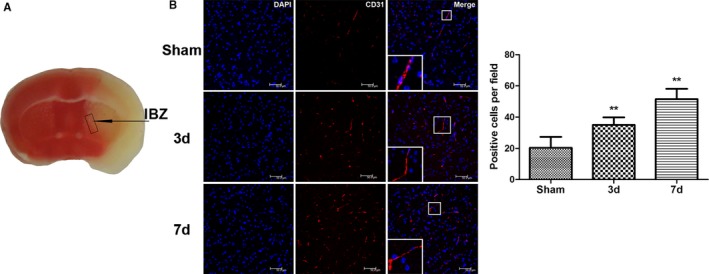
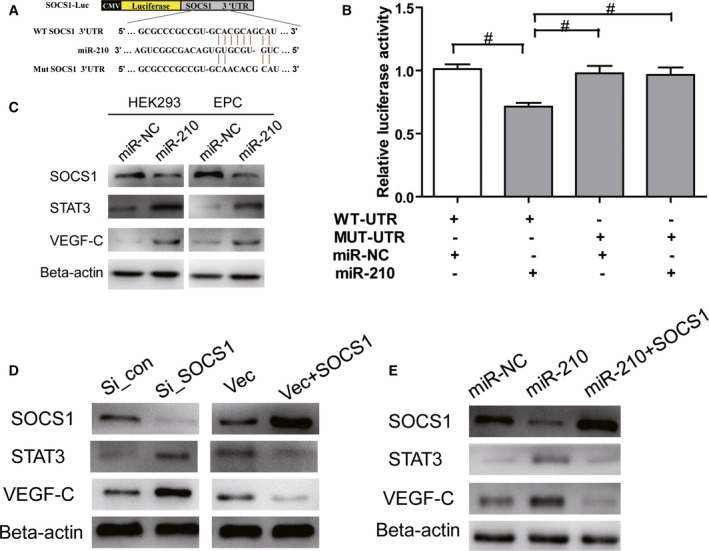
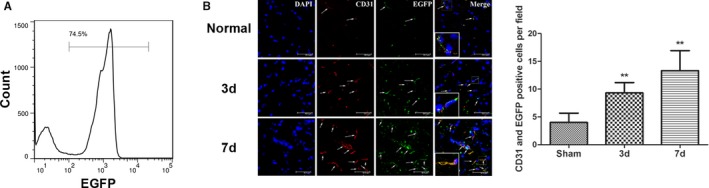
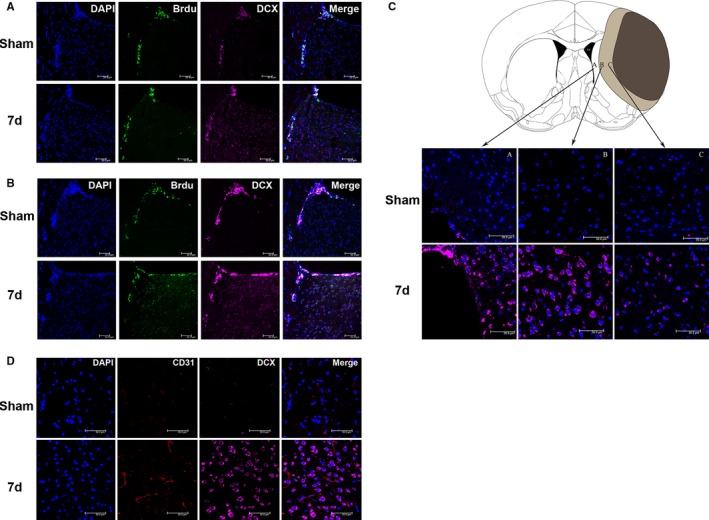
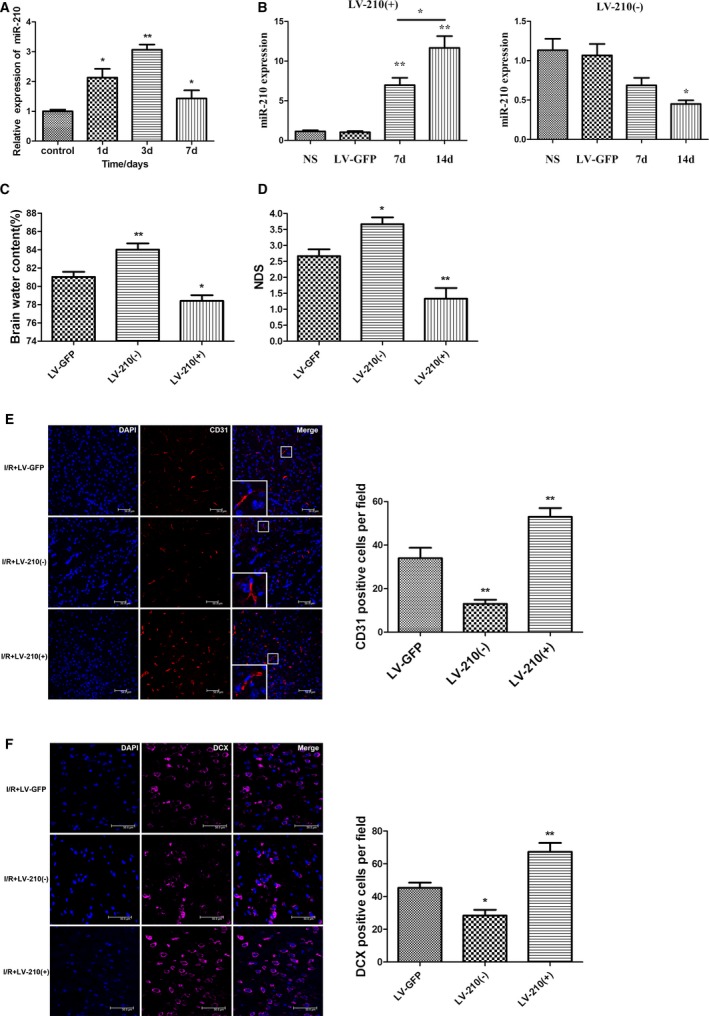
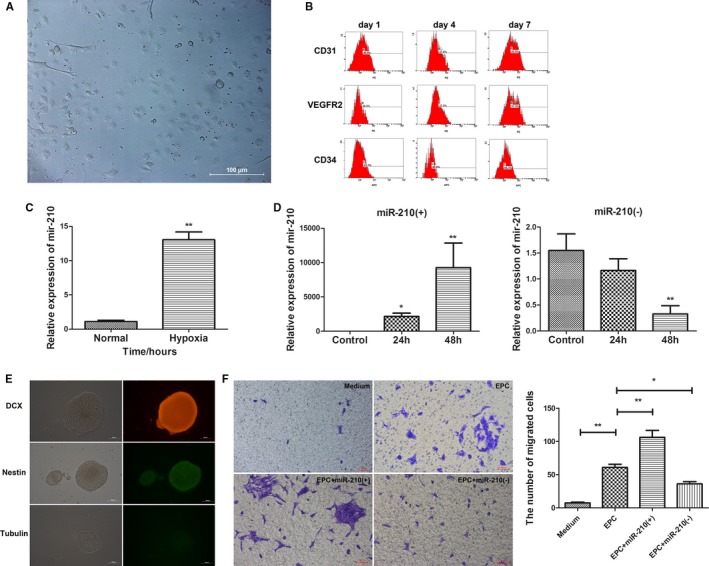
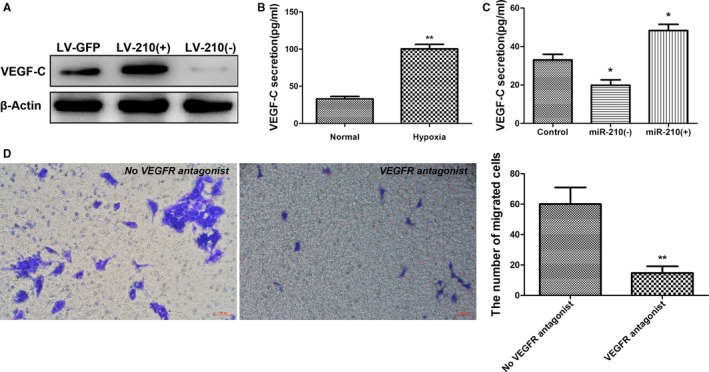
Neovascularization and NPC accumulation was detected around ischemic foci in a mouse model of middle cerebral artery occlusion (MCAO) and reperfusion. Bone marrow-derived endothelial progenitor cells (EPCs) were found to participate in neovascularization. miR-210 was markedly upregulated after focal cerebral ischemia/reperfusion. Overexpressed miR-210 enhanced neovascularization and NPC accumulation around the ischemic lesion and vice versa, strongly suggesting that miR-210 might be involved in neovascularization and NPC accumulation after focal cerebral ischemia/reperfusion. In vitro experiments were conducted to explore the underlying mechanism. The transwell assay showed that EPCs facilitated NPC migration, which was further promoted by miR-210 overexpression in EPCs. In addition, miR-210 facilitated VEGF-C (vascular endothelial growth factor C) expression both in vitro and in vivo. Moreover, the luciferase reporter assay demonstrated that miR-210 directly targeted the 3' untranslated region of SOCS1 (suppressor of cytokine signaling 1), and miR-210 overexpression in HEK293 cells or EPCs decreased SOCS1 and increased STAT3 (signal transducer and activator of transcription 3) and VEGF-C expression. When EPCs were simultaneously transfected with miR-210 mimics and SOCS1, the expression of STAT3 and VEGF-C was reversed.
miR-210 promoted neovascularization and NPC migration via the SOCS1-STAT3-VEGF-C pathway.
神经前体细胞(NPC)向病变部位迁移对于神经功能恢复至关重要。新生血管在引导 NPC 迁移中发挥重要作用。微小 RNA-210(miR-210)在脑缺血后的侧脑室和海马区促进血管生成和神经发生;然而,miR-210 是否调节 NPC 迁移及其潜在机制尚不清楚。本研究探讨了 miR-210 在 NPC 迁移中的作用。
在大脑中动脉闭塞(MCAO)再灌注的小鼠模型中,检测缺血灶周围的新血管生成和 NPC 聚集。发现骨髓源性内皮祖细胞(EPC)参与新血管生成。局灶性脑缺血再灌注后,miR-210 明显上调。过表达 miR-210 增强了缺血性损伤周围的新血管生成和 NPC 聚集,反之亦然,强烈表明 miR-210 可能参与局灶性脑缺血再灌注后的新血管生成和 NPC 聚集。进行了体外实验以探讨潜在机制。Transwell 测定表明 EPC 促进 NPC 迁移,而过表达 miR-210 的 EPC 进一步促进 NPC 迁移。此外,miR-210 在体外和体内均促进 VEGF-C(血管内皮生长因子 C)的表达。此外,荧光素酶报告基因测定表明,miR-210 直接靶向 SOCS1(细胞因子信号转导抑制因子 1)的 3'非翻译区,而 HEK293 细胞或 EPC 中转染 miR-210 模拟物可降低 SOCS1 并增加 STAT3(信号转导和转录激活因子 3)和 VEGF-C 的表达。当 EPC 同时转染 miR-210 模拟物和 SOCS1 时,STAT3 和 VEGF-C 的表达被逆转。
miR-210 通过 SOCS1-STAT3-VEGF-C 通路促进新血管生成和 NPC 迁移。