Rezghi Barez Shekufe, Movahedian Attar Ahmad, Aghaei Mahmoud
Department of Clinical Biochemistry, School of Pharmacy & Pharmaceutical Sciences, Isfahan University of Medical Sciences, Isfahan, Iran.
EXCLI J. 2021 May 25;20:922-934. doi: 10.17179/excli2020-2970. eCollection 2021.
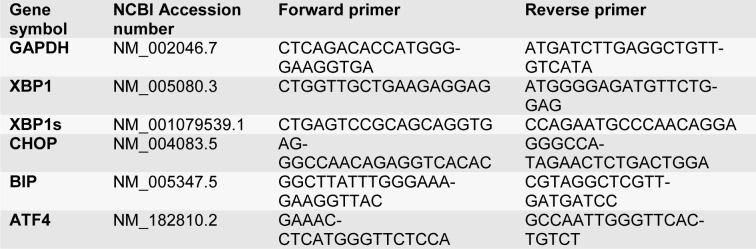
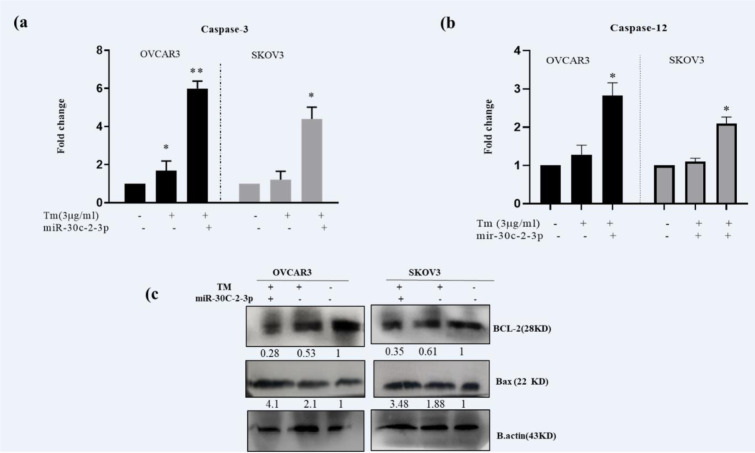
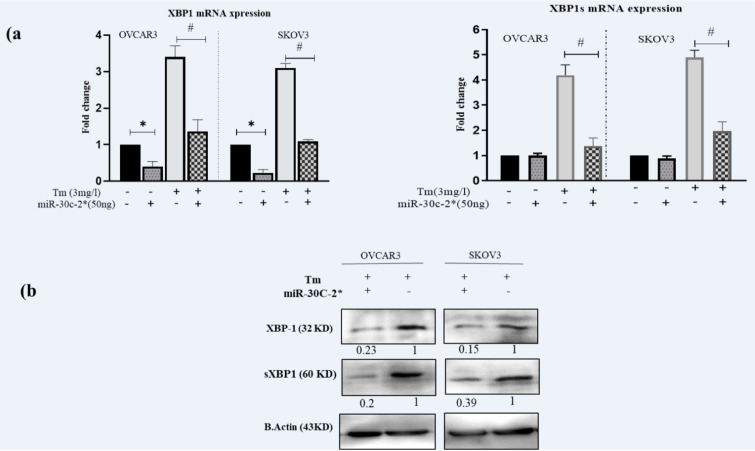
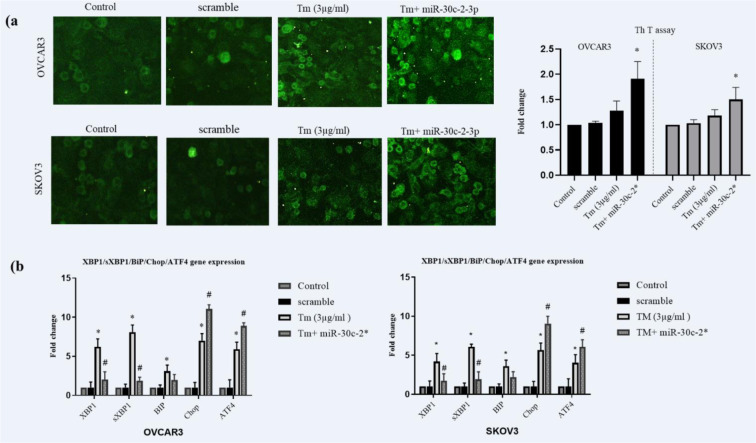
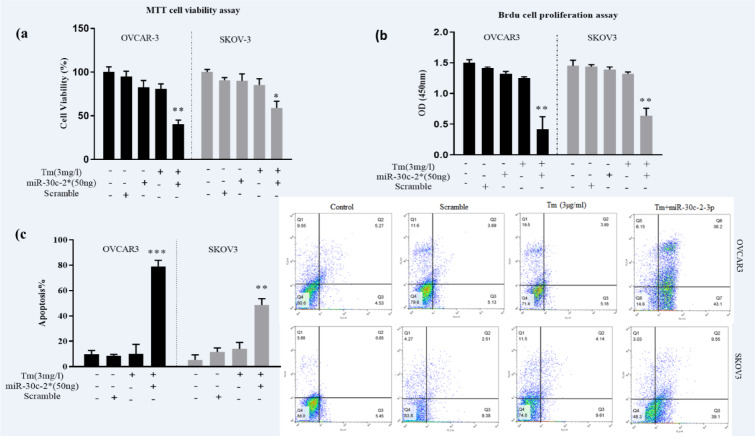
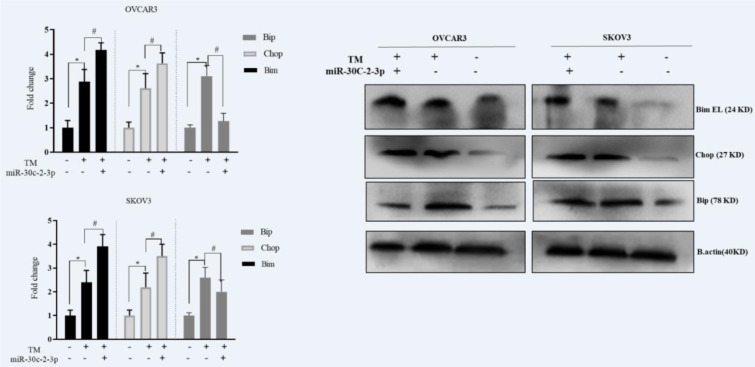
Ovarian cancer is a common gynecologic cancer with a high rate of recurrence, drug resistance, and mortality, thereby necessitating novel molecular target therapies. Ovarian cancer as a solid tumor has constantly been challenged by endoplasmic reticulum stress (ERS). Currently, XBP1 as a therapeutic target in solid tumors plays a key role in adaptation to ERS. Single-stranded RNAs usually modulate posttranscriptional of the gene activity. miR-30c-2-3p has been demonstrated to inhibit the expression of XBP1. Here, we evaluated the effect of miR-30c-2-3p on controlling XBP1-CHOP-BIM and its apoptotic effects on ovarian cancer cell lines during ERS. The ER stress was assessed using Thioflavin T staining in OVCAR3 and SKOV3 cells. The expression of ER stress genes was measured by QRT-PCR. The protein levels of XBP1(s), BIP/GRP78, CHOP, and BIM were evaluated using Western blotting. Cell viability and apoptosis in STF-083010 and Tunicamycin (Tm) co-treated cells were evaluated using BrdU, MTT, Annexin V-FITC/PI staining, and caspase-12 and -3 activities assays. We found that miR-30c-2-3p significantly decreased the folding capacity of ER, leading to ERS intensification (P<0.05). Additionally, the Western blot analysis showed the modest up-regulation of CHOP and BIM with pro-apoptotic activity and down-regulation of the BIP protein. Furthermore, mimic miR-30c-2-3p transfection not only decreased cell proliferation but also induced cell death in ovarian cancer cells in response to the Tm-treatment. Our results indicated that the apoptotic pathway was induced possibly through activation of caspases -12 and -3 and elevation of the Bax/Bcl-2 ratio. Overall, the present paper adds new evidence to the possible treatment of miR-30c-2-3p via impeding the XBP1 transcription in ovarian cancer cells provoking apoptotic pathways by XBP1/CHOP/BIM mediators.
卵巢癌是一种常见的妇科癌症,复发率、耐药性和死亡率都很高,因此需要新的分子靶向治疗。作为实体瘤的卵巢癌一直受到内质网应激(ERS)的挑战。目前,XBP1作为实体瘤的治疗靶点,在适应ERS中起关键作用。单链RNA通常调节基因活性的转录后过程。已证明miR-30c-2-3p可抑制XBP1的表达。在此,我们评估了miR-30c-2-3p在ERS期间对控制XBP1-CHOP-BIM的作用及其对卵巢癌细胞系的凋亡作用。使用硫黄素T染色评估OVCAR3和SKOV3细胞中的内质网应激。通过QRT-PCR测量内质网应激基因的表达。使用蛋白质印迹法评估XBP1(s)、BIP/GRP78、CHOP和BIM的蛋白质水平。使用BrdU、MTT、膜联蛋白V-FITC/PI染色以及半胱天冬酶-12和-3活性测定评估STF-083010和衣霉素(Tm)共同处理的细胞中的细胞活力和凋亡情况。我们发现miR-30c-2-3p显著降低了内质网的折叠能力,导致内质网应激加剧(P<0.05)。此外,蛋白质印迹分析显示具有促凋亡活性的CHOP和BIM适度上调,而BIP蛋白下调。此外,模拟miR-30c-2-3p转染不仅降低了卵巢癌细胞的增殖,还诱导了其在Tm处理后的细胞死亡。我们的结果表明,凋亡途径可能是通过激活半胱天冬酶-12和-3以及提高Bax/Bcl-2比值来诱导的。总体而言,本文通过阻碍XBP1转录,为miR-30c-2-3p在卵巢癌细胞中引发由XBP1/CHOP/BIM介导的凋亡途径的可能治疗提供了新证据。