Aging and Metabolism Research Program, Oklahoma Medical Research Foundation, Oklahoma City, OK 73104, USA.
Function (Oxf). 2021 May 10;2(4):zqab028. doi: 10.1093/function/zqab028. eCollection 2021.
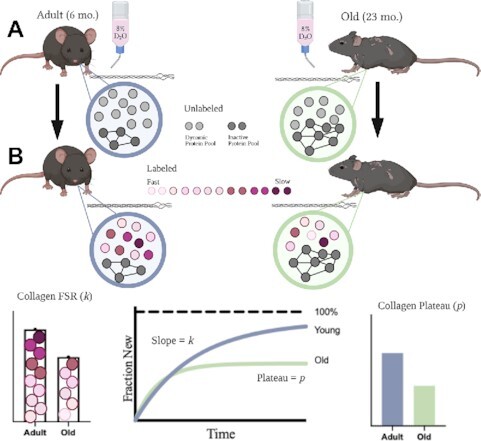
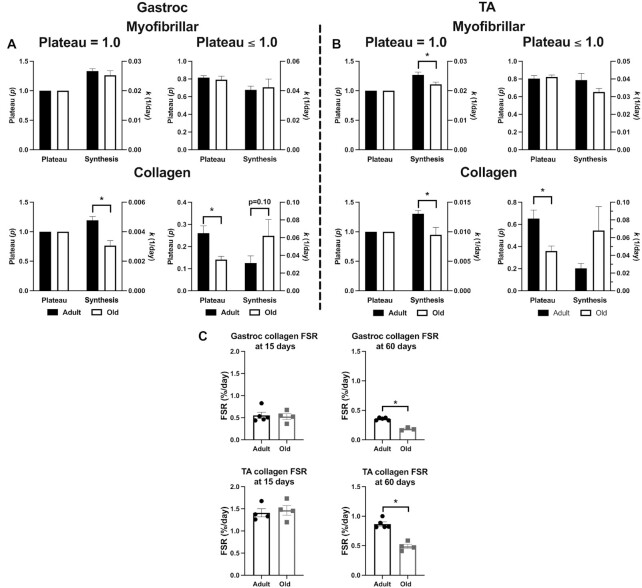
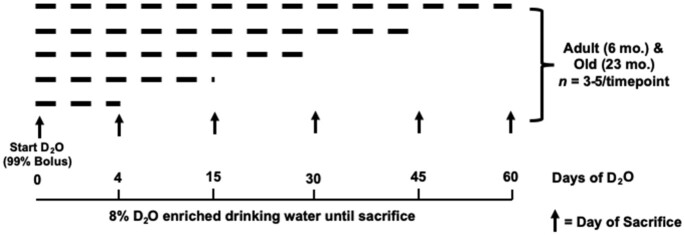
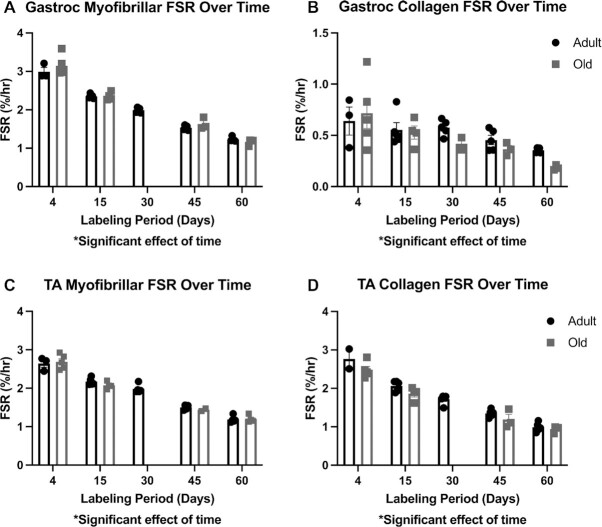
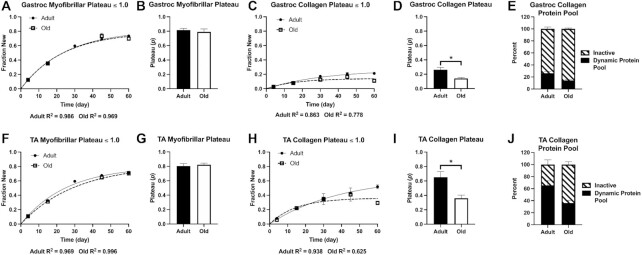
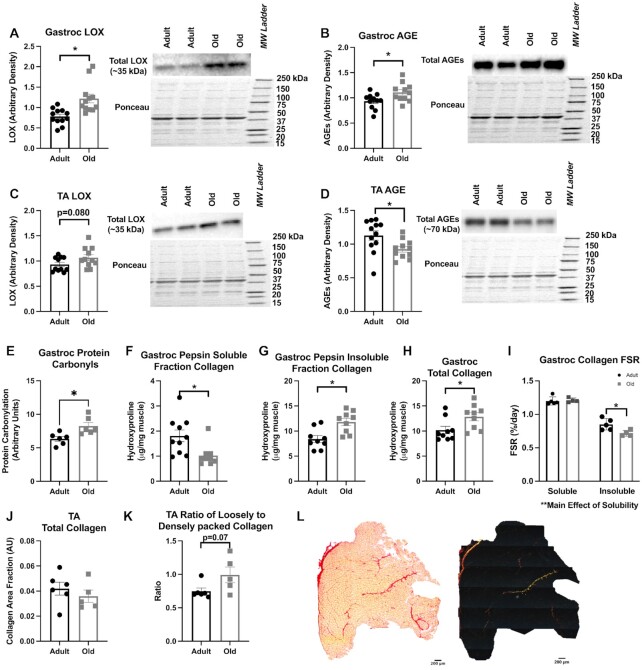
Age-related deterioration in turnover of collagen proteins accelerates extracellular matrix fibrosis and hinders adaptation to external stimuli. This project sought to understand factors that increase skeletal muscle fibrosis with age by studying what we term the dynamic protein pool. We hypothesized that the dynamic protein pool size of muscle collagen decreases with age, thus indicating a decrease in proteostatic maintenance (ie, ability to maintain proteostasis), and that failure to account for these changes impacts the interpretation of tracer-measured synthesis rates. We used deuterium oxide (DO) labeling for up to 60 days in adult (6 months) and old (23 months) mice. The dynamic protein pool in adult skeletal muscle was 65% in tibialis anterior (TA), but only 28% in gastrocnemius (Gastroc). In aged muscle, the dynamic protein pool was further decreased to only 35% and 14% for TA and Gastroc, respectively. We showed that this loss in dynamic pool size was associated with increases in markers of fibrosis and decreased proteostatic maintenance. We demonstrate that aged muscle has higher rates of collagen protein synthesis and lower rates of collagen protein breakdown, which causes collagen accumulation. We further demonstrated that the normal assumption of complete protein renewal and the standard practice of taking a single sample with isotope labeling have profound impacts on interpretation of the genesis of fibrosis. Strategies to maintain muscle function with aging should focus on the dynamic protein pool with attention to methodological strategies to assess those changes.
年龄相关的胶原蛋白周转率下降加速细胞外基质纤维化,并阻碍对外部刺激的适应。本研究旨在通过研究我们所谓的动态蛋白池来了解导致骨骼肌纤维化随年龄增长的因素。我们假设肌肉胶原蛋白的动态蛋白池大小随年龄的增长而减少,这表明蛋白质稳态维持能力(即维持蛋白质稳态的能力)下降,并且未能考虑到这些变化会影响示踪剂测量的合成率的解释。我们使用氘氧化(DO)标记在成年(6 个月)和老年(23 个月)小鼠中进行长达 60 天的标记。成年骨骼肌中的动态蛋白池在前胫骨(TA)中为 65%,但在比目鱼肌(Gastroc)中仅为 28%。在老年肌肉中,动态蛋白池进一步减少到 TA 和 Gastroc 中的分别为 35%和 14%。我们表明,这种动态池大小的损失与纤维化标志物的增加和蛋白质稳态维持能力的降低有关。我们证明了老年肌肉具有更高的胶原蛋白蛋白合成率和更低的胶原蛋白蛋白分解率,这导致了胶原蛋白的积累。我们进一步证明,假设蛋白质完全更新和同位素标记单次取样的标准做法对纤维化发生的解释具有深远的影响。随着年龄的增长,维持肌肉功能的策略应侧重于动态蛋白池,并注意评估这些变化的方法策略。