Wisconsin National Primate Research Center, University of Wisconsin, Madison, WI, USA.
Waisman Center, Graduate School, University of Wisconsin, Madison, WI, USA.
Endocrinology. 2021 Sep 1;162(9). doi: 10.1210/endocr/bqab120.
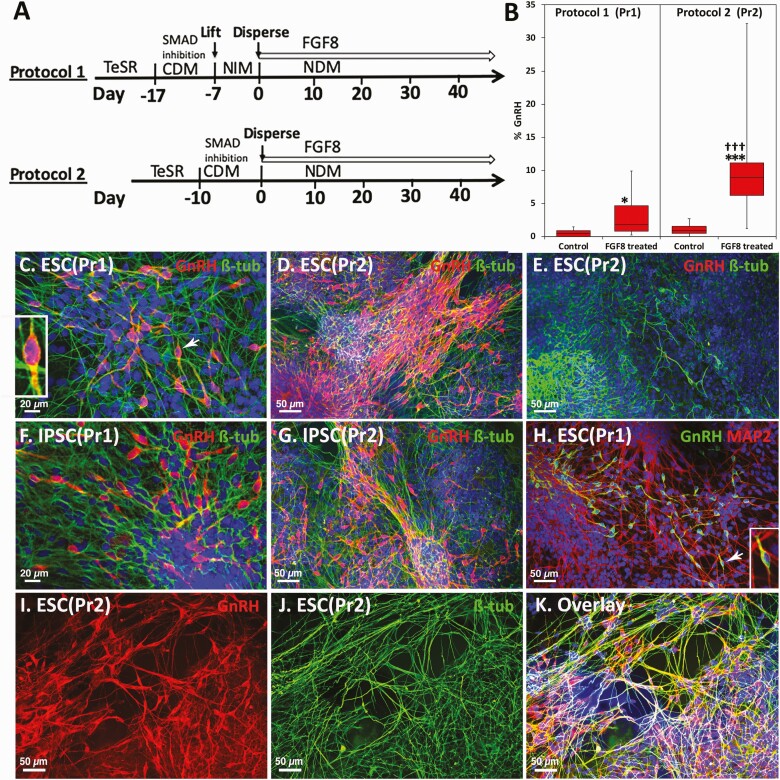
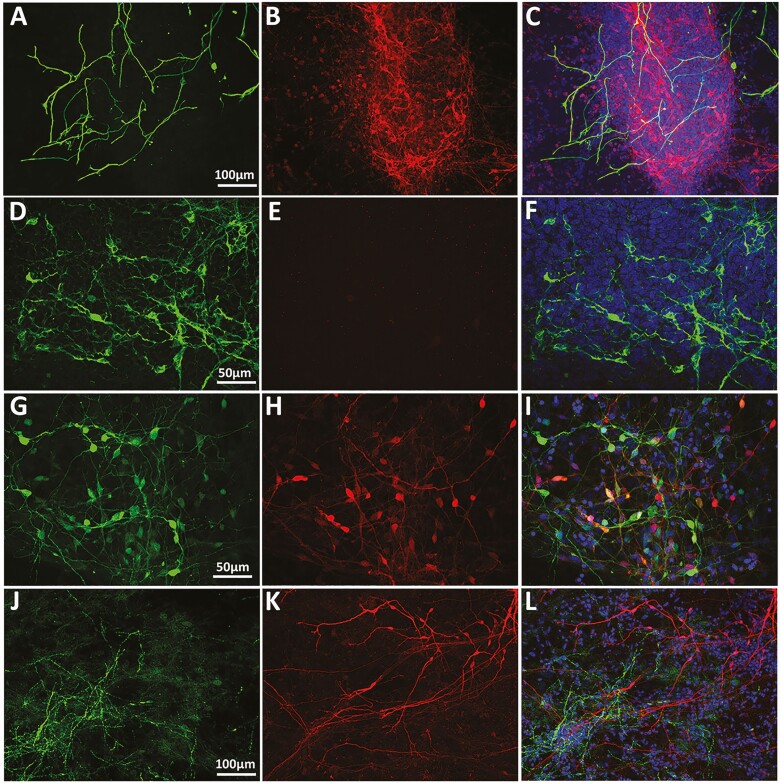
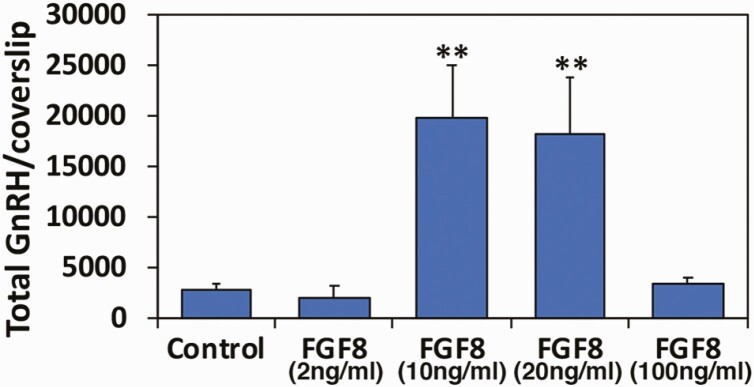
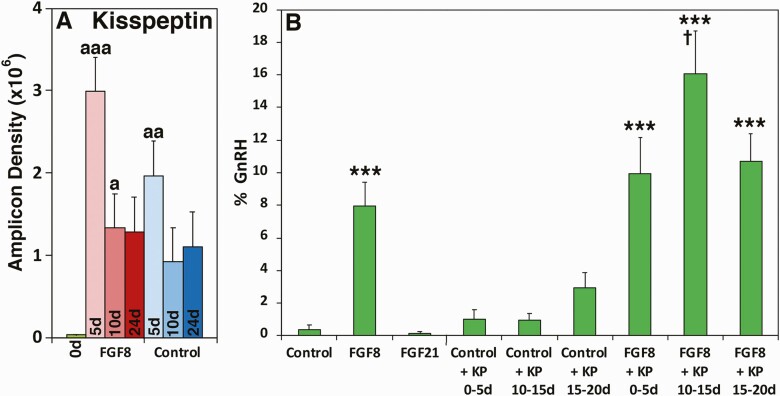
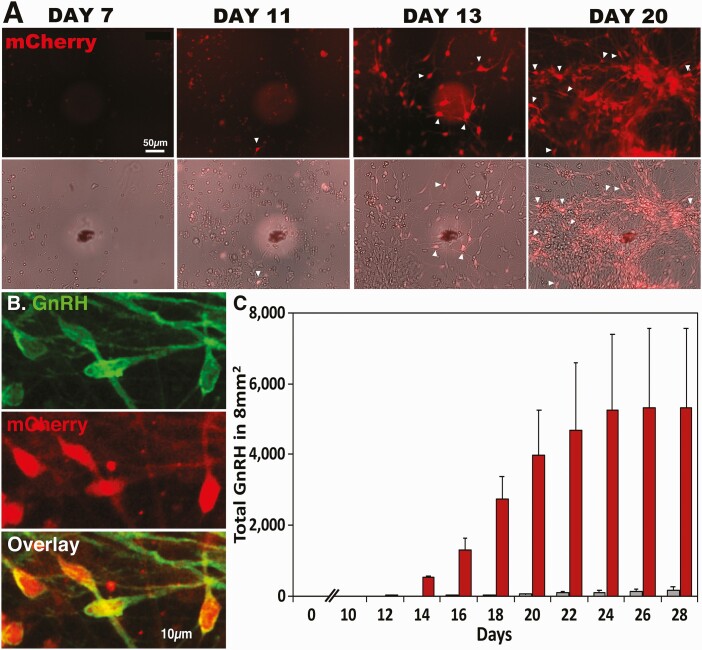
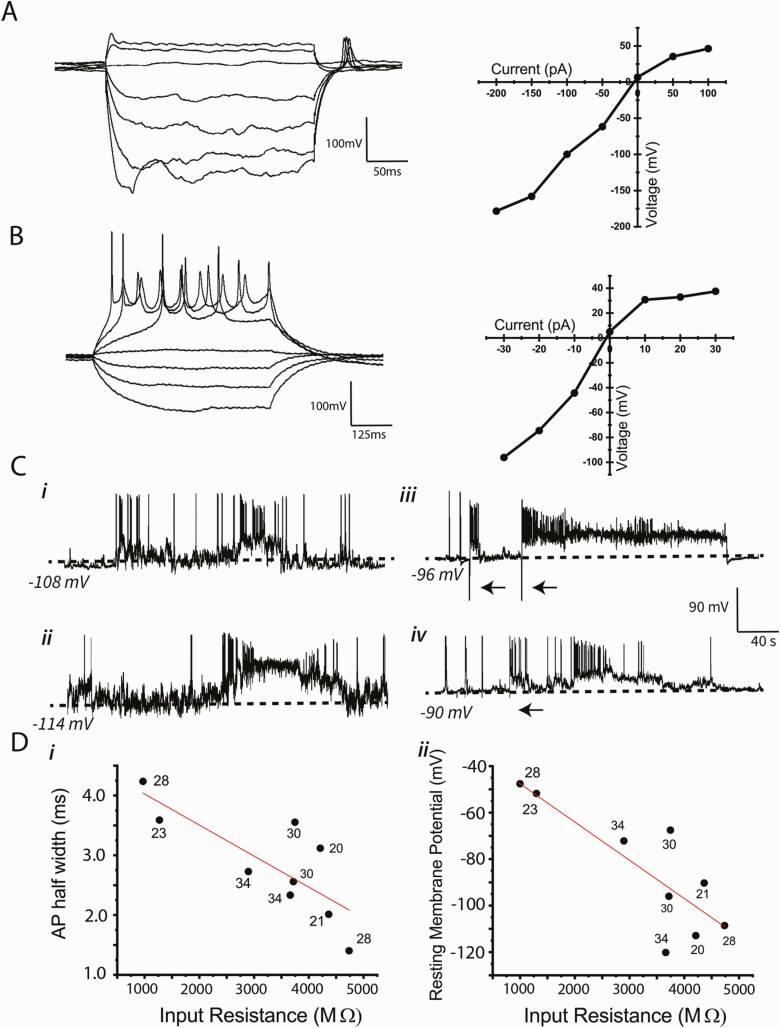
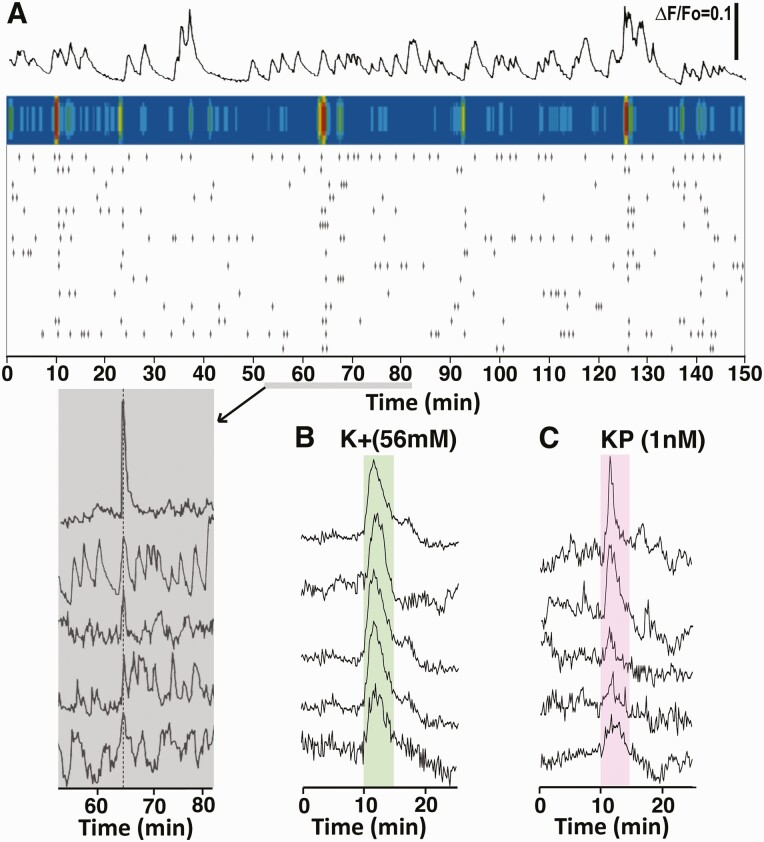
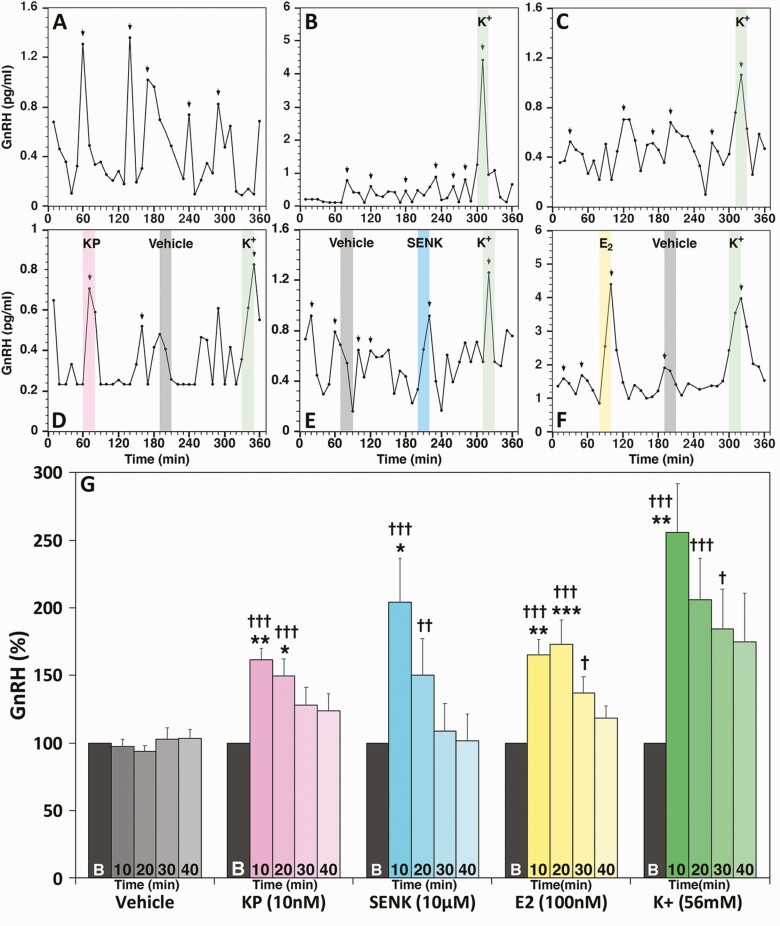
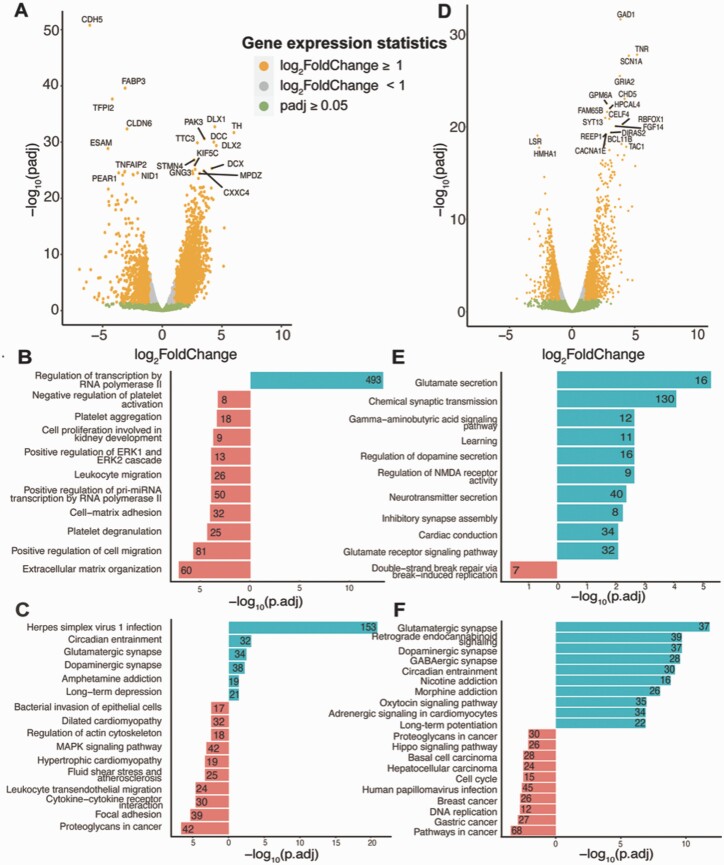
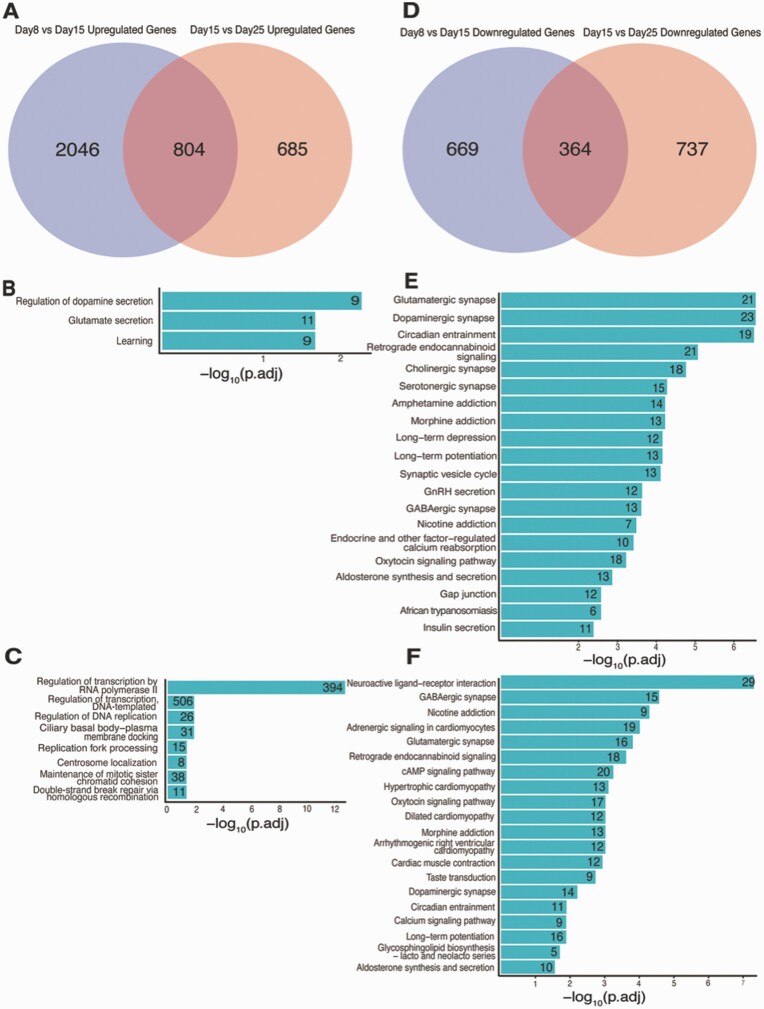
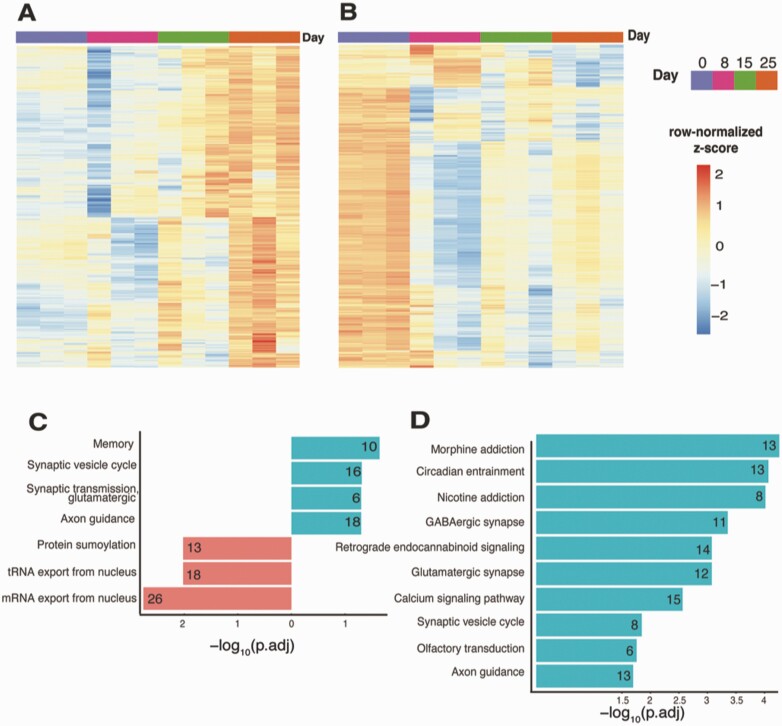
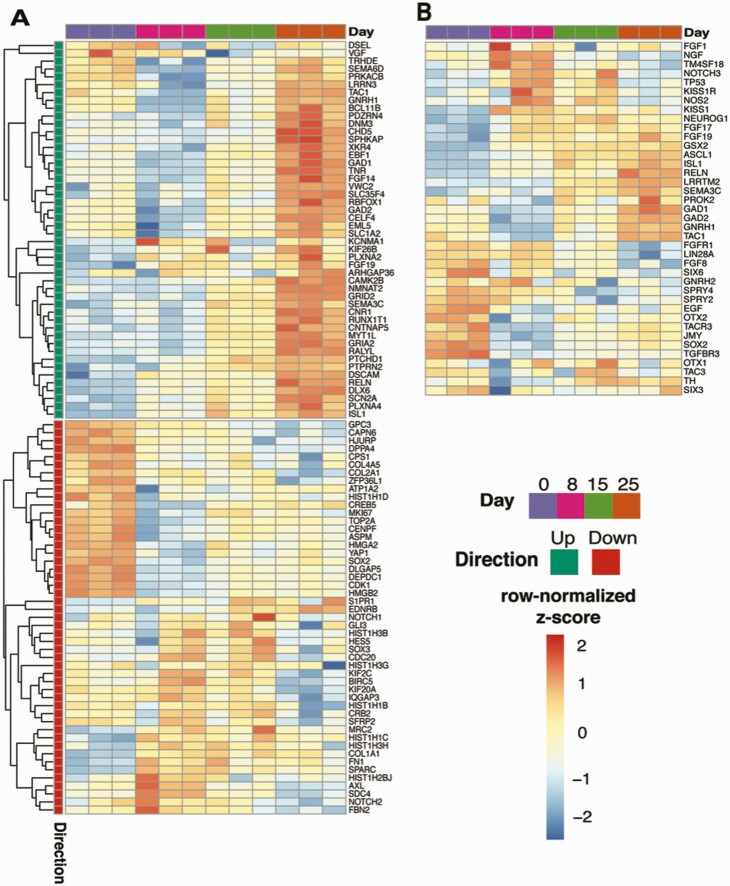
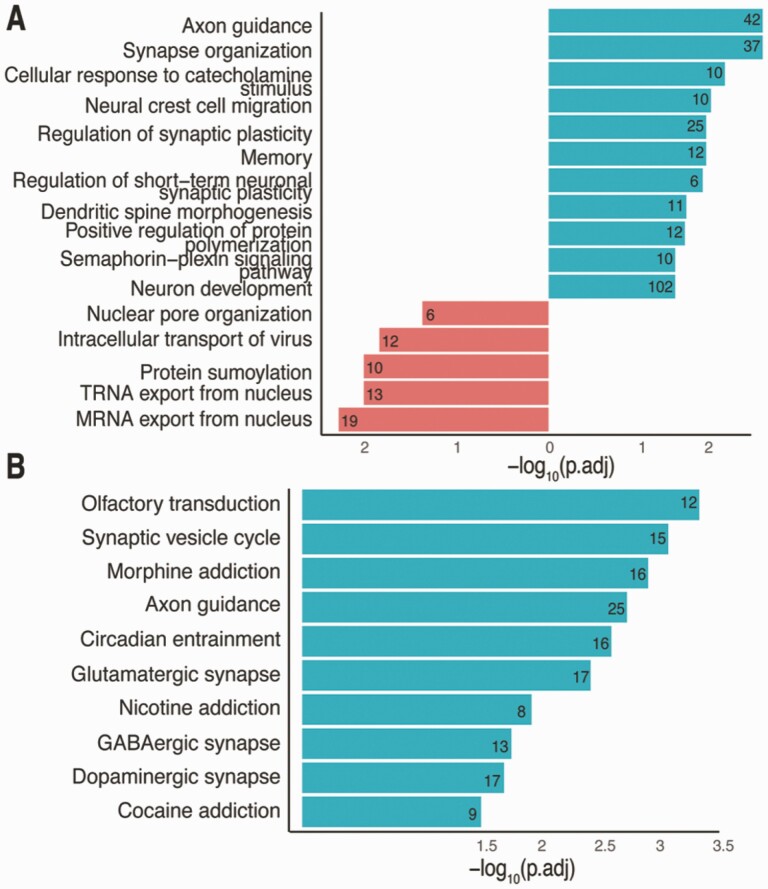
Gonadotropin-releasing hormone (GnRH) neurons in the hypothalamus play a key role in the regulation of reproductive function. In this study, we sought an efficient method for generating GnRH neurons from human embryonic and induced pluripotent stem cells (hESC and hiPSC, respectively). First, we found that exposure of primitive neuroepithelial cells, rather than neuroprogenitor cells, to fibroblast growth factor 8 (FGF8), was more effective in generating GnRH neurons. Second, addition of kisspeptin to FGF8 further increased the efficiency rates of GnRH neurogeneration. Third, we generated a fluorescent marker mCherry labeled human embryonic GnRH cell line (mCh-hESC) using a CRISPR-Cas9 targeting approach. Fourth, we examined physiological characteristics of GnRH (mCh-hESC) neurons: similar to GnRH neurons in vivo, they released the GnRH peptide in a pulsatile manner at ~60 min intervals; GnRH release increased in response to high potassium, kisspeptin, estradiol, and neurokinin B challenges; and injection of depolarizing current induced action potentials. Finally, we characterized developmental changes in transcriptomes of GnRH neurons using hESC, hiPSC, and mCh-hESC. The developmental pattern of transcriptomes was remarkably similar among the 3 cell lines. Collectively, human stem cell-derived GnRH neurons will be an important tool for establishing disease models to understand diseases, such as idiopathic hypothalamic hypogonadism, and testing contraceptive drugs.
下丘脑的促性腺激素释放激素 (GnRH) 神经元在生殖功能调节中发挥着关键作用。在这项研究中,我们试图寻找一种从人胚胎和诱导多能干细胞 (hESC 和 hiPSC) 中生成 GnRH 神经元的有效方法。首先,我们发现原始神经上皮细胞(而非神经祖细胞)暴露于成纤维细胞生长因子 8 (FGF8) 更有效地生成 GnRH 神经元。其次,添加 kisspeptin 到 FGF8 进一步提高了 GnRH 神经生成的效率。第三,我们使用 CRISPR-Cas9 靶向方法生成了一个荧光标记 mCherry 标记的人胚胎 GnRH 细胞系 (mCh-hESC)。第四,我们研究了 GnRH (mCh-hESC) 神经元的生理特征:与体内 GnRH 神经元相似,它们以约 60 分钟的间隔以脉冲方式释放 GnRH 肽;高钾、kisspeptin、雌二醇和神经激肽 B 刺激可增加 GnRH 释放;去极化电流的注入可诱导动作电位。最后,我们使用 hESC、hiPSC 和 mCh-hESC 研究了 GnRH 神经元的转录组的发育变化。这 3 种细胞系的转录组发育模式非常相似。总之,人干细胞衍生的 GnRH 神经元将成为建立疾病模型的重要工具,以了解特发性下丘脑性性腺功能减退症等疾病,并测试避孕药物。