Dong Jiawen, Rees D Aled
Neuroscience and Mental Health Innovation Institute, School of Medicine, Cardiff University, Cardiff, UK.
BMJ Med. 2023 Oct 12;2(1):e000548. doi: 10.1136/bmjmed-2023-000548. eCollection 2023.
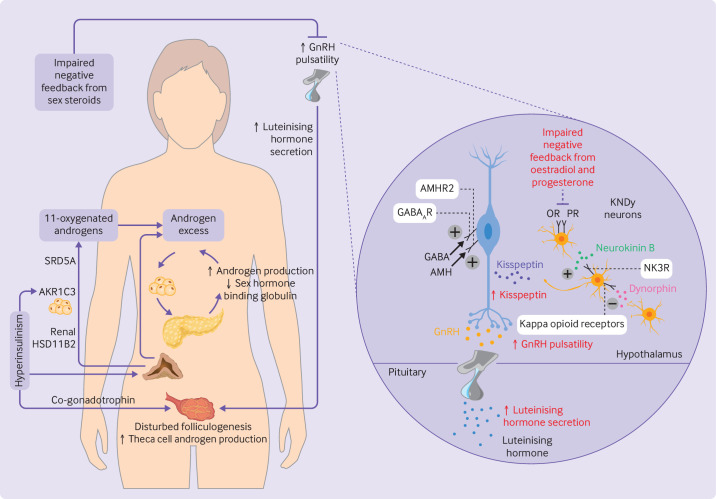
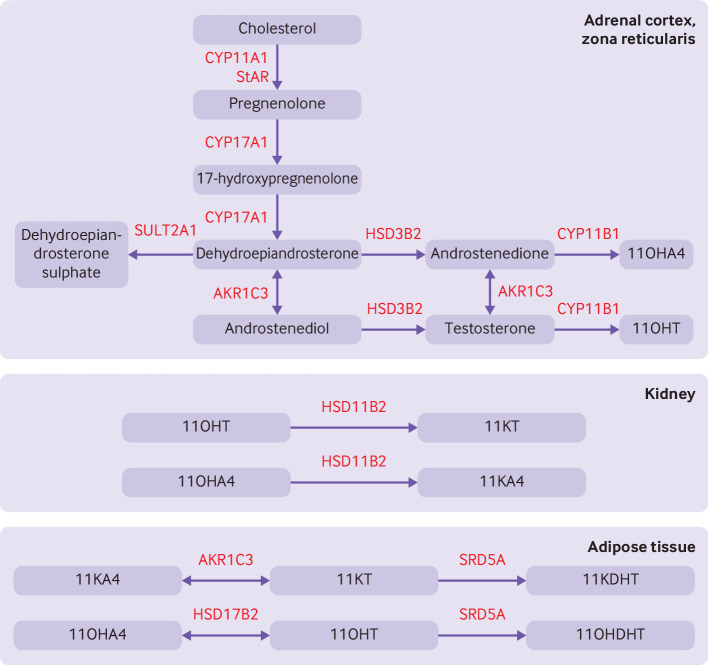
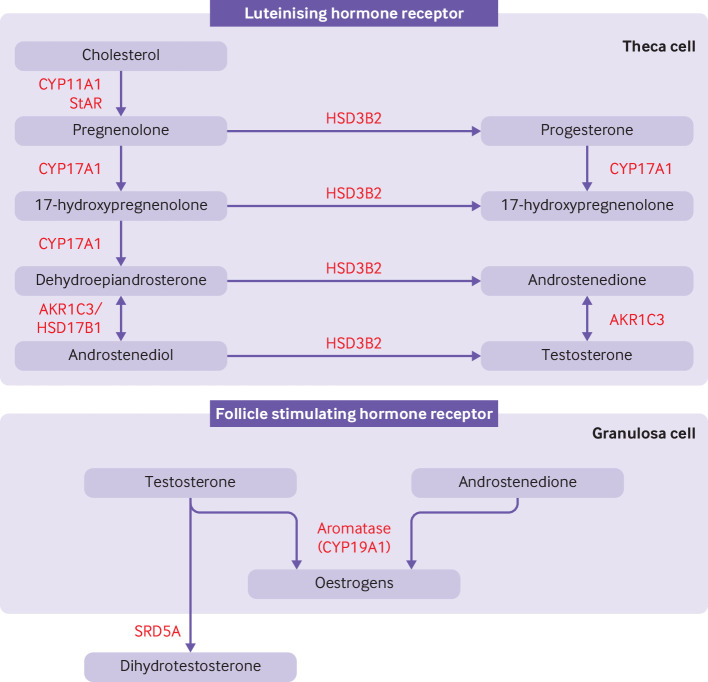
Polycystic ovary syndrome is characterised by excessive levels of androgens and ovulatory dysfunction, and is a common endocrine disorder in women of reproductive age. Polycystic ovary syndrome arises as a result of polygenic susceptibility in combination with environmental influences that might include epigenetic alterations and in utero programming. In addition to the well recognised clinical manifestations of hyperandrogenism and ovulatory dysfunction, women with polycystic ovary syndrome have an increased risk of adverse mental health outcomes, pregnancy complications, and cardiometabolic disease. Unlicensed treatments have limited efficacy, mostly because drug development has been hampered by an incomplete understanding of the underlying pathophysiological processes. Advances in genetics, metabolomics, and adipocyte biology have improved our understanding of key changes in neuroendocrine, enteroendocrine, and steroidogenic pathways, including increased gonadotrophin releasing hormone pulsatility, androgen excess, insulin resistance, and changes in the gut microbiome. Many patients with polycystic ovary syndrome have high levels of 11-oxygenated androgens, with high androgenic potency, that might mediate metabolic risk. These advances have prompted the development of new treatments, including those that target the neurokinin-kisspeptin axis upstream of gonadotrophin releasing hormone, with the potential to lessen adverse clinical sequelae and improve patient outcomes.
多囊卵巢综合征的特征是雄激素水平过高和排卵功能障碍,是育龄女性常见的内分泌疾病。多囊卵巢综合征是由多基因易感性与环境影响共同导致的,环境影响可能包括表观遗传改变和子宫内编程。除了公认的高雄激素血症和排卵功能障碍的临床表现外,多囊卵巢综合征女性出现不良心理健康结果、妊娠并发症和心血管代谢疾病的风险增加。未经许可的治疗效果有限,主要是因为对潜在病理生理过程的理解不完整阻碍了药物开发。遗传学、代谢组学和脂肪细胞生物学的进展提高了我们对神经内分泌、肠内分泌和类固醇生成途径关键变化的理解,包括促性腺激素释放激素脉冲频率增加、雄激素过多、胰岛素抵抗和肠道微生物群的变化。许多多囊卵巢综合征患者的11-氧化雄激素水平较高,具有较高的雄激素活性,可能介导代谢风险。这些进展促使了新治疗方法的开发,包括那些靶向促性腺激素释放激素上游的神经激肽-亲吻素轴的治疗方法,有可能减少不良临床后遗症并改善患者预后。