Li Bo, Si Yuan, Fang Qian, Shi Ying, Huang Wei-Qing, Hu Wangyu, Pan Anlian, Fan Xiaoxing, Huang Gui-Fang
Department of Applied Physics, College of Physics and Electronics, and College of Materials Science and Engineering, and State Key Laboratory of Chemo/Biosensing and Chemometrics, College of Chemistry and Chemical Engineering, Hunan University, Changsha, 410082, People's Republic of China.
Department of Physics and Tsinghua-Foxconn Nanotechnology Research Center, Tsinghua University, Beijing, 100084, People's Republic of China.
Nanomicro Lett. 2020 Feb 17;12(1):52. doi: 10.1007/s40820-020-0399-1.
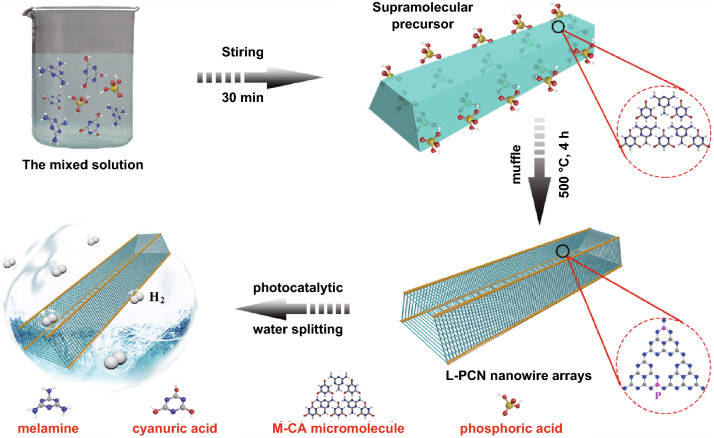
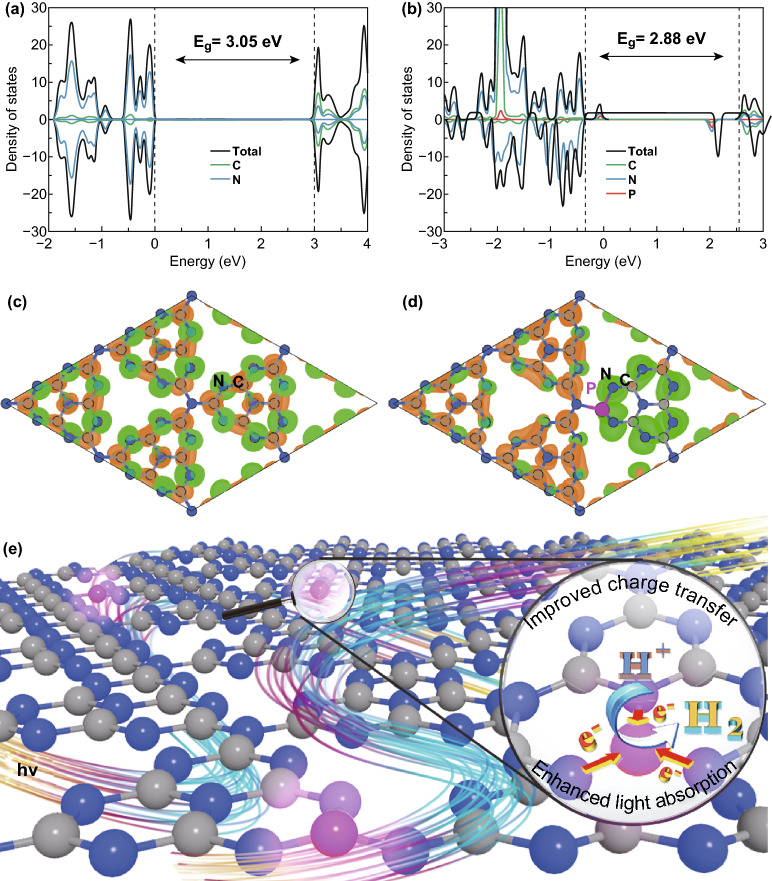
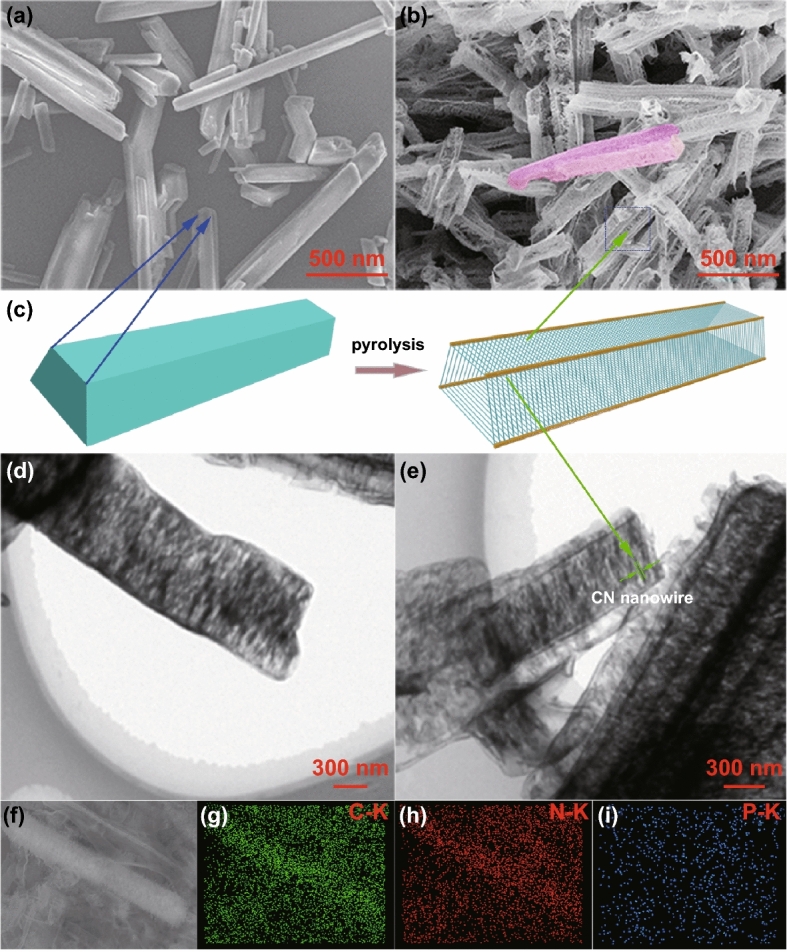
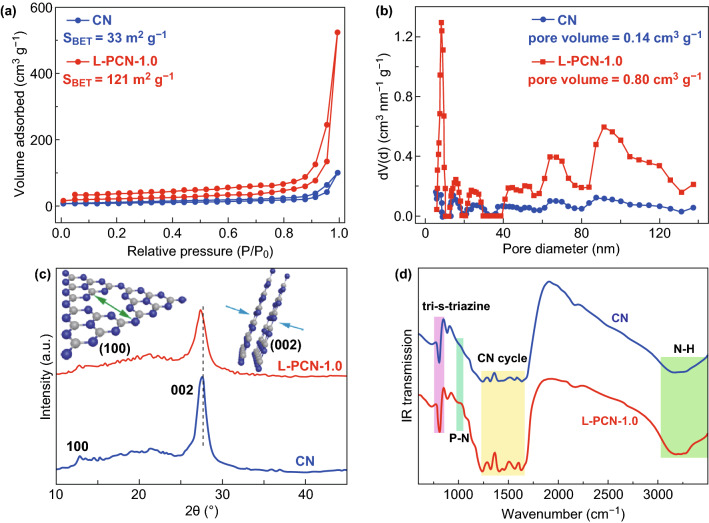
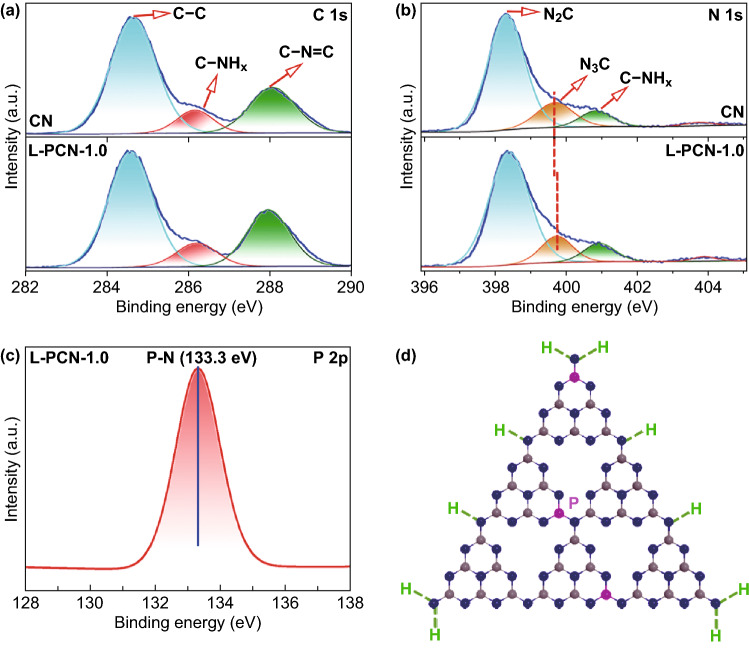
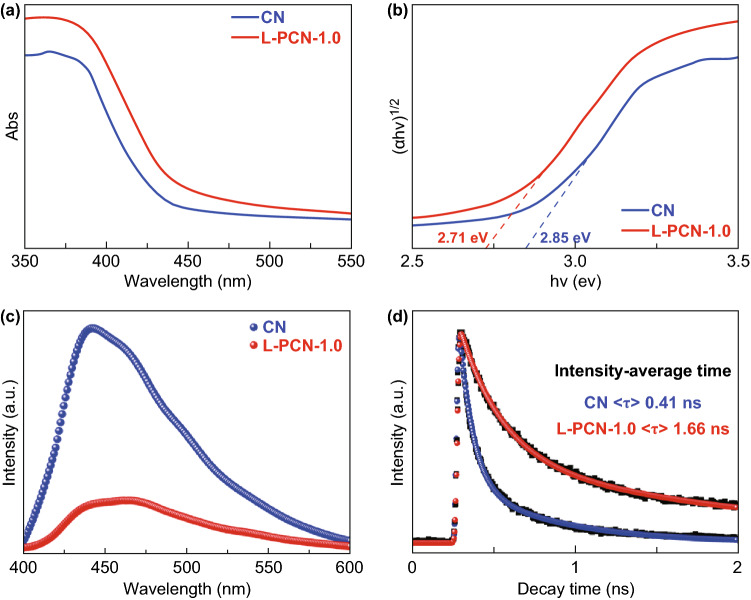
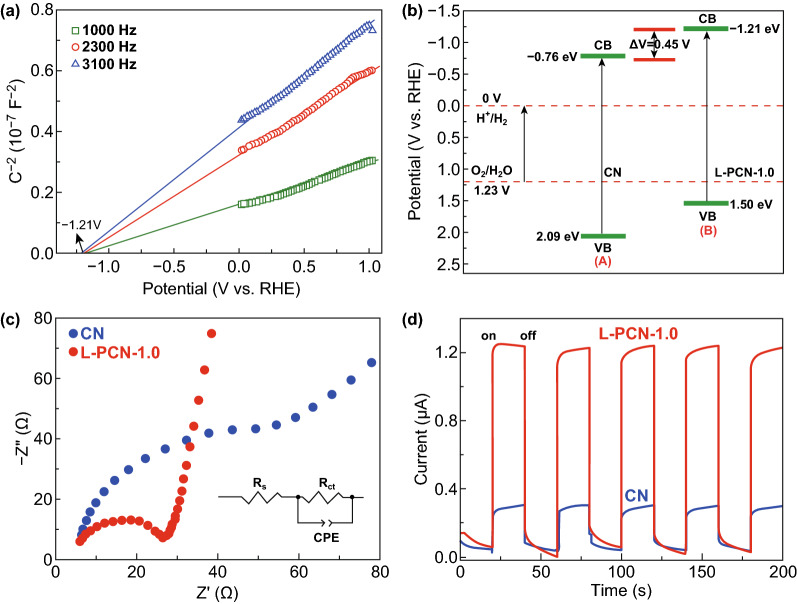
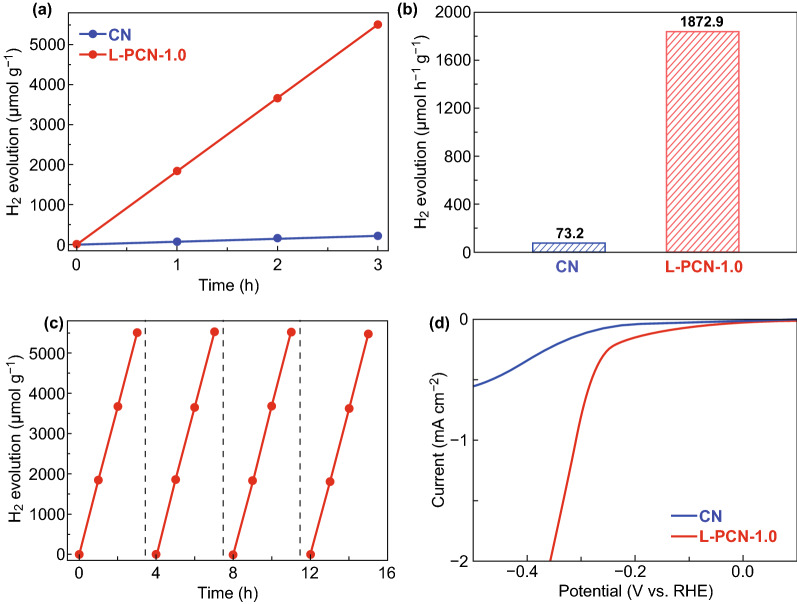
Self-assembled nanostructure arrays integrating the advantages of the intrinsic characters of nanostructure as well as the array stability are appealing in advanced materials. However, the precise bottom-up synthesis of nanostructure arrays without templates or substrates is quite challenging because of the general occurrence of homogeneous nucleation and the difficult manipulation of noncovalent interactions. Herein, we first report the precisely manipulated synthesis of well-defined louver-like P-doped carbon nitride nanowire arrays (L-PCN) via a supramolecular self-assembly method by regulating the noncovalent interactions through hydrogen bond. With this strategy, CN nanowires align in the outer frame with the separation and spatial location achieving ultrastability and outstanding photoelectricity properties. Significantly, this self-assembly L-PCN exhibits a superior visible light-driven hydrogen evolution activity of 1872.9 μmol h g, rendering a ~ 25.6-fold enhancement compared to bulk CN, and high photostability. Moreover, an apparent quantum efficiency of 6.93% is achieved for hydrogen evolution at 420 ± 15 nm. The experimental results and first-principles calculations demonstrate that the remarkable enhancement of photocatalytic activity of L-PCN can be attributed to the synergetic effect of structural topology and dopant. These findings suggest that we are able to design particular hierarchical nanostructures with desirable performance using hydrogen-bond engineering.
集成了纳米结构固有特性优势以及阵列稳定性的自组装纳米结构阵列在先进材料领域颇具吸引力。然而,由于普遍存在均相成核现象以及非共价相互作用难以操控,在无模板或基底的情况下精确地自下而上合成纳米结构阵列极具挑战性。在此,我们首次报道了通过一种超分子自组装方法,借助氢键调控非共价相互作用,精确操控合成出定义明确的百叶窗状P掺杂氮化碳纳米线阵列(L-PCN)。采用这种策略,CN纳米线在外框中排列,其间距和空间位置实现了超稳定性和出色的光电性能。值得注意的是,这种自组装的L-PCN展现出1872.9 μmol h g的卓越可见光驱动析氢活性,相较于块状CN提高了约25.6倍,且具有高光稳定性。此外,在420±15 nm波长下析氢的表观量子效率达到6.93%。实验结果和第一性原理计算表明,L-PCN光催化活性的显著增强可归因于结构拓扑和掺杂剂的协同效应。这些发现表明,我们能够利用氢键工程设计出具有理想性能的特定分级纳米结构。