Graduate School of Science and Engineering for Education, University of Toyama, Toyama, Toyama, 930-8555, Japan.
Faculty of Science, Academic Assembly, University of Toyama, 3190 Gofuku, Toyama, Toyama, 930-8555, Japan.
Sci Rep. 2021 Jun 21;11(1):13013. doi: 10.1038/s41598-021-92417-3.
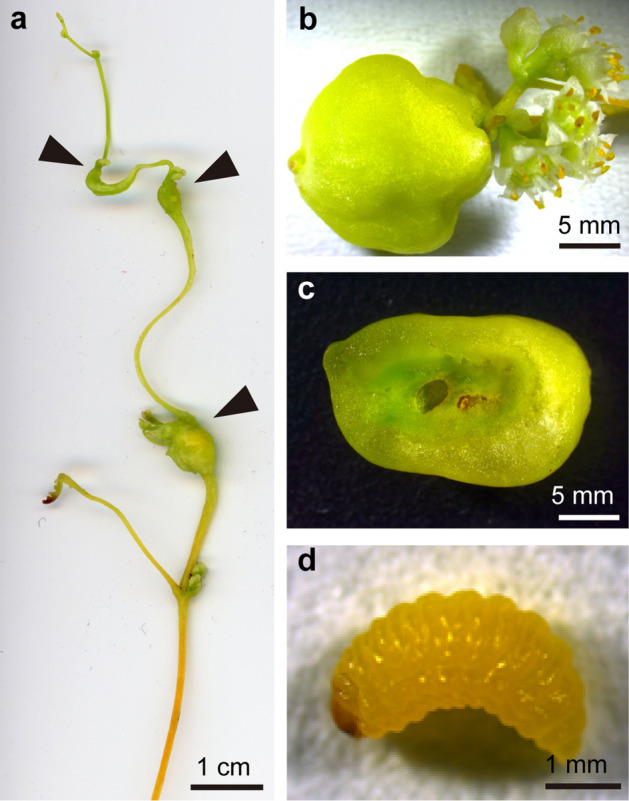
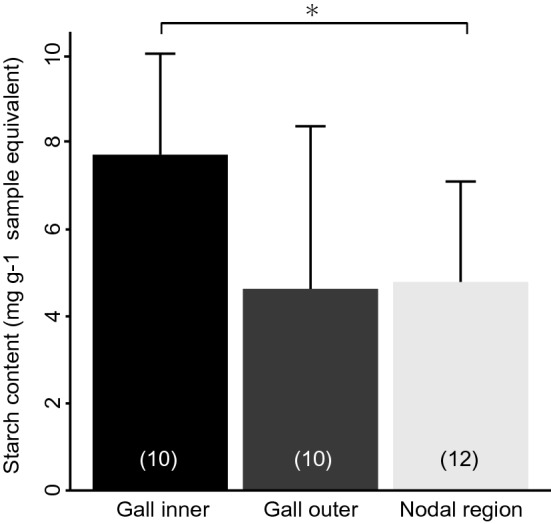
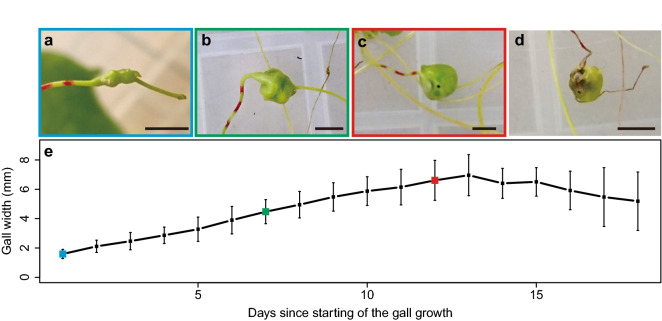
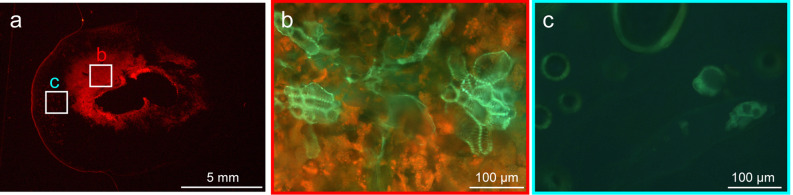
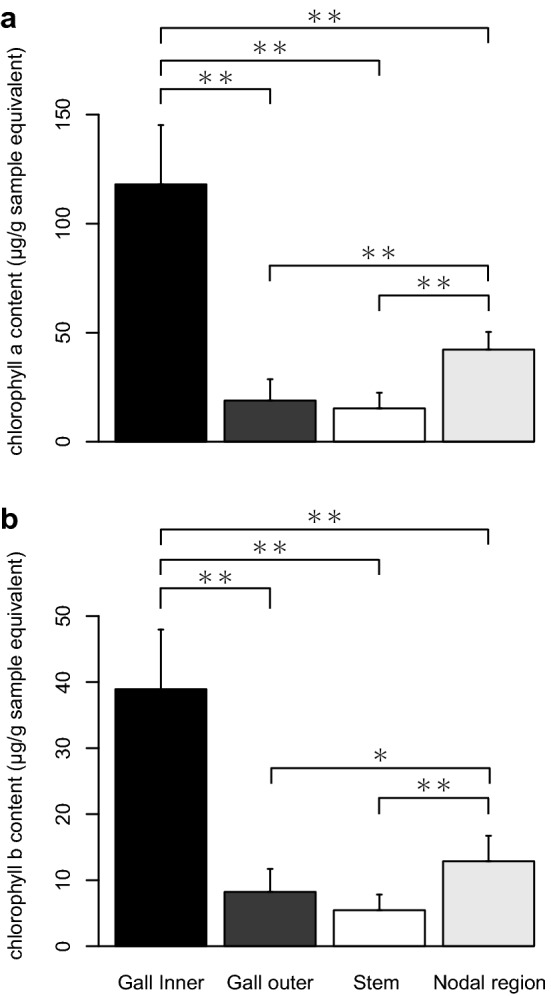
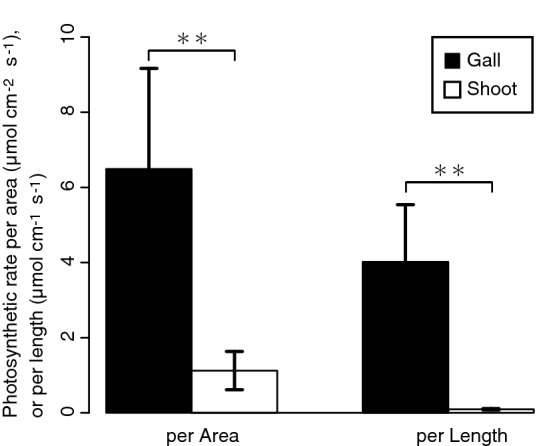
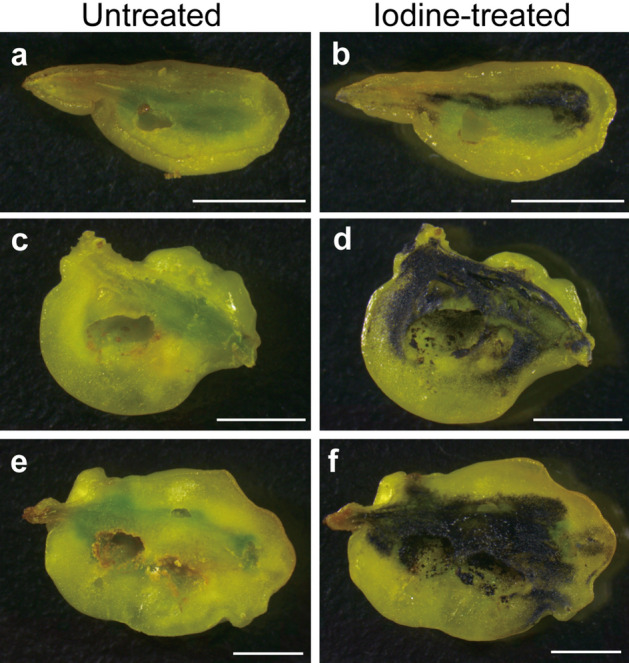
Insect-induced galls are microhabitats distinct from the outer environment that support inhabitants by providing improved nutrients, defence against enemies, and other unique features. It is intriguing as to how insects reprogram and modify plant morphogenesis. Because most of the gall systems are formed on trees, it is difficult to maintain them in laboratories and to comprehend the mechanisms operative in them through experimental manipulations. Herein, we propose a new model insect, Smicronyx madaranus, for studying the mechanisms of gall formation. This weevil forms spherical galls on the shoots of Cuscuta campestris, an obligate parasitic plant. We established a stable system for breeding and maintaining this ecologically intriguing insect in the laboratory, and succeeded in detailed analyses of the gall-forming behaviour, gall formation process, and histochemical and physiological features. Parasitic C. campestris depends on host plants for its nutrients, and usually shows low chlorophyll content and photosynthetic activity. We demonstrate that S. madaranus-induced galls have significantly increased CO absorbance. Moreover, chloroplasts and starch accumulated in gall tissues at locations inhabited by the weevil larvae. These results suggest that the gall-inducing weevils enhance the photosynthetic activity in C. campestris, and modify the plant tissue to a nutrient-rich shelter for them.
昆虫诱导的瘿是与外部环境明显不同的微生境,通过提供改善的营养物质、抵御敌人的防御以及其他独特的特征来支持居民。昆虫如何重新编程和修改植物形态发生是令人着迷的。由于大多数瘿系统是在树上形成的,因此很难在实验室中维持它们,并且很难通过实验操作来理解它们中起作用的机制。在此,我们提出了一种新的模式昆虫,Smicronyx madaranus,用于研究瘿形成的机制。这种象鼻虫在菟丝子的嫩枝上形成球形瘿,菟丝子是一种专性寄生植物。我们建立了一个稳定的系统,用于在实验室中繁殖和维持这种具有生态吸引力的昆虫,并成功地对其瘿形成行为、瘿形成过程以及组织化学和生理学特征进行了详细分析。寄生的菟丝子依赖于宿主植物获取其营养物质,通常表现出低叶绿素含量和光合作用活性。我们证明,Smicronyx madaranus 诱导的瘿具有显著增加的 CO 吸收。此外,在象鼻虫幼虫栖息的瘿组织中积累了叶绿体和淀粉。这些结果表明,诱导瘿的象鼻虫增强了菟丝子的光合作用,并将植物组织改造成富含营养的庇护所供它们居住。