Luo Wenhao, Qiu Jiangdong, Zheng Lianfang, Zhang Taiping
Department of General Surgery, Peking Union Medical College Hospital, Chinese Academy of Medical Sciences and Peking Union Medical College, Beijing 100730, China.
Department of Nuclear Medicine, Peking Union Medical College Hospital, Chinese Academy of Medical Sciences and Peking Union Medical College, Beijing 100730, China.
Chin J Cancer Res. 2021 Apr 30;33(2):216-231. doi: 10.21147/j.issn.1000-9604.2021.02.09.
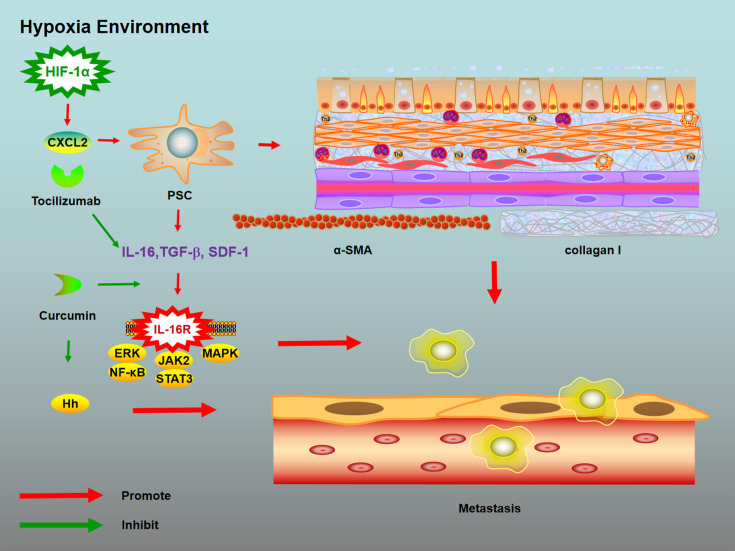
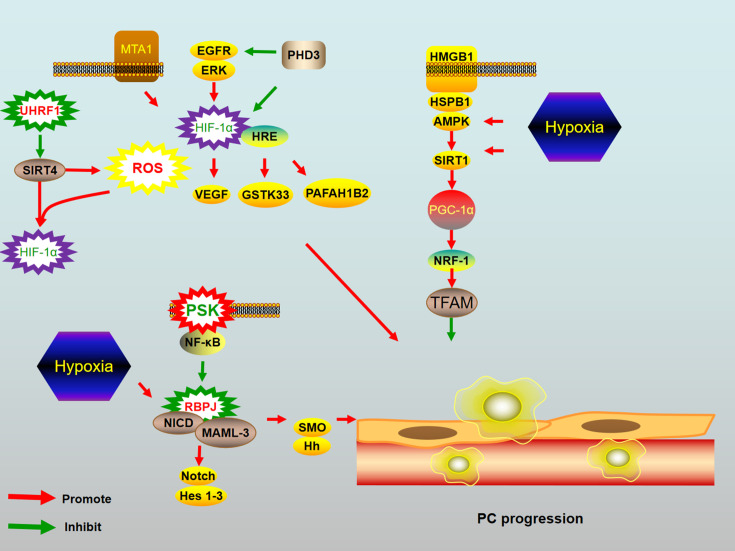
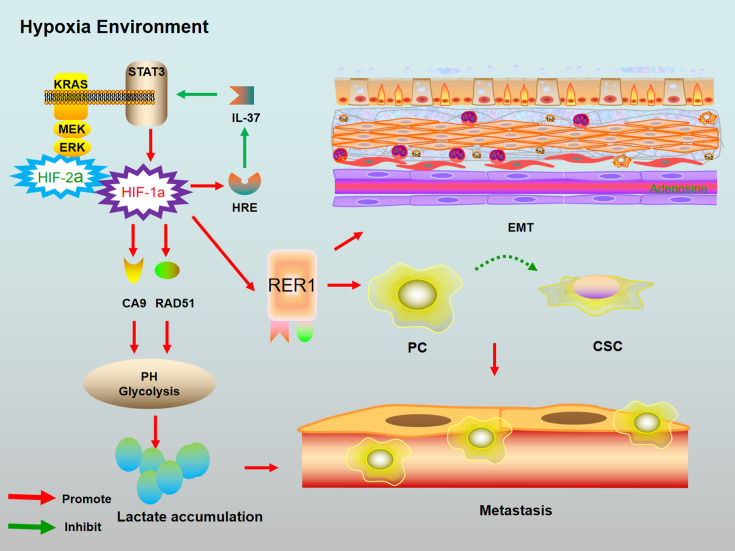
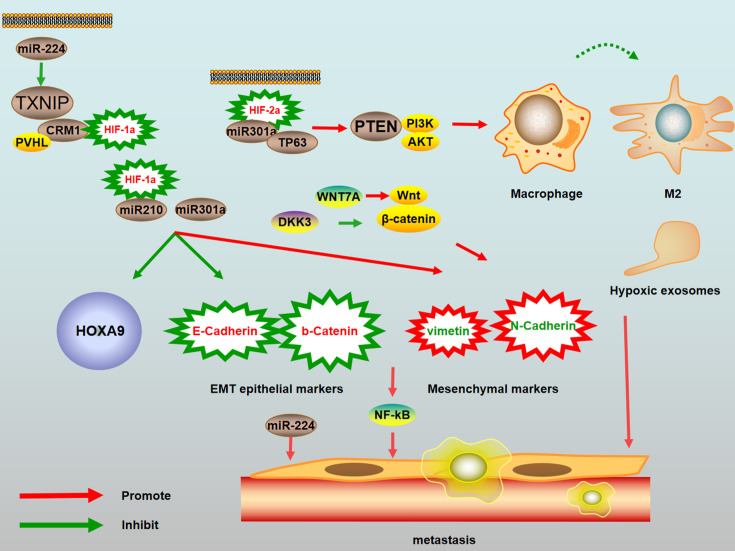
Pancreatic cancer (PC) is one of the deadliest malignancies. The high mortality rate of PC largely results from delayed diagnosis and early metastasis. Therefore, identifying novel treatment targets for patients with PC is urgently required to improve survival rates. A major barrier to successful treatment of PC is the presence of a hypoxic tumor microenvironment, which is associated with poor prognosis, treatment resistance, increased invasion and metastasis. Recent studies have identified a number of novel molecules and pathways in PC cells that promote cancer cells progression under hypoxic conditions, which may provide new therapy strategies to inhibit the development and metastasis of PC. This review summarizes the latest research of hypoxia in PC and provides an overview of how the current therapies have the capacity to overcome hypoxia and improve PC patient treatment. These findings will eventually provide guidance for future PC management and clinical trials and hopefully improve the survival of patients with PC.
胰腺癌(PC)是最致命的恶性肿瘤之一。PC的高死亡率主要源于诊断延迟和早期转移。因此,迫切需要为PC患者确定新的治疗靶点以提高生存率。PC成功治疗的一个主要障碍是存在缺氧的肿瘤微环境,这与预后不良、治疗耐药性、侵袭和转移增加有关。最近的研究已经在PC细胞中鉴定出许多新的分子和途径,它们在缺氧条件下促进癌细胞进展,这可能为抑制PC的发展和转移提供新的治疗策略。本综述总结了PC中缺氧的最新研究,并概述了当前疗法如何有能力克服缺氧并改善PC患者的治疗。这些发现最终将为未来的PC管理和临床试验提供指导,并有望提高PC患者的生存率。