Department of Biological Sciences, Oakland University, Rochester, MI, USA.
Department of Foundation Medical Studies, Oakland University William Beaumont School of Medicine, Rochester, MI, USA.
J Cell Mol Med. 2021 Aug;25(15):7122-7134. doi: 10.1111/jcmm.16741. Epub 2021 Jun 23.
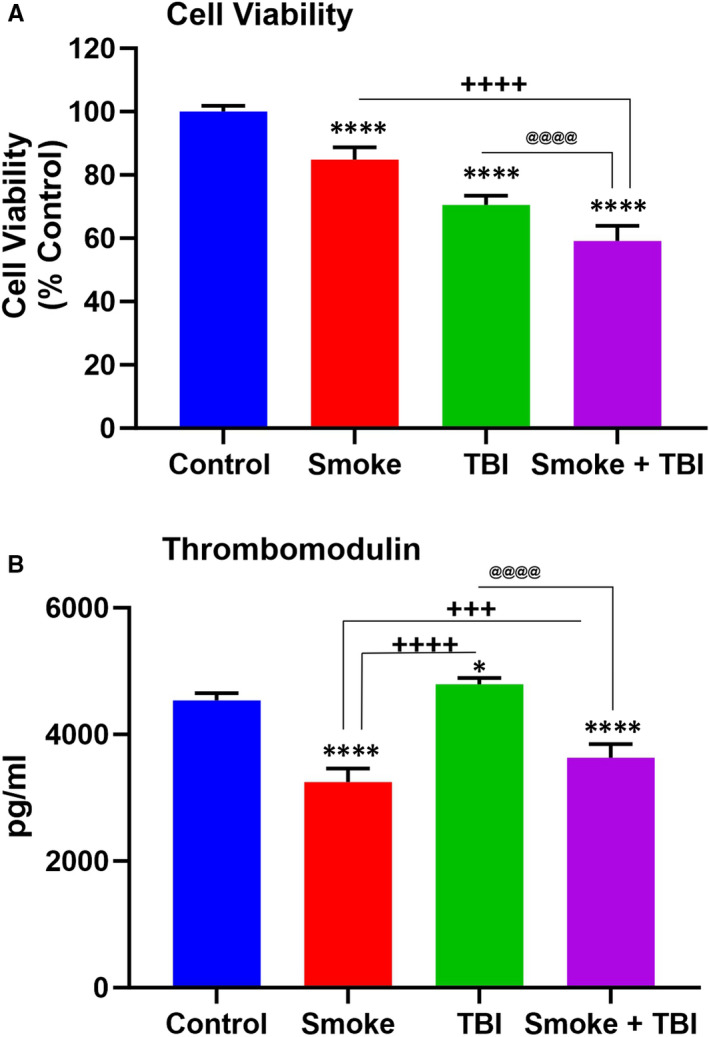
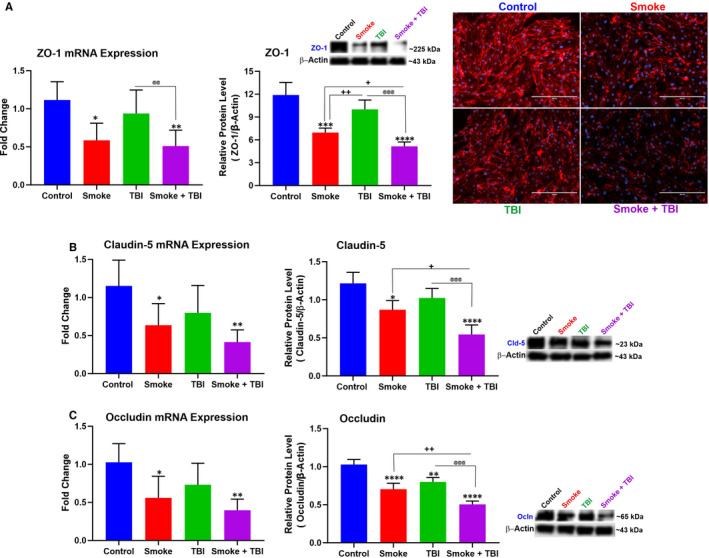
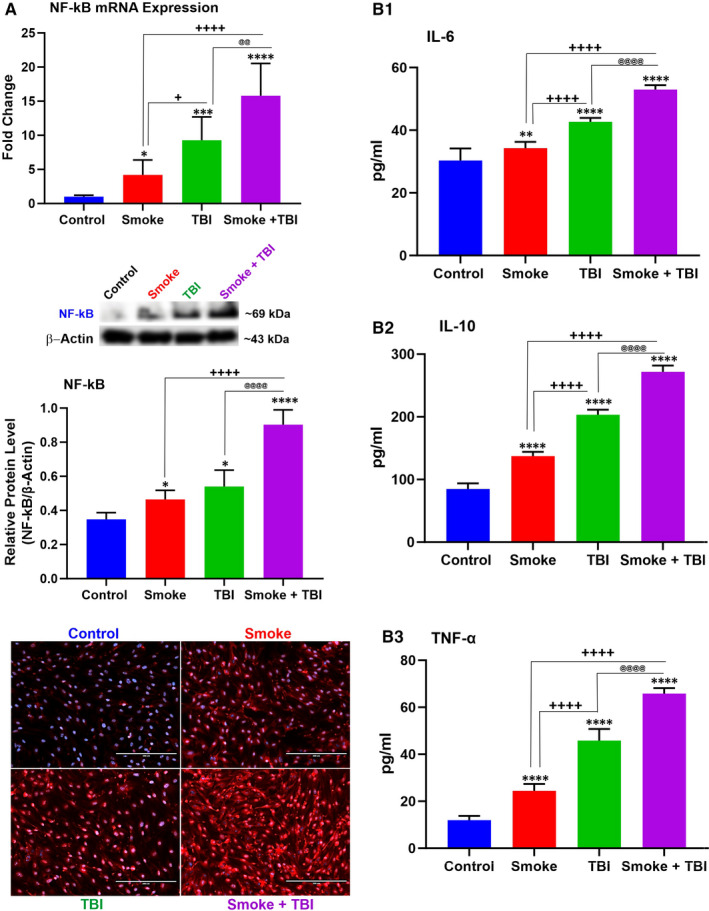
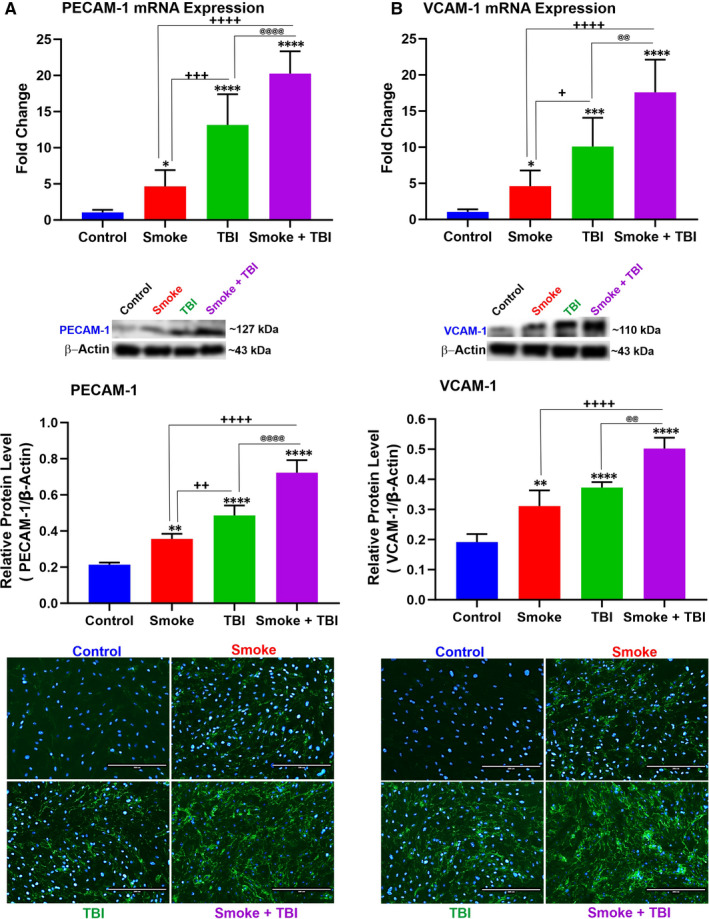
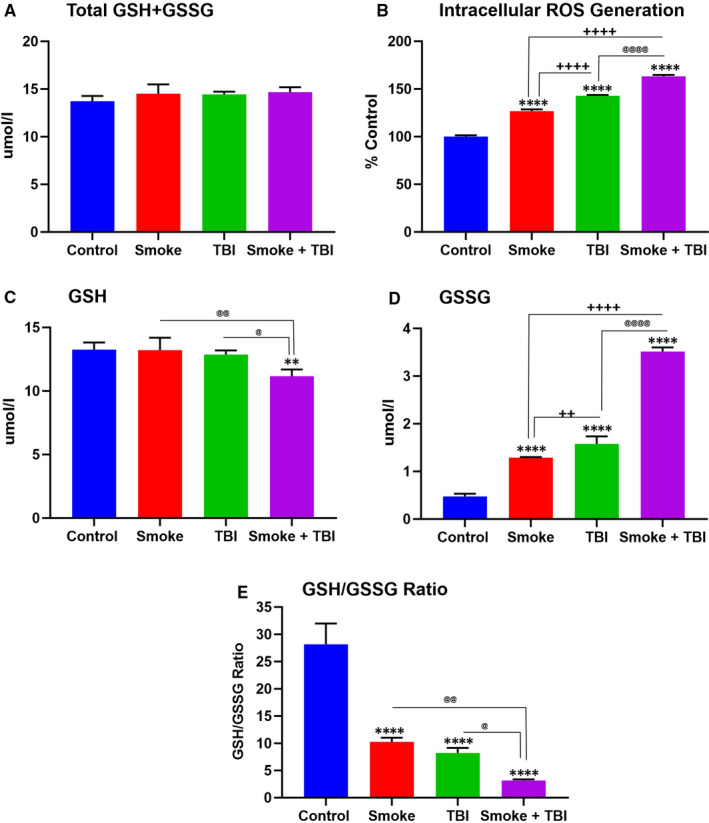
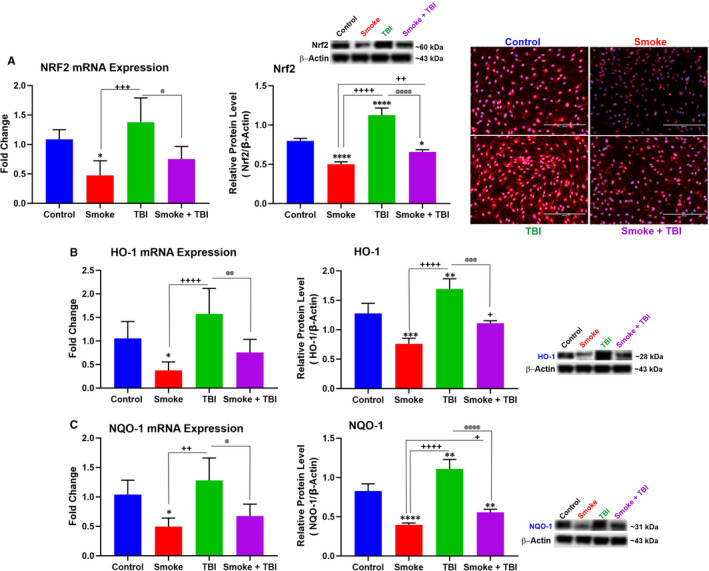
Traumatic brain injury (TBI) is a major reason of cerebrovascular and neurological damage. Premorbid conditions such as tobacco smoking (TS) can worsen post-TBI injuries by promoting vascular endothelial impairments. Indeed, TS-induced oxidative stress (OS) and inflammation can hamper the blood-brain barrier (BBB) endothelium. This study evaluated the subsequence of chronic TS exposure on BBB endothelial cells in an established in vitro model of traumatic cell injury. Experiments were conducted on confluent TS-exposed mouse brain microvascular endothelial cells (mBMEC-P5) following scratch injury. The expression of BBB integrity-associated tight junction (TJ) proteins was assessed by immunofluorescence imaging (IF), Western blotting (WB) and quantitative RT-PCR. We evaluated reactive oxygen species (ROS) generation, the nuclear factor 2-related (Nrf2) with its downstream effectors and several inflammatory markers. Thrombomodulin expression was used to assess the endothelial haemostatic response to injury and TS exposure. Our results show that TS significantly decreased Nrf2, thrombomodulin and TJ expression in the BBB endothelium injury models while increased OS and inflammation compared to parallel TS-free cultures. These data suggest that chronic TS exposure exacerbates traumatic endothelial injury and abrogates the protective antioxidative cell responses. The downstream effect was a more significant decline of BBB endothelial viability, which could aggravate subsequent neurological impairments.
创伤性脑损伤(TBI)是脑血管和神经损伤的主要原因。先前存在的情况,如吸烟(TS),可通过促进血管内皮损伤使 TBI 后损伤恶化。事实上,TS 引起的氧化应激(OS)和炎症会损害血脑屏障(BBB)内皮细胞。本研究在创伤性细胞损伤的体外模型中评估了慢性 TS 暴露对 BBB 内皮细胞的后续影响。在划痕损伤后,对融合的 TS 暴露的小鼠脑微血管内皮细胞(mBMEC-P5)进行实验。通过免疫荧光成像(IF)、Western blot(WB)和定量 RT-PCR 评估 BBB 完整性相关紧密连接(TJ)蛋白的表达。我们评估了活性氧(ROS)的产生、核因子 2 相关(Nrf2)及其下游效应物和几种炎症标志物。血栓调节蛋白的表达用于评估内皮细胞对损伤和 TS 暴露的止血反应。我们的结果表明,与平行的无 TS 培养相比,TS 显著降低了 BBB 内皮细胞损伤模型中的 Nrf2、血栓调节蛋白和 TJ 的表达,同时增加了 OS 和炎症。这些数据表明,慢性 TS 暴露会加重创伤性内皮损伤并削弱保护性抗氧化细胞反应。其下游效应是 BBB 内皮细胞活力的显著下降,这可能会加重随后的神经损伤。