Shigeoka Manabu, Koma Yu-Ichiro, Kodama Takayuki, Nishio Mari, Akashi Masaya, Yokozaki Hiroshi
Division of Pathology, Department of Pathology, Kobe University Graduate School of Medicine, Kobe, Japan.
Division of Oral and Maxillofacial Surgery, Department of Surgery Related, Kobe University Graduate School of Medicine, Kobe, Japan.
Front Oncol. 2021 Jun 9;11:667174. doi: 10.3389/fonc.2021.667174. eCollection 2021.
CD163-positive macrophages contribute to the aggressiveness of oral squamous cell carcinoma. We showed in a previous report that CD163-positive macrophages infiltrated not only to the cancer nest but also to its surrounding epithelium, depending on the presence of stromal invasion in tongue carcinogenesis. However, the role of intraepithelial macrophages in tongue carcinogenesis remains unclear. In this study, we assessed the biological behavior of intraepithelial macrophages on their interaction with cancer cells.
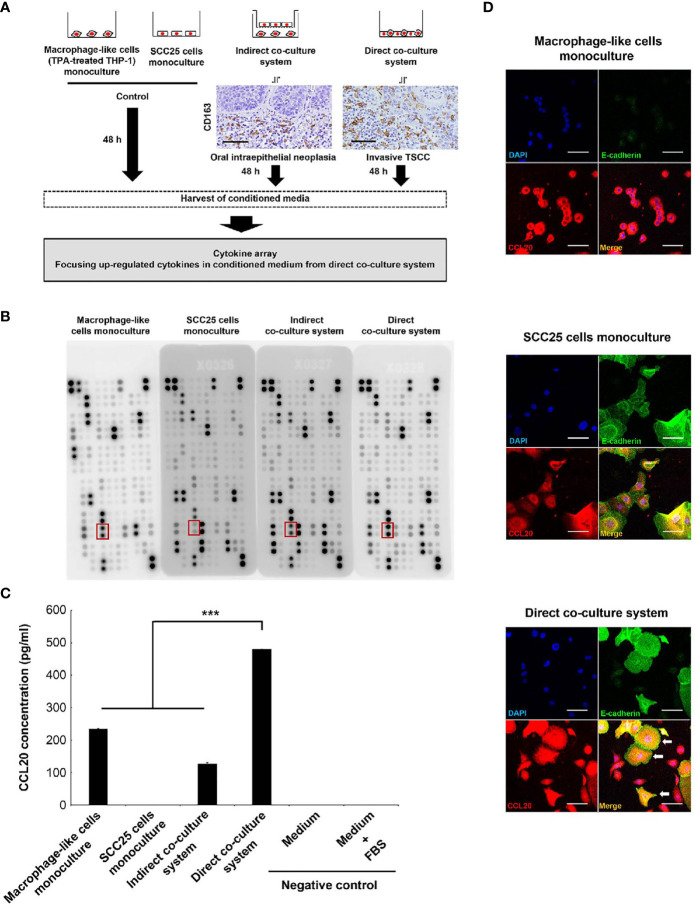
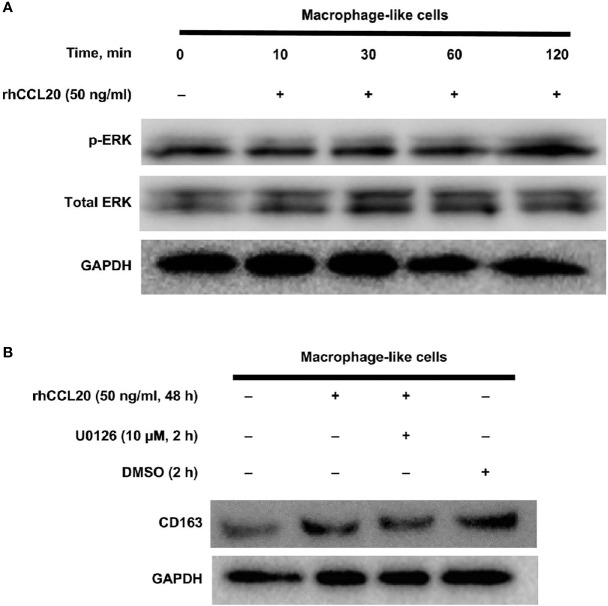
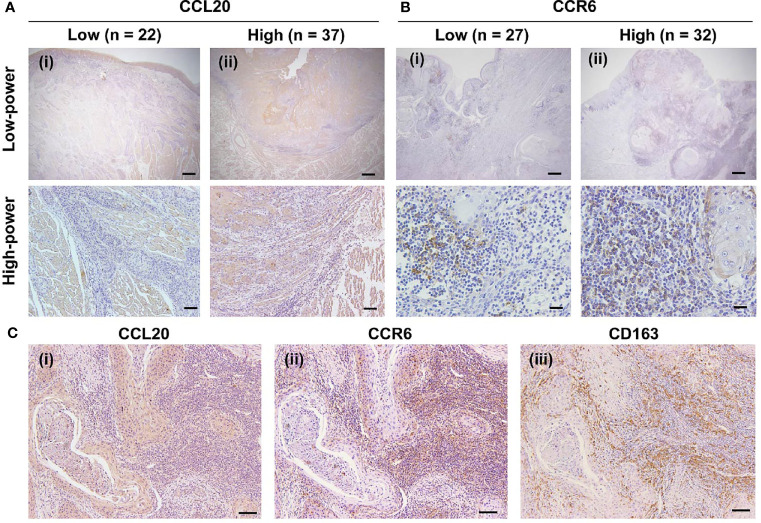
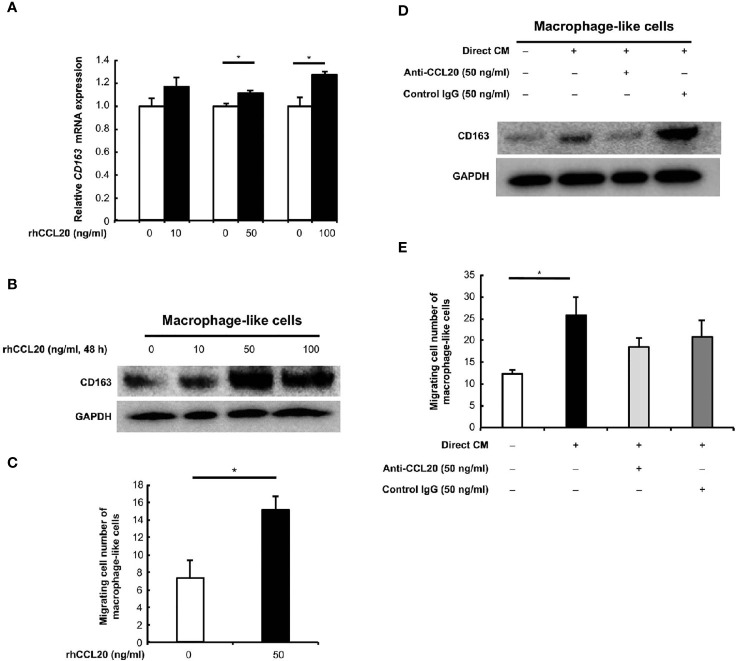
We established the indirect coculture system (intraepithelial neoplasia model) and direct coculture system (invasive cancer model) of human monocytic leukemia cell line THP-1-derived CD163-positive macrophages with SCC25, a tongue squamous cell carcinoma (TSCC) cell line. Conditioned media (CM) harvested from these systems were analyzed using cytokine array and enzyme-linked immunosorbent assay and extracted a specific upregulated cytokine in CM from the direct coculture system (direct CM). The correlation of both this cytokine and its receptor with various clinicopathological factors were evaluated based on immunohistochemistry using clinical samples from 59 patients with TSCC. Moreover, the effect of this cytokine in direct CM on the phenotypic alterations of THP-1 was confirmed by real-time polymerase chain reaction, western blotting, immunofluorescence, and transwell migration assay.
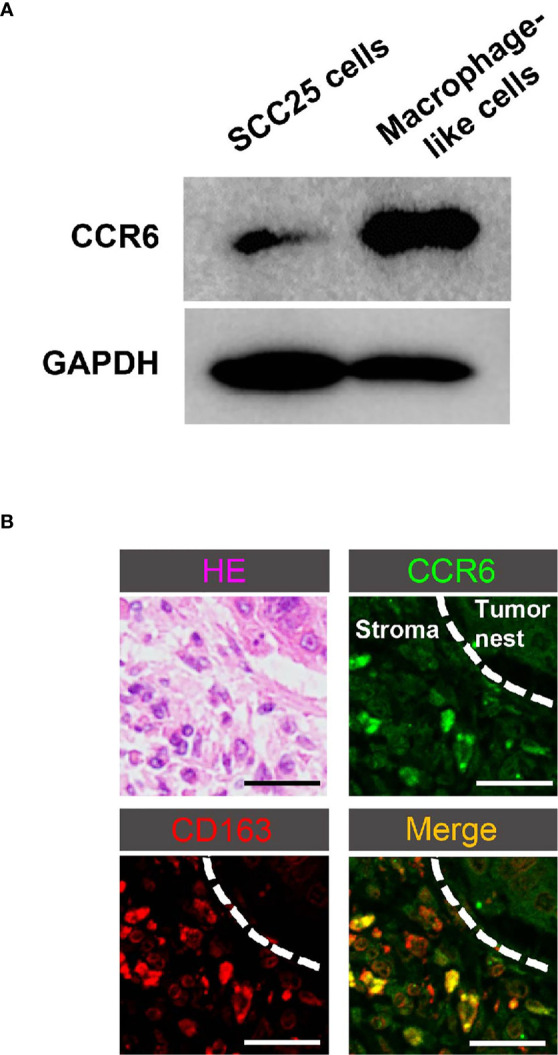
It was shown that CCL20 was induced in the direct CM specifically. Interestingly, CCL20 was produced primarily in SCC25. The expression level of CCR6, which is a sole receptor of CCL20, was higher than the expression level of SCC25. Our immunohistochemical investigation showed that CCL20 and CCR6 expression was associated with lymphatic vessel invasion and the number of CD163-positive macrophages. Recombinant human CCL20 induced the CD163 expression and promoted migration of THP-1. We also confirmed that a neutralizing anti-CCL20 antibody blocked the induction of CD163 expression by direct CM in THP-1. Moreover, ERK1/2 phosphorylation was associated with the CCL20-driven induction of CD163 expression in THP-1.
Tongue cancer cell-derived CCL20 that was induced by interaction with macrophages promotes CD163 expression on macrophages.
CD163阳性巨噬细胞促进口腔鳞状细胞癌的侵袭性。我们在之前的报告中表明,在舌癌发生过程中,根据基质浸润情况,CD163阳性巨噬细胞不仅浸润到癌巢,还浸润到其周围上皮。然而,上皮内巨噬细胞在舌癌发生中的作用仍不清楚。在本研究中,我们评估了上皮内巨噬细胞与癌细胞相互作用时的生物学行为。
我们建立了人单核细胞白血病细胞系THP-1来源的CD163阳性巨噬细胞与舌鳞状细胞癌(TSCC)细胞系SCC25的间接共培养系统(上皮内瘤变模型)和直接共培养系统(侵袭性癌模型)。使用细胞因子阵列和酶联免疫吸附测定法分析从这些系统收获的条件培养基(CM),并从直接共培养系统(直接CM)的CM中提取一种特异性上调的细胞因子。基于免疫组织化学,使用59例TSCC患者的临床样本评估该细胞因子及其受体与各种临床病理因素的相关性。此外,通过实时聚合酶链反应、蛋白质印迹、免疫荧光和Transwell迁移试验证实了直接CM中的这种细胞因子对THP-1表型改变的影响。
结果表明,CCL20在直接CM中特异性诱导产生。有趣的是,CCL20主要由SCC25产生。CCL20的唯一受体CCR6的表达水平高于SCC25的表达水平。我们的免疫组织化学研究表明,CCL20和CCR6表达与淋巴管浸润和CD163阳性巨噬细胞数量相关。重组人CCL20诱导CD163表达并促进THP-1迁移。我们还证实,中和抗CCL20抗体可阻断直接CM对THP-1中CD163表达的诱导。此外,ERK1/2磷酸化与CCL20驱动的THP-1中CD163表达的诱导相关。
舌癌细胞与巨噬细胞相互作用诱导产生的CCL20促进巨噬细胞上CD163的表达。