Ji Xiuna, Wang Baokun, Paudel Yam Nath, Li Zhihui, Zhang Shanshan, Mou Lei, Liu Kechun, Jin Meng
Biology Institute, Qilu University of Technology (Shandong Academy of Sciences), Jinan, China.
Engineering Research Center of Zebrafish Models for Human Diseases and Drug Screening of Shandong Province, Jinan, China.
Front Mol Biosci. 2021 Jun 11;8:655549. doi: 10.3389/fmolb.2021.655549. eCollection 2021.
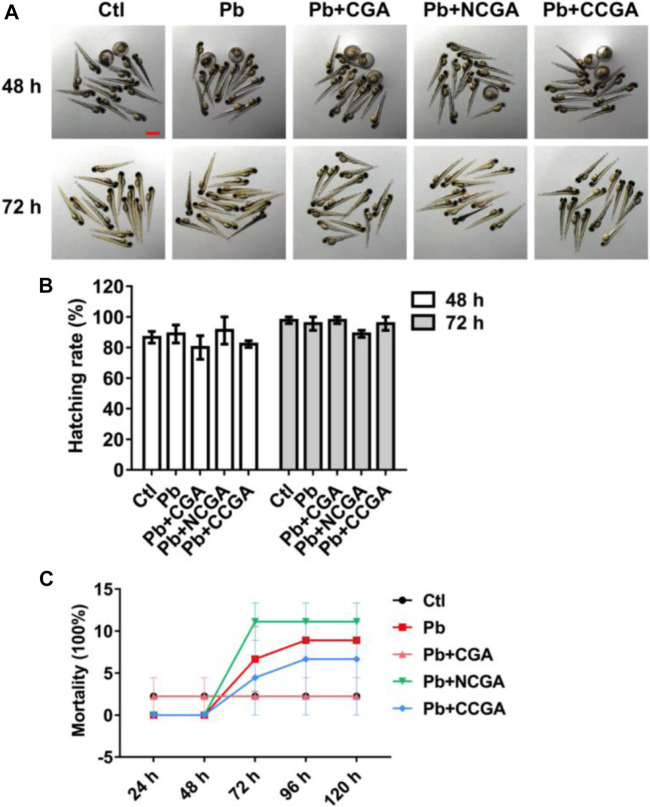
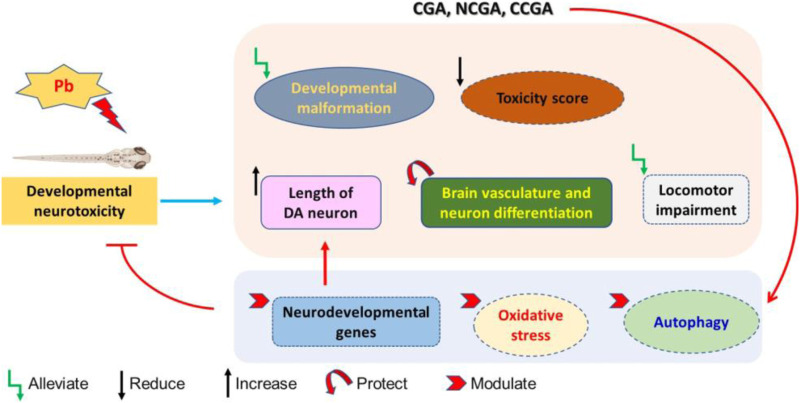
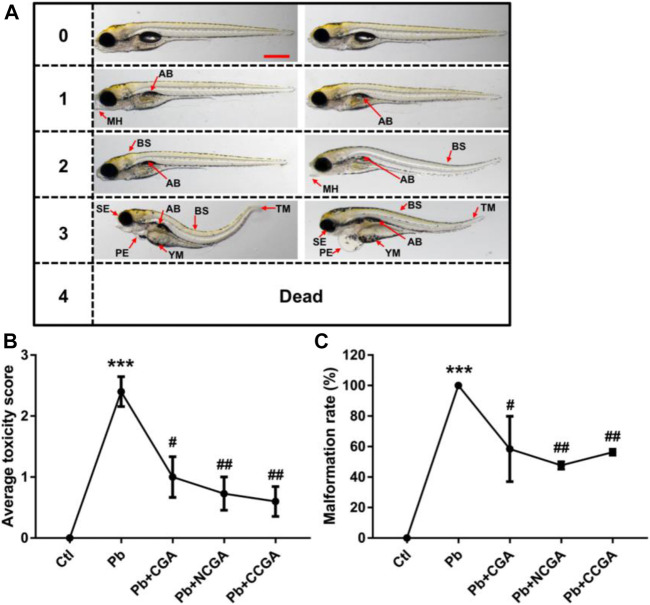
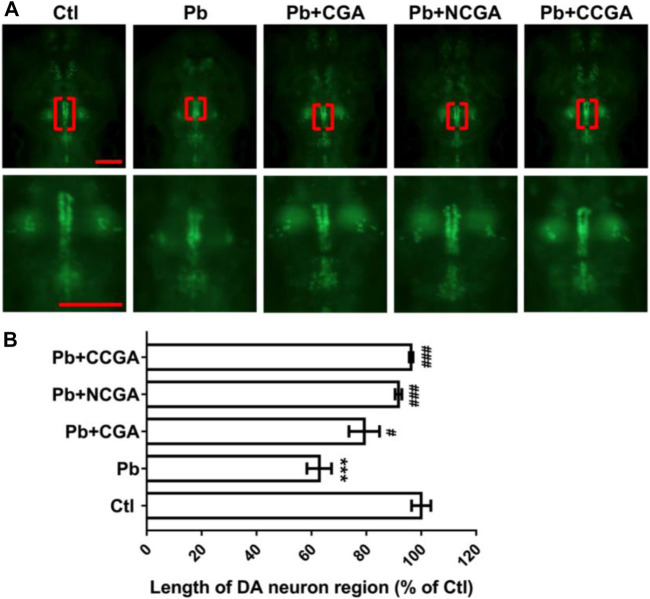
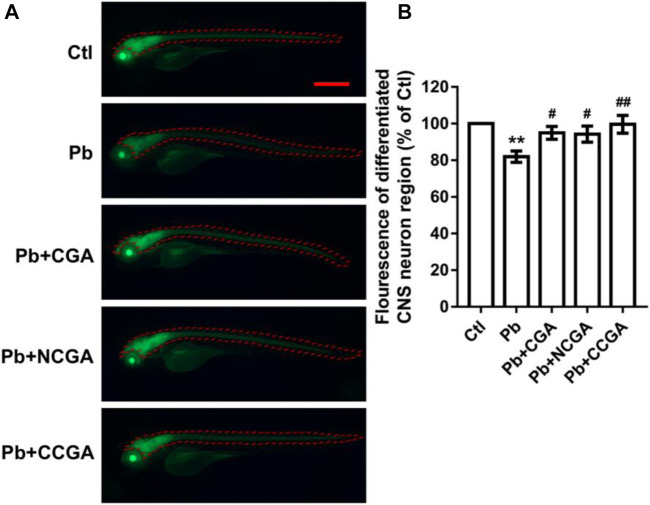
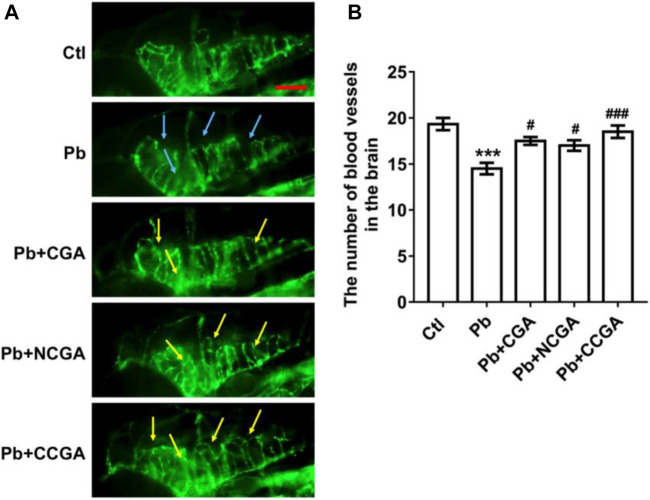
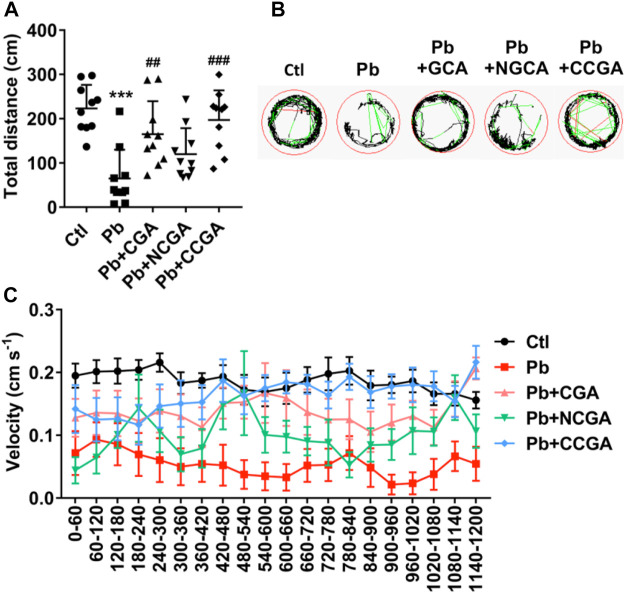
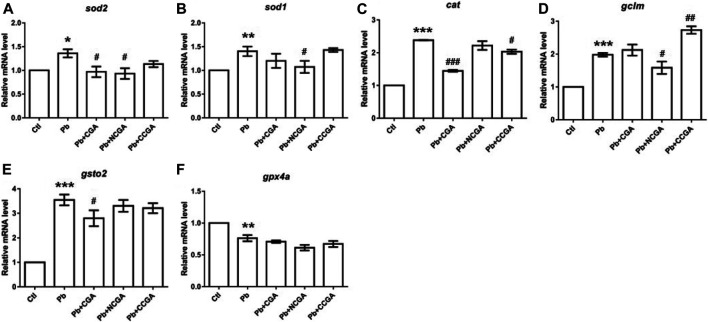
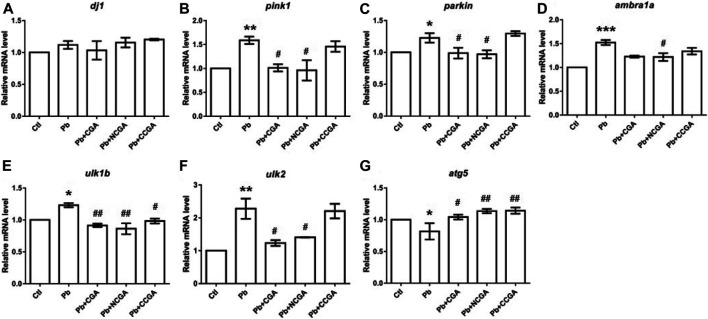
Lead (Pb) is among the deleterious heavy metal and has caused global health concerns due to its tendency to cause a detrimental effect on the development of the central nervous system (CNS). Despite being a serious health concern, treatment of Pb poisoning is not yet available, reflecting the pressing need for compounds that can relieve Pb-induced toxicity, especially neurotoxicity. In the quest of exploring protective strategies against Pb-induced developmental neurotoxicity, compounds from natural resources have gained increased attention. Chlorogenic acid (CGA) and its analogues neochlorogenic acid (NCGA) and cryptochlorogenic acid (CCGA) are the important phenolic compounds widely distributed in plants. Herein, utilizing zebrafish as a model organism, we modeled Pb-induced developmental neurotoxicity and investigated the protective effect of CGA, NCGA, and CCGA co-treatment. In zebrafish, Pb exposure (1,000 μg/L) for 5 days causes developmental malformation, loss of dopaminergic (DA) neurons, and brain vasculature, as well as disrupted neuron differentiation in the CNS. Additionally, Pb-treated zebrafish exhibited abnormal locomotion. Notably, co-treatment with CGA (100 µM), NCGA (100 µM), and CCGA (50 µM) alleviated these developmental malformation and neurotoxicity induced by Pb. Further underlying mechanism investigation revealed that these dietary phenolic acid compounds may ameliorate Pb-induced oxidative stress and autophagy in zebrafish, therefore protecting against Pb-induced developmental neurotoxicity. In general, our study indicates that CGA, NCGA, and CCGA could be promising agents for treating neurotoxicity induced by Pb, and CCGA shows the strongest detoxifying activity.
铅(Pb)是有害重金属之一,因其易于对中枢神经系统(CNS)的发育产生有害影响而引起全球健康关注。尽管这是一个严重的健康问题,但目前尚无铅中毒的治疗方法,这反映出迫切需要能够缓解铅诱导的毒性,尤其是神经毒性的化合物。在探索针对铅诱导的发育性神经毒性的保护策略的过程中,来自自然资源的化合物受到了越来越多的关注。绿原酸(CGA)及其类似物新绿原酸(NCGA)和隐绿原酸(CCGA)是广泛分布于植物中的重要酚类化合物。在此,我们以斑马鱼为模式生物,建立了铅诱导的发育性神经毒性模型,并研究了CGA、NCGA和CCGA联合处理的保护作用。在斑马鱼中,暴露于1000μg/L的铅5天会导致发育畸形、多巴胺能(DA)神经元和脑血管系统丧失,以及中枢神经系统中神经元分化受阻。此外,经铅处理的斑马鱼表现出异常运动。值得注意的是,与CGA(100μM)、NCGA(100μM)和CCGA(50μM)联合处理可减轻铅诱导的这些发育畸形和神经毒性。进一步的潜在机制研究表明,这些膳食酚酸化合物可能会改善斑马鱼中铅诱导的氧化应激和自噬,从而预防铅诱导的发育性神经毒性。总体而言,我们的研究表明,CGA、NCGA和CCGA可能是治疗铅诱导的神经毒性的有前景的药物,并且CCGA显示出最强的解毒活性。