Guerrero Aarón, Visniauskas Bruna, Cárdenas Pilar, Figueroa Stefanny M, Vivanco Jorge, Salinas-Parra Nicolas, Araos Patricio, Nguyen Quynh My, Kassan Modar, Amador Cristián A, Prieto Minolfa C, Gonzalez Alexis A
Instituto de Química, Pontificia Universidad Católica de Valparaíso, Valparaíso, Chile.
Department of Physiology, School of Medicine, Tulane University, New Orleans, LA, United States.
Front Cardiovasc Med. 2021 Jun 4;8:644797. doi: 10.3389/fcvm.2021.644797. eCollection 2021.
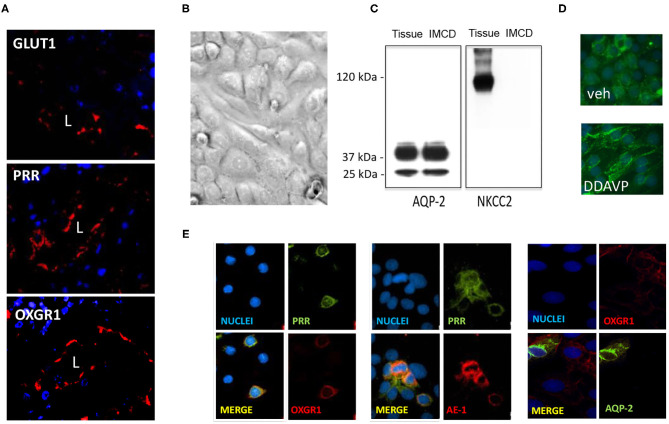
Diabetes mellitus (DM) causes high glucose (HG) levels in the plasma and urine. The (pro)renin receptor (PRR) is a key regulator of renal Na handling. PRR is expressed in intercalated (IC) cells of the collecting duct (CD) and binds renin to promote angiotensin (Ang) II formation, thereby contributing to Na reabsorption. In DM, the Kreb's cycle is in a state of suppression in most tissues. However, in the CD, expression of glucose transporters is augmented, boosting the Kreb's cycle and consequently causing α-ketoglutarate (αKG) accumulation. The αKG receptor 1 (OXGR1) is a Gq-coupled receptor expressed on the apical membrane of IC cells of the CD. We hypothesize that HG causes αKG secretion and activation of OXGR1, which increases PRR expression in CD cells. This effect then promotes intratubular AngII formation and Na reabsorption. To test this hypothesis, streptozotocin (STZ)-induced diabetic mice were treated with or without montelukast (ML), an OXGR1 antagonist, for 6 days. STZ mice had higher urinary αKG and PRR expression along with augmented urinary AngII levels and Na retention. Treatment with ML prevented all these effects. Similarly, primary cultured inner medullary CD cells treated with HG showed increased PRR expression, while OXGR1 antagonist prevented this effect. αKG increases PRR expression, while treatments with ML, PKC inhibition, or intracellular Ca depletion impair this effect. analysis suggested that αKG binds to mouse OXGR1. These results indicate that HG conditions promote increased levels of intratubular αKG and OXGR1-dependent PRR upregulation, which impact AngII formation and Na reabsorption.
糖尿病(DM)会导致血浆和尿液中的葡萄糖(HG)水平升高。(前)肾素受体(PRR)是肾脏钠处理的关键调节因子。PRR在集合管(CD)的闰细胞(IC)中表达,并与肾素结合以促进血管紧张素(Ang)II的形成,从而有助于钠的重吸收。在糖尿病中,大多数组织中的三羧酸循环处于抑制状态。然而,在集合管中,葡萄糖转运蛋白的表达增加,促进了三羧酸循环,从而导致α-酮戊二酸(αKG)积累。αKG受体1(OXGR1)是一种与Gq偶联的受体,表达于集合管闰细胞的顶端膜上。我们假设高糖会导致αKG分泌并激活OXGR1,从而增加集合管细胞中PRR的表达。这种作用进而促进肾小管内AngII的形成和钠的重吸收。为了验证这一假设,将链脲佐菌素(STZ)诱导的糖尿病小鼠用OXGR1拮抗剂孟鲁司特(ML)处理或不处理6天。STZ小鼠的尿αKG和PRR表达更高,同时尿AngII水平和钠潴留增加。用ML治疗可防止所有这些影响。同样,用高糖处理的原代培养的髓质内集合管细胞显示PRR表达增加,而OXGR1拮抗剂可防止这种影响。αKG增加PRR表达,而用ML、蛋白激酶C抑制或细胞内钙耗竭处理会削弱这种影响。分析表明αKG与小鼠OXGR1结合。这些结果表明,高糖状态会促进肾小管内αKG水平升高以及OXGR1依赖性PRR上调,这会影响AngII的形成和钠的重吸收。