National Institute for Mathematical and Biological Synthesis, The University of Tennessee, Knoxville, Tennessee, United States of America.
Department of Biological Science, Florida State University, Tallahassee, Florida, United States of America.
PLoS Comput Biol. 2021 Jun 28;17(6):e1008762. doi: 10.1371/journal.pcbi.1008762. eCollection 2021 Jun.
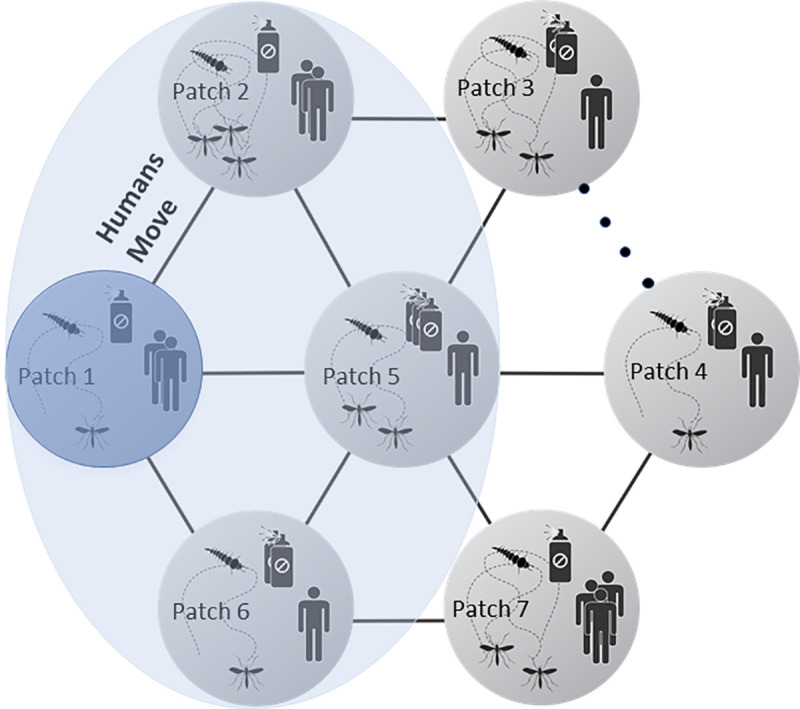
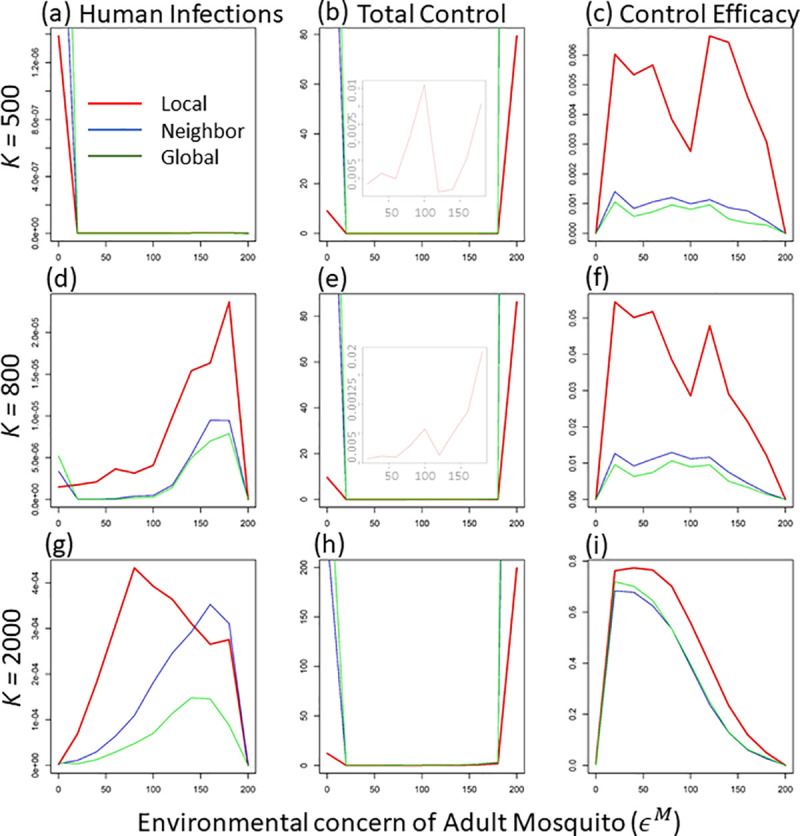
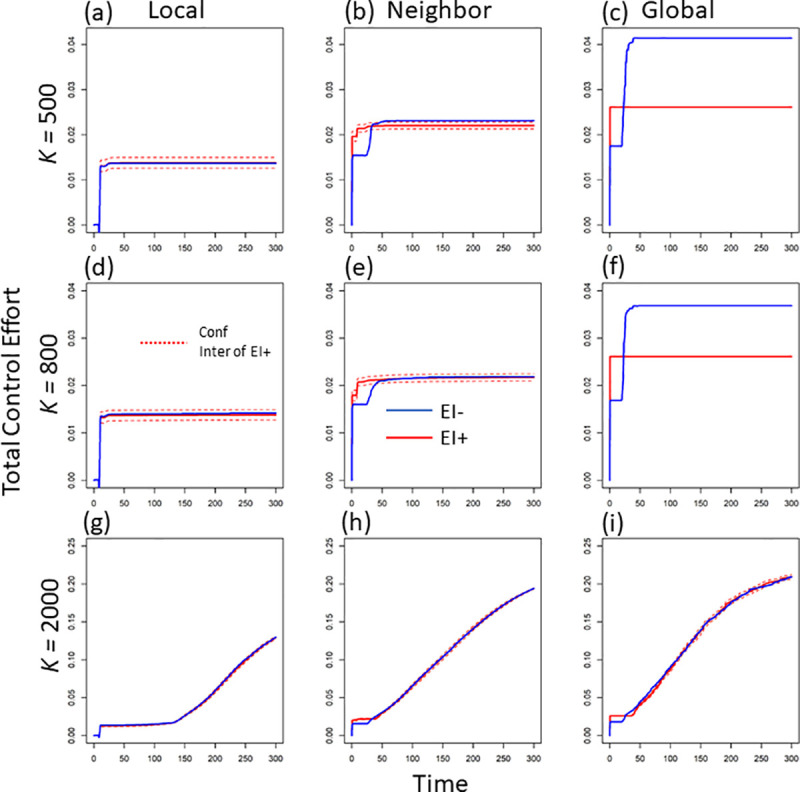
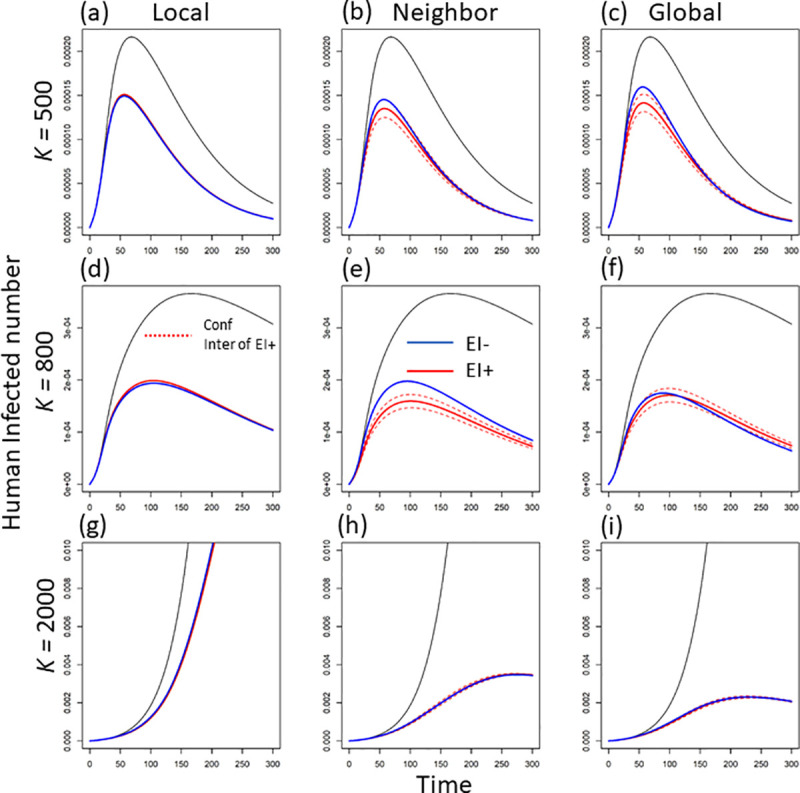
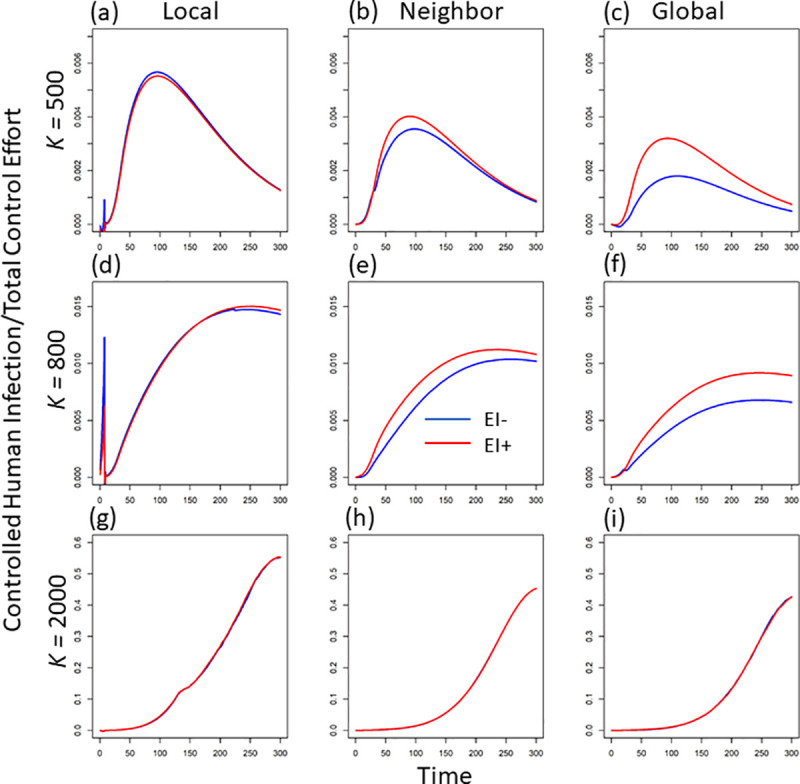
With the development of social media, the information about vector-borne disease incidence over broad spatial scales can cause demand for local vector control before local risk exists. Anticipatory intervention may still benefit local disease control efforts; however, infection risks are not the only focal concerns governing public demand for vector control. Concern for environmental contamination from pesticides and economic limitations on the frequency and magnitude of control measures also play key roles. Further, public concern may be focused more on ecological factors (i.e., controlling mosquito populations) or on epidemiological factors (i.e., controlling infection-carrying mosquitoes), which may lead to very different control outcomes. Here we introduced a generic Ross-MacDonald model, incorporating these factors under three spatial scales of disease information: local, regional, and global. We tailored and parameterized the model for Zika virus transmitted by Aedes aegypti mosquito. We found that sensitive reactivity caused by larger-scale incidence information could decrease average human infections per patch breeding capacity, however, the associated increase in total control effort plays a larger role, which leads to an overall decrease in control efficacy. The shift of focal concerns from epidemiological to ecological risk could relax the negative effect of the sensitive reactivity on control efficacy when mosquito breeding capacity populations are expected to be large. This work demonstrates that, depending on expected total mosquito breeding capacity population size, and weights of different focal concerns, large-scale disease information can reduce disease infections without lowering control efficacy. Our findings provide guidance for vector-control strategies by considering public reaction through social media.
随着社交媒体的发展,关于广泛空间尺度上虫媒传染病发病率的信息可能会导致在当地存在风险之前就对当地的病媒控制产生需求。预期干预措施仍然可能有利于当地的疾病控制工作;然而,感染风险并不是管理公众对病媒控制需求的唯一焦点关注。对农药造成的环境污染的担忧以及控制措施的频率和规模的经济限制也起着关键作用。此外,公众的关注可能更集中在生态因素(即控制蚊子种群)或流行病学因素(即控制携带感染的蚊子)上,这可能导致非常不同的控制结果。在这里,我们引入了一个通用的罗斯-麦克唐纳模型,在疾病信息的三个空间尺度(局部、区域和全球)下纳入了这些因素。我们针对埃及伊蚊传播的寨卡病毒对模型进行了调整和参数化。我们发现,较大规模的发病率信息引起的敏感反应可能会降低每个斑块繁殖能力的平均人类感染数量,但随之而来的总控制努力的增加起着更大的作用,这导致控制效果整体下降。当预期的蚊子繁殖能力种群较大时,将焦点关注从流行病学风险转移到生态风险,可能会减轻敏感反应对控制效果的负面影响。这项工作表明,根据预期的总蚊子繁殖能力种群规模以及不同焦点关注的权重,大规模的疾病信息可以在不降低控制效果的情况下减少疾病感染。我们的研究结果通过考虑通过社交媒体的公众反应,为病媒控制策略提供了指导。