Wei Jun-Jun, Tang Li, Chen Liang-Liang, Xie Zhen-Hua, Ren Yu, Qi Hong-Gang, Lou Jiang-Yong, Weng Guo-Bin, Zhang Shu-Wei
Department of Renal Transplantation, Ningbo Urology and Nephrology Hospital, Ningbo, Zhejiang, China.
Iran J Public Health. 2021 May;50(5):908-918. doi: 10.18502/ijph.v50i5.6108.
Mesenchymal stem cells (MSCs) have recently shown promise for the treatment of various types of chronic kidney disease models. However, the mechanism of this effect is still not well understood. Our study is aimed to investigate the effect of MSCs on transforming growth factor beta 1 (TGF-β1)-induced epithelial mesenchymal transition (EMT) in renal tubular epithelial cells (HK-2 cells) and the underlying mechanism related to the reciprocal balance between hepatocyte growth factor (HGF) and TGF-β1.
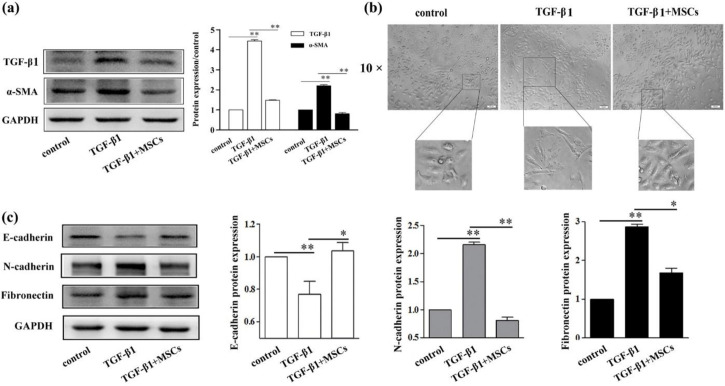
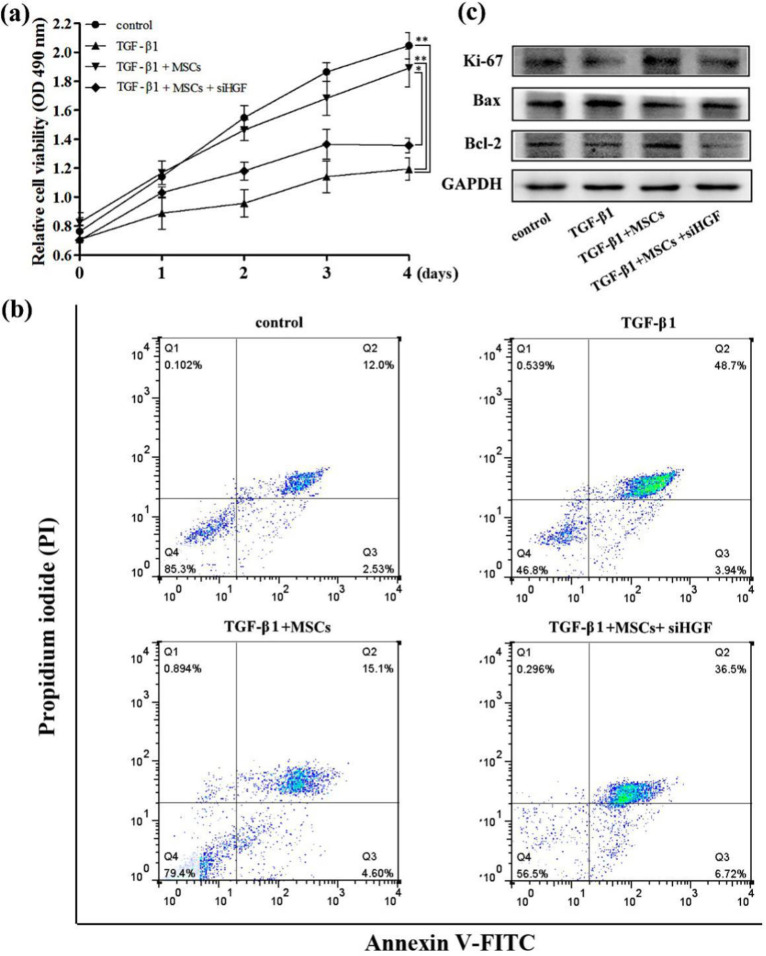
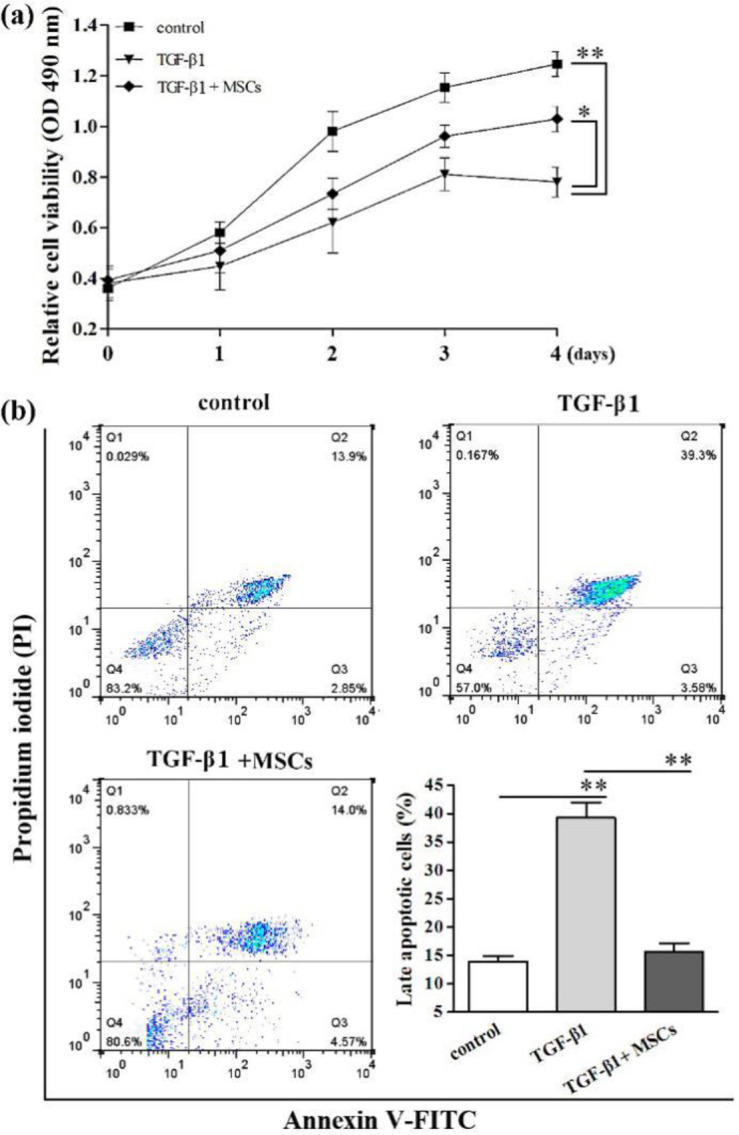
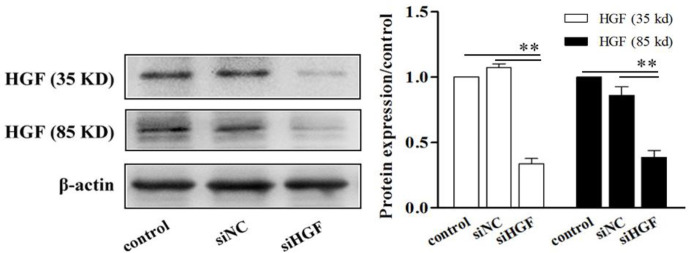
Our study was performed at Ningbo University, , Zhejiang, China between Mar 2017 and Jun 2018. HK-2 cells were initially treated with TGF-β1, then co-cultured with MSCs. The induced EMT was assessed by cellular morphology and the expressions of alpha-smooth muscle actin (α-SMA) and EMT-related proteins. MTS assay and flow cytometry were employed to detect the effect of TGF-β1 and MSCs on HK-2 cell proliferation and apoptosis. SiRNA against hepatocyte growth factor (siHGF) was transfected to decrease the expression of HGF to identify the role of HGF in MSCs inhibiting HK-2 cells EMT.
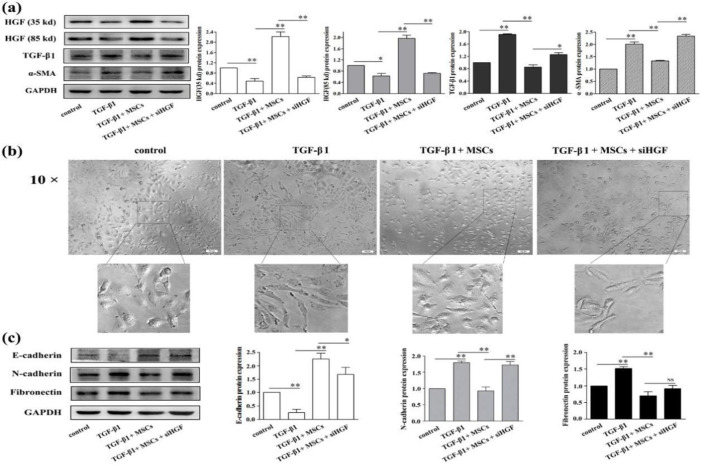
Overexpressing TGF-β1 decreased HGF expression, induced EMT, suppressed proliferation and promoted apoptosis in HK-2 cells; but when co-cultured with MSCs all the outcomes were reversed. However, after treated with siHGF, all the benefits taken from MSCs vanished.
TGF-β1 was a motivating factor of kidney cell EMT and it suppressed the HGF expression. However, MSCs provided protection against EMT by increasing HGF level and decreasing TGF-β1 level. Our results also demonstrated HGF is one of the critical factor in MSCs anti- fibrosis.
间充质干细胞(MSCs)最近在治疗各种类型的慢性肾脏病模型方面显示出前景。然而,这种作用的机制仍未完全清楚。我们的研究旨在探讨间充质干细胞对转化生长因子β1(TGF-β1)诱导的肾小管上皮细胞(HK-2细胞)上皮-间质转化(EMT)的影响以及与肝细胞生长因子(HGF)和TGF-β1之间相互平衡相关的潜在机制。
我们的研究于2017年3月至2018年6月在中国浙江省宁波大学进行。HK-2细胞首先用TGF-β1处理,然后与间充质干细胞共培养。通过细胞形态以及α-平滑肌肌动蛋白(α-SMA)和EMT相关蛋白的表达来评估诱导的EMT。采用MTS法和流式细胞术检测TGF-β1和间充质干细胞对HK-2细胞增殖和凋亡的影响。转染针对肝细胞生长因子的小干扰RNA(siHGF)以降低HGF的表达,以确定HGF在间充质干细胞抑制HK-2细胞EMT中的作用。
过表达TGF-β1降低了HGF表达,诱导了EMT,抑制了HK-2细胞的增殖并促进了其凋亡;但与间充质干细胞共培养后,所有这些结果都得到了逆转。然而,在用siHGF处理后,从间充质干细胞获得的所有益处都消失了。
TGF-β1是肾细胞EMT的一个驱动因素,它抑制了HGF表达。然而,间充质干细胞通过提高HGF水平和降低TGF-β1水平来提供对EMT的保护。我们的结果还表明HGF是间充质干细胞抗纤维化的关键因素之一。