Institute of Human Genetics, Universitätsklinikum Erlangen, Friedrich-Alexander-Universität Erlangen-Nürnberg (FAU), 91054 Erlangen, Germany.
Institute of Biochemistry, Emil Fischer Center, Friedrich-Alexander-Universität Erlangen-Nürnberg, 91054 Erlangen, Germany.
Development. 2021 Jul 15;148(14). doi: 10.1242/dev.196022. Epub 2021 Jul 19.
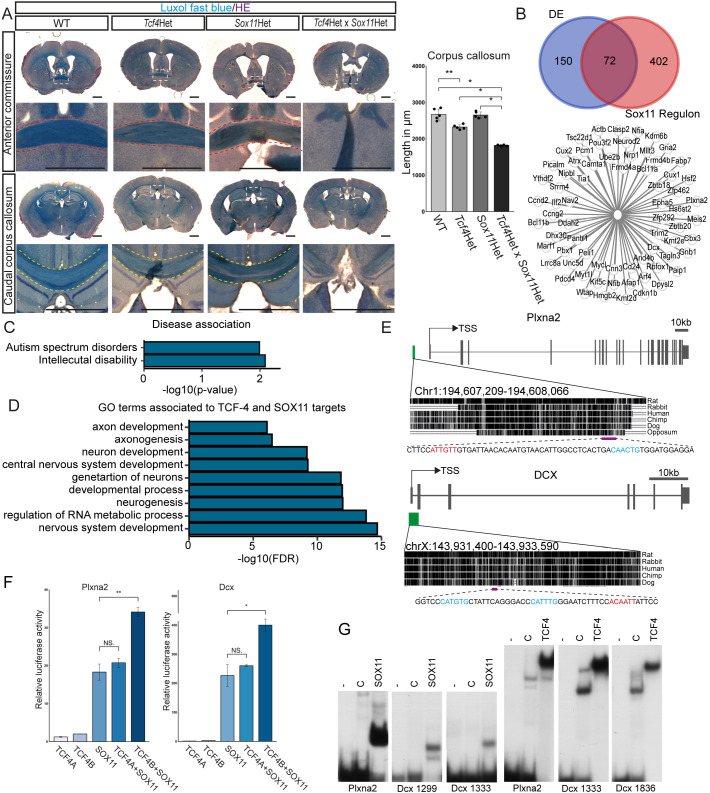
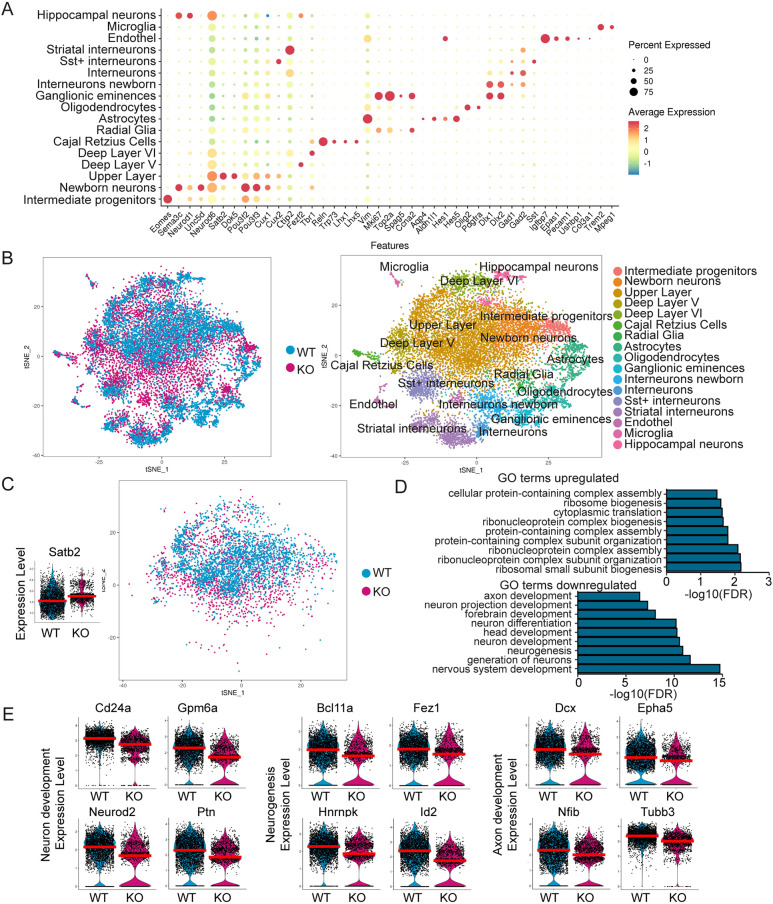
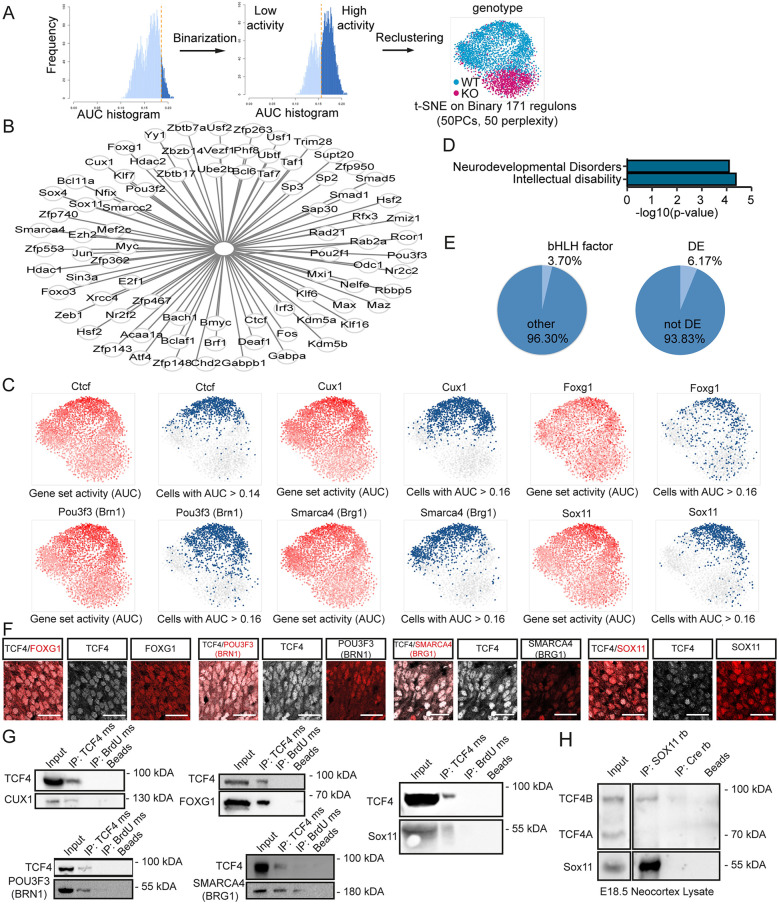
Transcription factor 4 (TCF4) is a crucial regulator of neurodevelopment and has been linked to the pathogenesis of autism, intellectual disability and schizophrenia. As a class I bHLH transcription factor (TF), it is assumed that TCF4 exerts its neurodevelopmental functions through dimerization with proneural class II bHLH TFs. Here, we aim to identify TF partners of TCF4 in the control of interhemispheric connectivity formation. Using a new bioinformatic strategy integrating TF expression levels and regulon activities from single cell RNA-sequencing data, we find evidence that TCF4 interacts with non-bHLH TFs and modulates their transcriptional activity in Satb2+ intercortical projection neurons. Notably, this network comprises regulators linked to the pathogenesis of neurodevelopmental disorders, e.g. FOXG1, SOX11 and BRG1. In support of the functional interaction of TCF4 with non-bHLH TFs, we find that TCF4 and SOX11 biochemically interact and cooperatively control commissure formation in vivo, and regulate the transcription of genes implicated in this process. In addition to identifying new candidate interactors of TCF4 in neurodevelopment, this study illustrates how scRNA-Seq data can be leveraged to predict TF networks in neurodevelopmental processes.
转录因子 4 (TCF4) 是神经发育的关键调节因子,与自闭症、智力障碍和精神分裂症的发病机制有关。作为 I 类 bHLH 转录因子 (TF),TCF4 被认为通过与神经前体细胞 II 类 bHLH TF 二聚化来发挥其神经发育功能。在这里,我们旨在确定 TCF4 在控制半球间连接形成中的 TF 伙伴。我们使用一种新的生物信息学策略,整合来自单细胞 RNA 测序数据的 TF 表达水平和调控子活性,发现 TCF4 与非 bHLH TF 相互作用,并调节它们在 Satb2+皮质间投射神经元中的转录活性。值得注意的是,这个网络包括与神经发育障碍发病机制相关的调节剂,例如 FOXG1、SOX11 和 BRG1。为了支持 TCF4 与非 bHLH TF 的功能相互作用,我们发现 TCF4 和 SOX11 在体内具有生物化学相互作用,并协同控制联合形成,调节与该过程相关的基因的转录。除了在神经发育中鉴定 TCF4 的新候选相互作用物外,这项研究还说明了如何利用 scRNA-Seq 数据来预测神经发育过程中的 TF 网络。