Department of Anesthesia, St. Michael's Hospital, University of Toronto, Toronto, ON, Canada.
Department of Physiology, University of Toronto, Toronto, ON, Canada.
Physiol Rep. 2021 Jun;9(12):e14890. doi: 10.14814/phy2.14890.
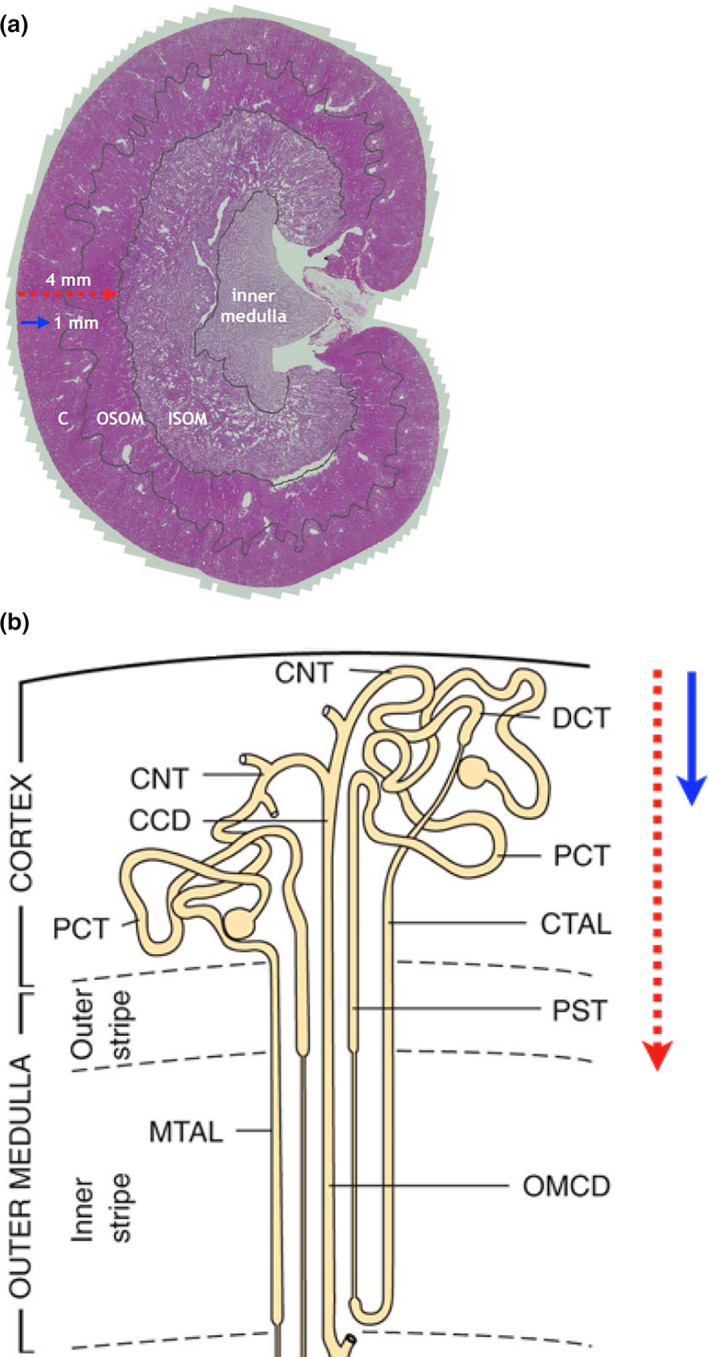
The mechanisms whereby inhibitors of sodium-glucose linked cotransporter-2 (SGLT2) exert their nephroprotective effects in patients with diabetes are incompletely understood but have been hypothesized to include improved tissue oxygen tension within the renal cortex. The impact of SGLT2 inhibition is likely complex and region specific within the kidney. We hypothesize that SGLT2 inhibitors have differential effects on renal tissue oxygen delivery and consumption in specific regions of the diabetic kidney, including the superficial cortex, containing SGLT2-rich components of proximal tubules, versus the deeper cortex and outer medulla, containing predominantly SGLT1 receptors.
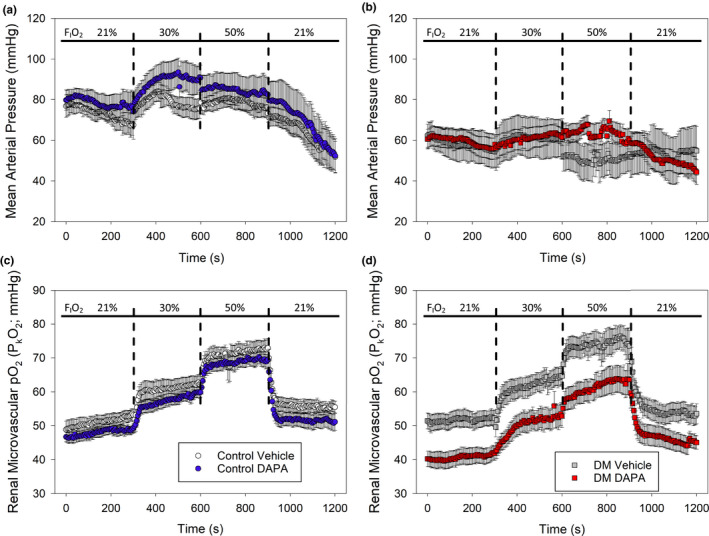
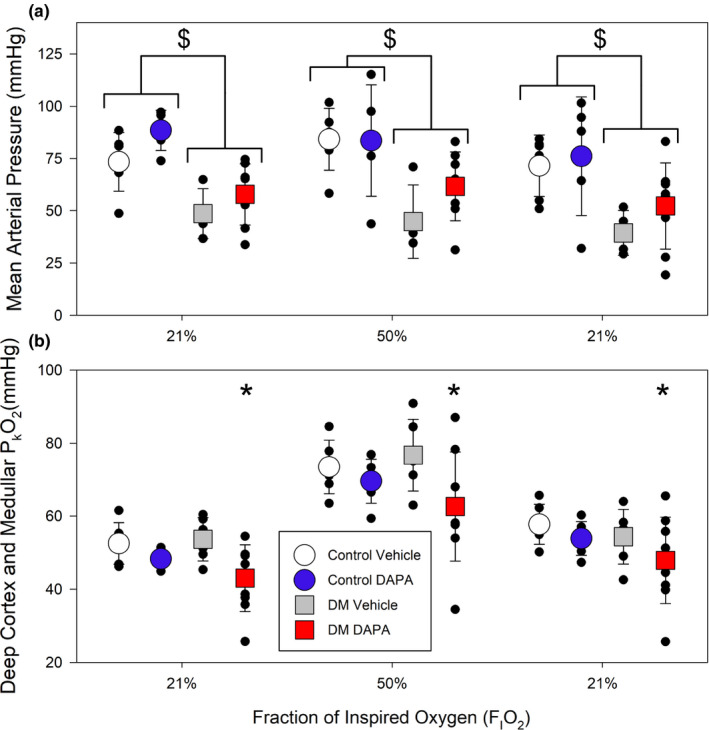
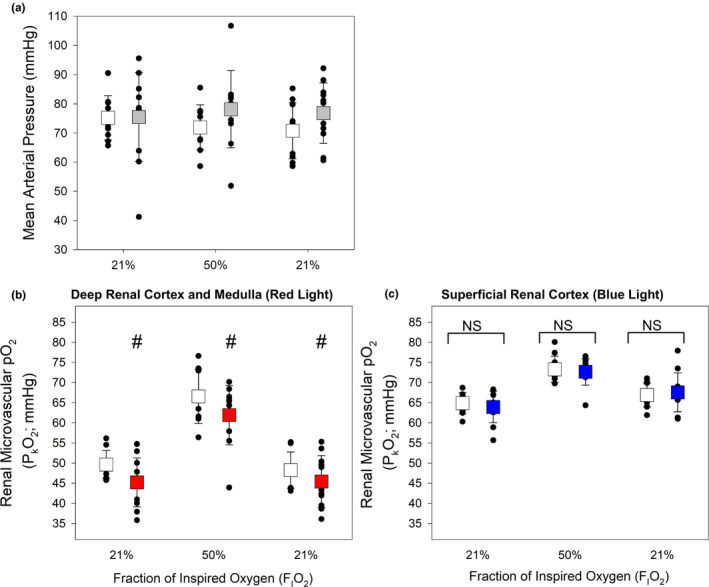
We measured glomerular filtration rate (GFR), microvascular kidney oxygen tension (P O ), erythropoietin (EPO) mRNA, and reticulocyte count in diabetic rats (streptozotocin) treated with the SGLT2 inhibitor, dapagliflozin. Utilizing phosphorescence quenching by oxygen and an intravascular oxygen sensitive probe (Oxyphor PdG4); we explored the effects of SGLT2 inhibition on P O in a region-specific manner, in vivo, in diabetic and non-diabetic rats. Superficial renal cortical or deeper cortical and outer medullary P O were measured utilizing excitations with blue and red light wavelengths, respectively.
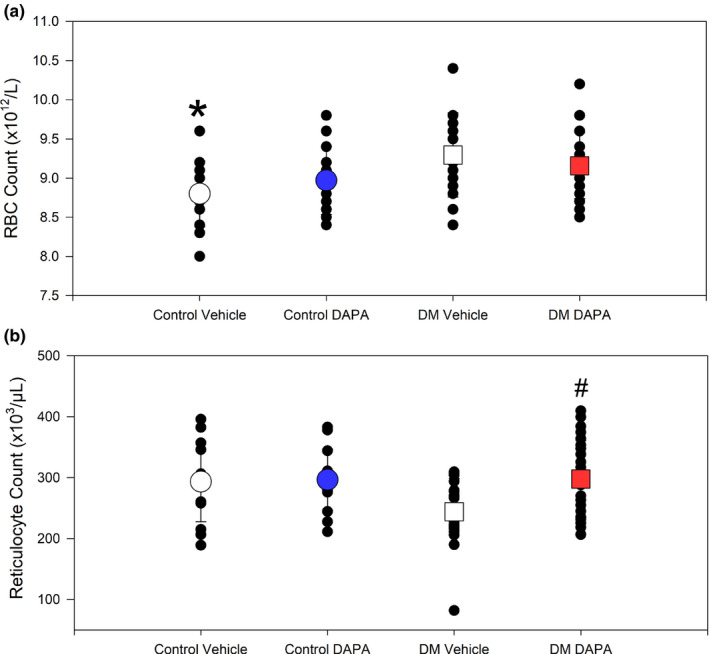
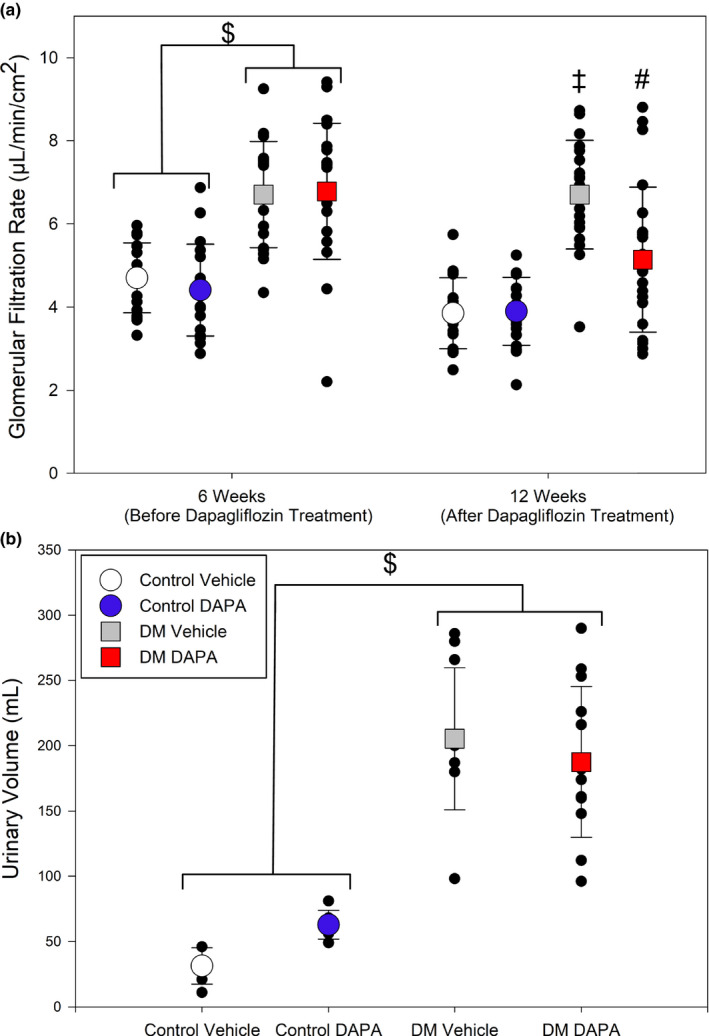
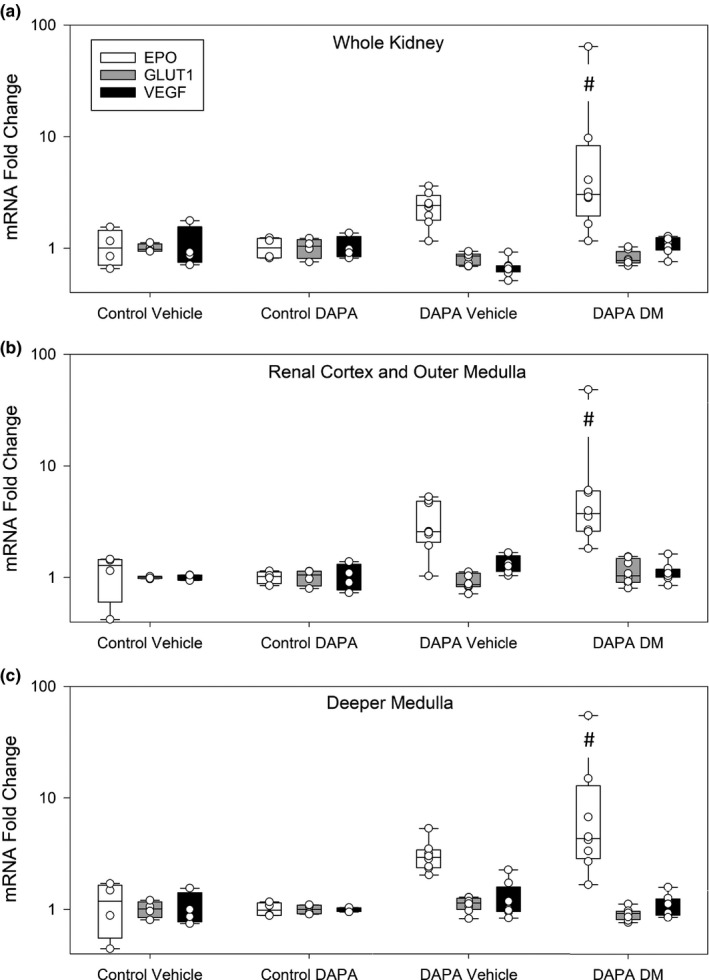
In diabetic rats treated with dapagliflozin, measurement within the superficial cortex (blue light) demonstrated no change in P O . By contrast, measurements in the deeper cortex and outer medulla (red light) demonstrated a significant reduction in P O in dapagliflozin treated diabetic rats (p = 0.014). Consistent with these findings, GFR was decreased, hypoxia-responsive EPO mRNA levels were elevated and reticulocyte counts were increased with SGLT2 inhibition in diabetic rats (p < 0.05 for all).
These findings indicate that microvascular kidney oxygen tension is maintained in the superficial cortex but reduced in deeper cortical and outer medullary tissue, possibly due to the regional impact of SGLT-2 inhibition on tissue metabolism. This reduction in deeper P O had biological impact as demonstrated by increased renal EPO mRNA levels and circulating reticulocyte count.
目前对于钠-葡萄糖协同转运蛋白 2(SGLT2)抑制剂在糖尿病患者中发挥肾脏保护作用的机制尚不完全清楚,但据推测可能包括改善肾皮质组织中的氧张力。SGLT2 抑制剂在肾脏中的作用可能是复杂的,并且具有区域特异性。我们假设 SGLT2 抑制剂对糖尿病肾脏的特定区域(包括富含 SGLT2 的近端肾小管的浅层皮质和主要含有 SGLT1 受体的深层皮质和外髓质)的肾组织氧供和消耗有不同的影响。
我们测量了糖尿病大鼠(链脲佐菌素)在给予 SGLT2 抑制剂达格列净后的肾小球滤过率(GFR)、肾脏微血管氧分压(P O )、促红细胞生成素(EPO)mRNA 和网织红细胞计数。利用氧的磷光猝灭和血管内氧敏感探针(Oxyphor PdG4),我们在体内以区域特异性的方式探索了 SGLT2 抑制对 P O 的影响,在糖尿病和非糖尿病大鼠中分别使用蓝光和红光激发进行测量。
在接受达格列净治疗的糖尿病大鼠中,在浅层皮质(蓝光)进行的测量显示 P O 没有变化。相比之下,在深层皮质和外髓质(红光)的测量显示,达格列净治疗的糖尿病大鼠的 P O 显著降低(p = 0.014)。与这些发现一致的是,在糖尿病大鼠中,SGLT2 抑制导致 GFR 降低、缺氧反应性 EPO mRNA 水平升高和网织红细胞计数升高(所有均为 p < 0.05)。
这些发现表明,尽管 SGLT2 抑制剂可能会影响组织代谢,但在浅层皮质中肾脏微血管氧分压得以维持,而在深层皮质和外髓质组织中则降低。这种深层 P O 的降低具有生物学影响,表现为肾脏 EPO mRNA 水平升高和循环网织红细胞计数升高。