Bittner Andras, Hause Bettina, Baier Margarete
Plant Physiology, Freie Universität Berlin, Dahlem Centre of Plant Sciences, Königin-Luise-Straße 12-16, 14195 Berlin, Germany.
Leibniz Institute of Plant Biochemistry, Weinberg 3, 06120 Halle, Germany.
J Exp Bot. 2021 Oct 26;72(20):7163-7179. doi: 10.1093/jxb/erab314.
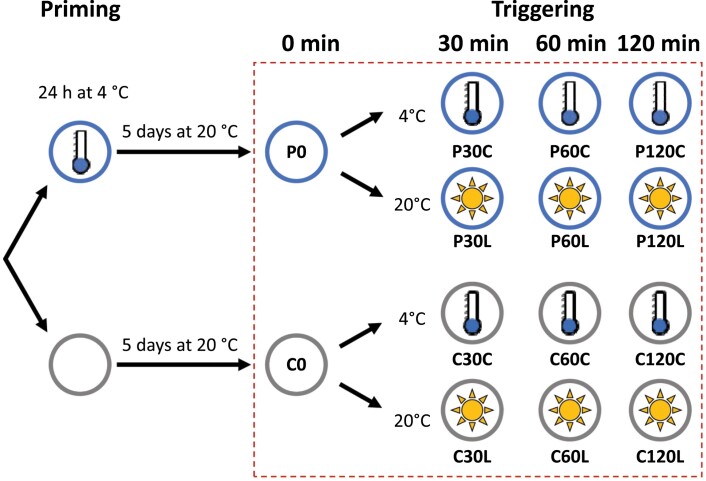
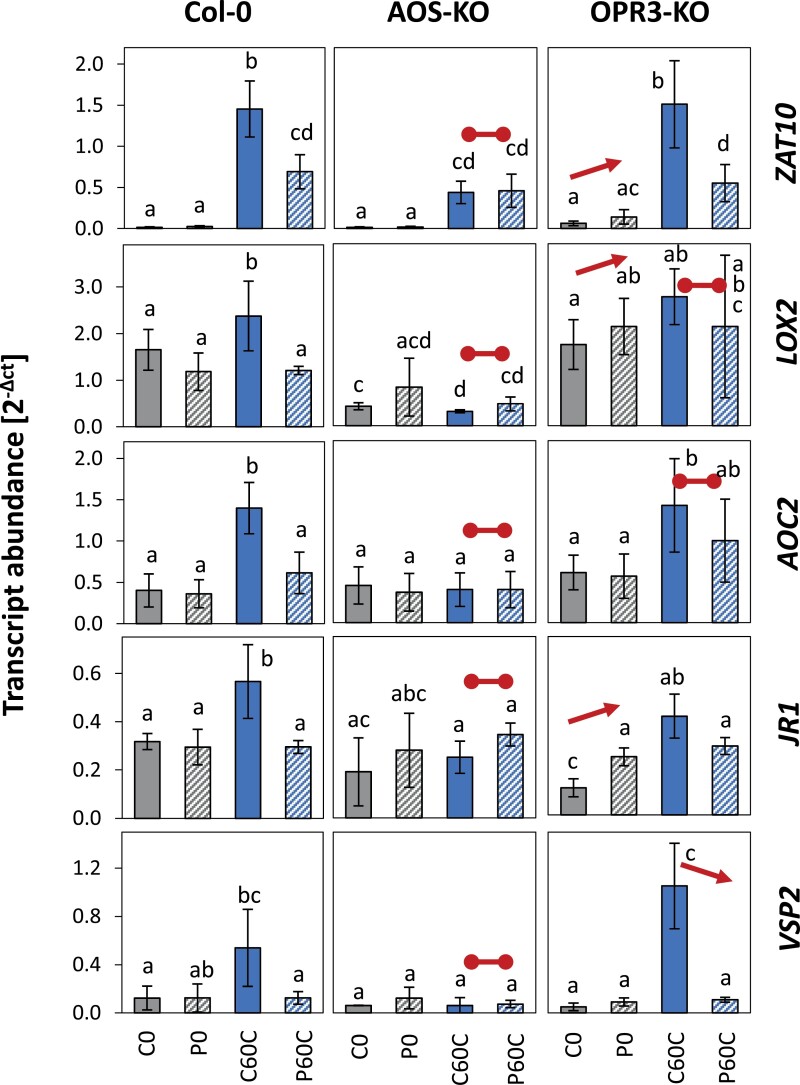
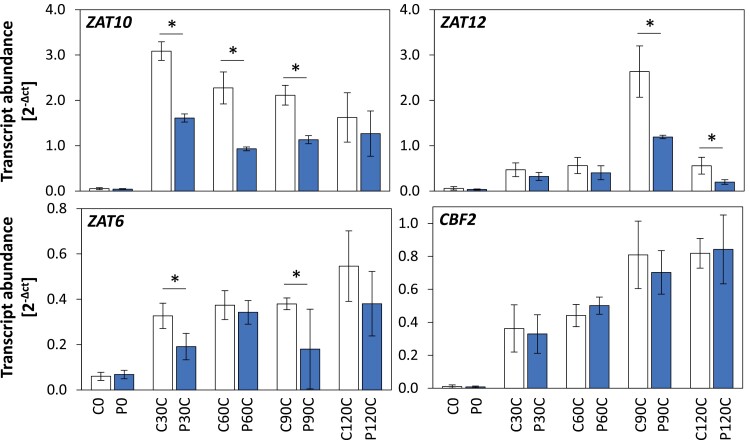
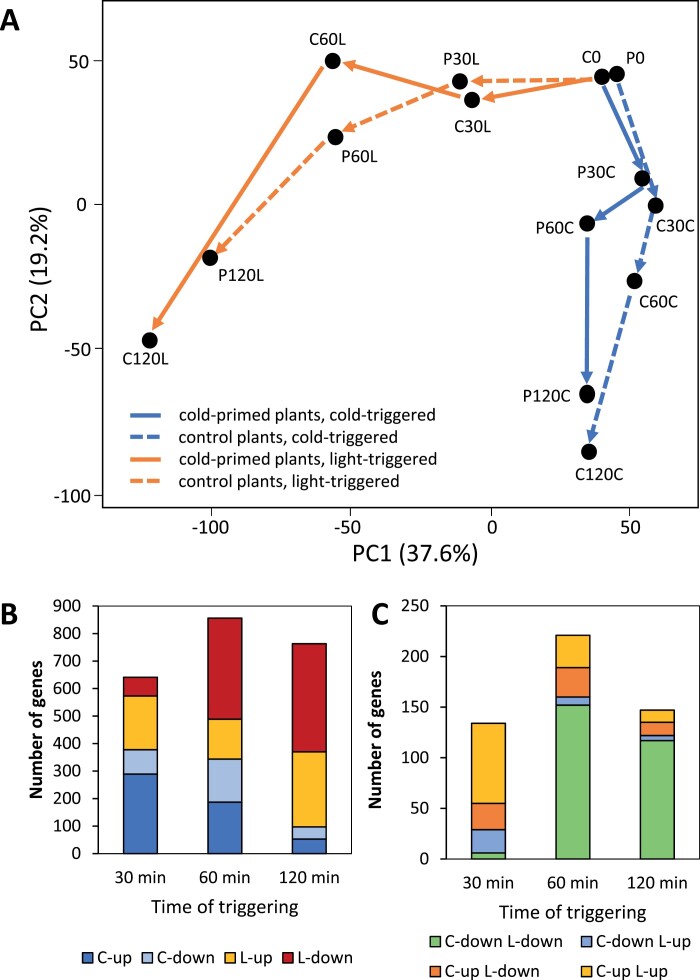
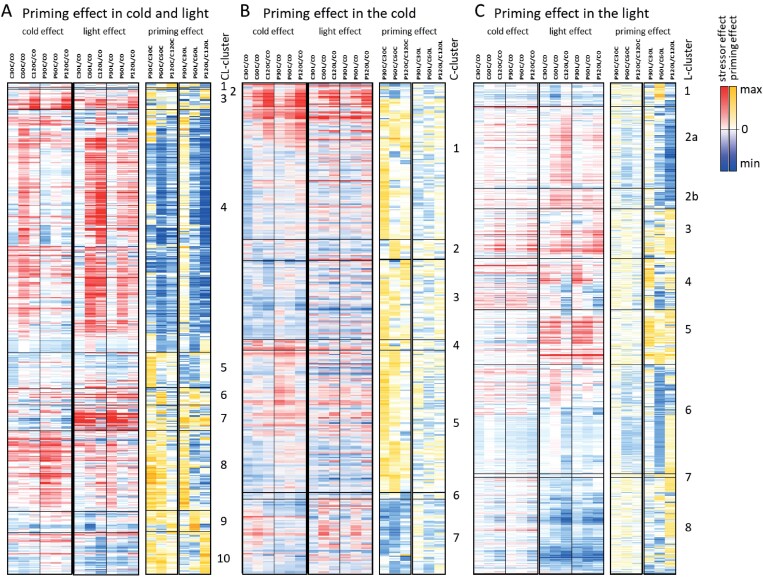
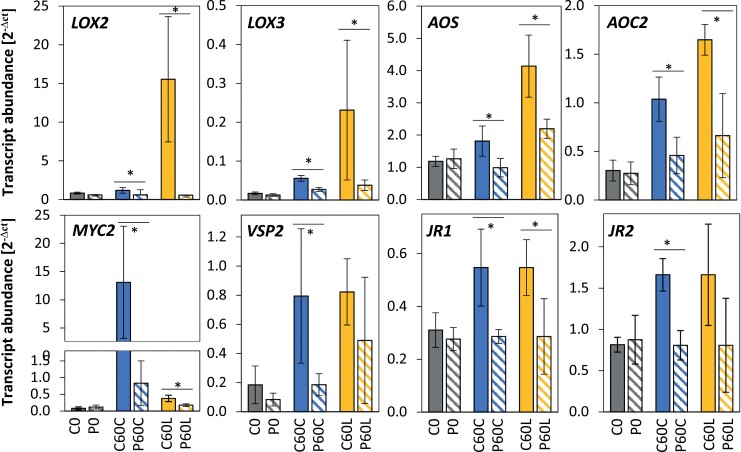
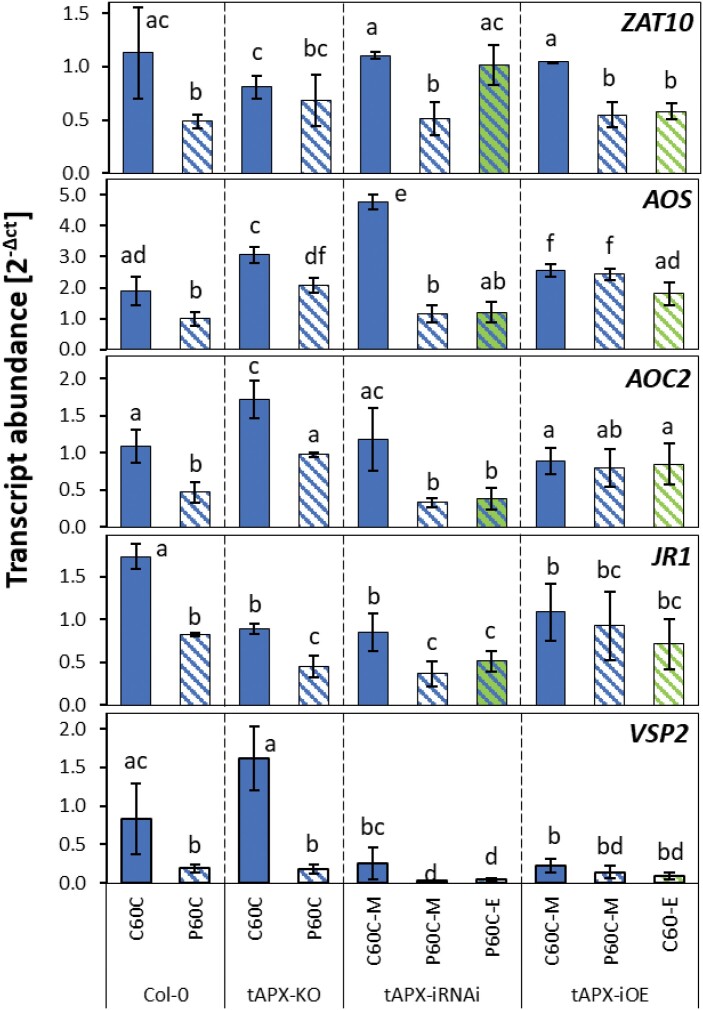
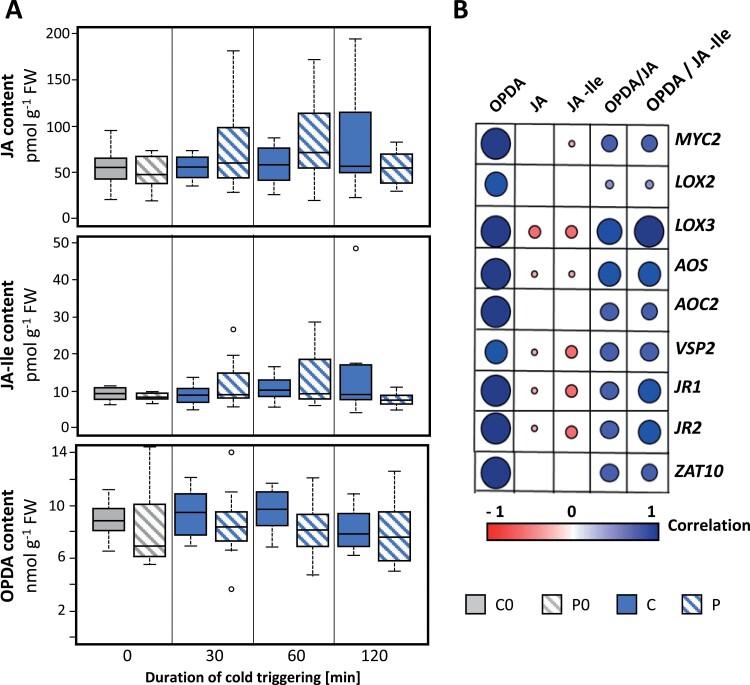
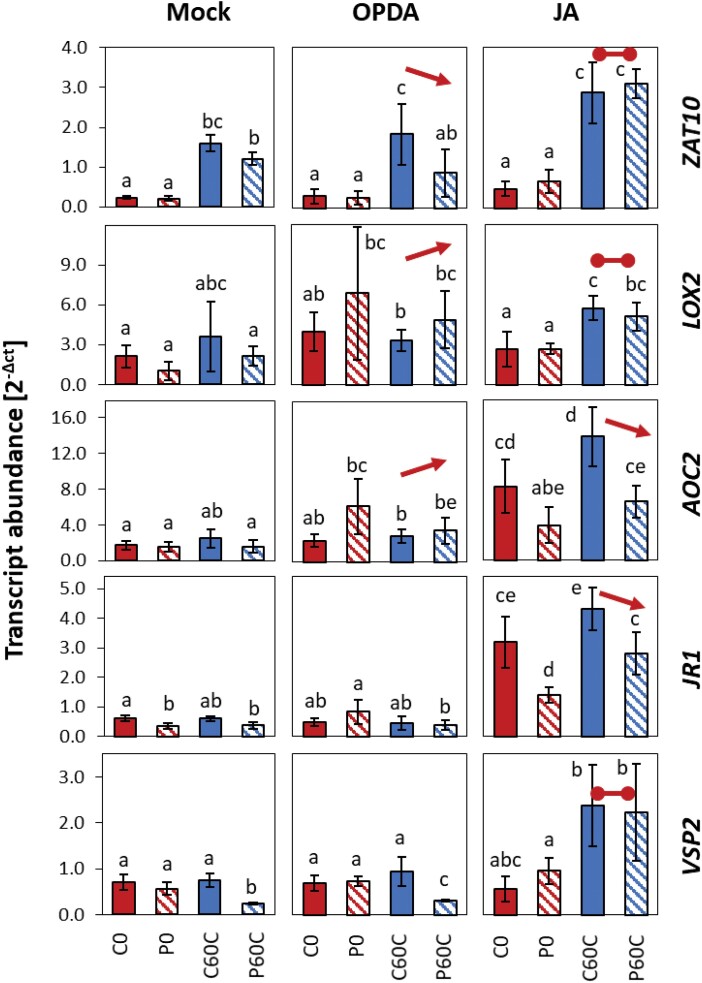
Cold-priming uncouples cold and light regulation of otherwise tightly co-regulated genes. In this study, we focused on the early regulatory processes in Arabidopsis within the first 2 h in cold and in high light after a 5-d lag-phase at 20 °C and 24 h cold-priming at 4 °C. Priming quickly modified gene expression in a trigger-specific manner. In the early stress-response phase during cold and high-light triggering, it reduced the regulatory amplitudes of many up- and down-regulated genes. A third of the priming-regulated genes were jasmonate-sensitive, including the full set of genes required for oxylipin biosynthesis. Analysis of wild-type and mutant plants based on qPCR demonstrated that biosynthesis of the jasmonic acid (JA) precursor 12-oxo phytenoic acid (OPDA) relative to the availability of JA dampened the response of the genes for oxylipin biosynthesis. In oxylipin biosynthetic mutants, cold-priming more strongly affected genes involved in the biosynthesis of OPDA than in its conversion to JA. In addition, priming-dependent dampening of the triggering response was more linked to OPDA than to regulation of the JA concentration. Spray application of OPDA prior to triggering counteracted the priming effect. Regulation of the oxylipin hub was controlled by modulation of the oxylipin-sensitivity of the genes for OPDA biosynthesis, but it was insensitive to priming-induced accumulation of thylakoid ascorbate peroxidase, thus identifying a parallel-acting cold-priming pathway.
冷启动解除了对原本紧密共调控基因的冷和光调节。在本研究中,我们聚焦于拟南芥在20℃下经过5天滞后期以及在4℃下进行24小时冷启动后,最初2小时内的早期调控过程。启动以触发特异性方式快速改变基因表达。在冷和高光触发的早期应激反应阶段,它降低了许多上调和下调基因的调控幅度。三分之一的启动调控基因对茉莉酸敏感,包括氧脂生物合成所需的全套基因。基于qPCR对野生型和突变体植物的分析表明,相对于茉莉酸的可用性,茉莉酸(JA)前体12-氧代植二烯酸(OPDA)的生物合成减弱了氧脂生物合成基因的反应。在氧脂生物合成突变体中,冷启动对参与OPDA生物合成的基因的影响比对其转化为JA的影响更强。此外,启动依赖的触发反应抑制与OPDA的关系比与JA浓度的调节更密切。在触发前喷施OPDA可抵消启动效应。氧脂枢纽的调节是通过调节OPDA生物合成基因的氧脂敏感性来控制的,但它对启动诱导的类囊体抗坏血酸过氧化物酶积累不敏感,从而确定了一条平行作用的冷启动途径。