Ross Tilley Burn Centre, Sunnybrook Health Sciences Centre, Toronto, Ontario, Canada.
Institute of Medical Sciences, University of Toronto, Toronto, Ontario, Canada.
Clin Transl Med. 2021 Jun;11(6):e417. doi: 10.1002/ctm2.417.
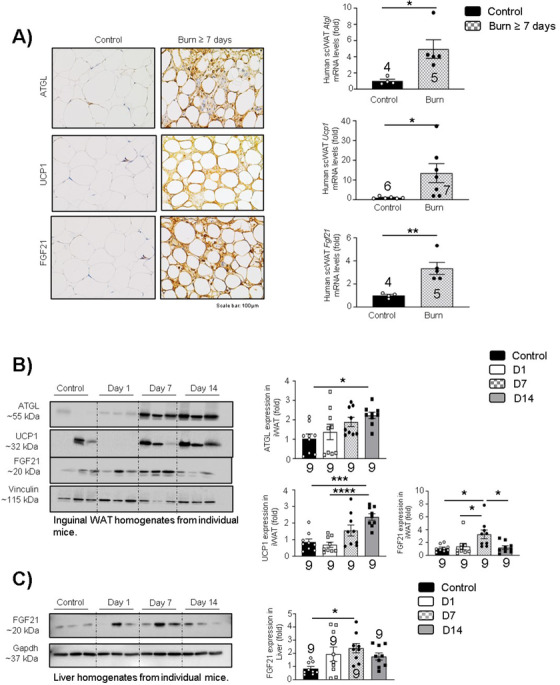
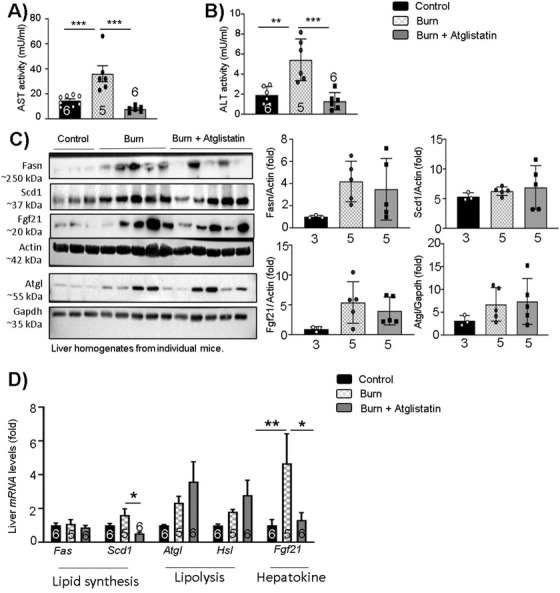
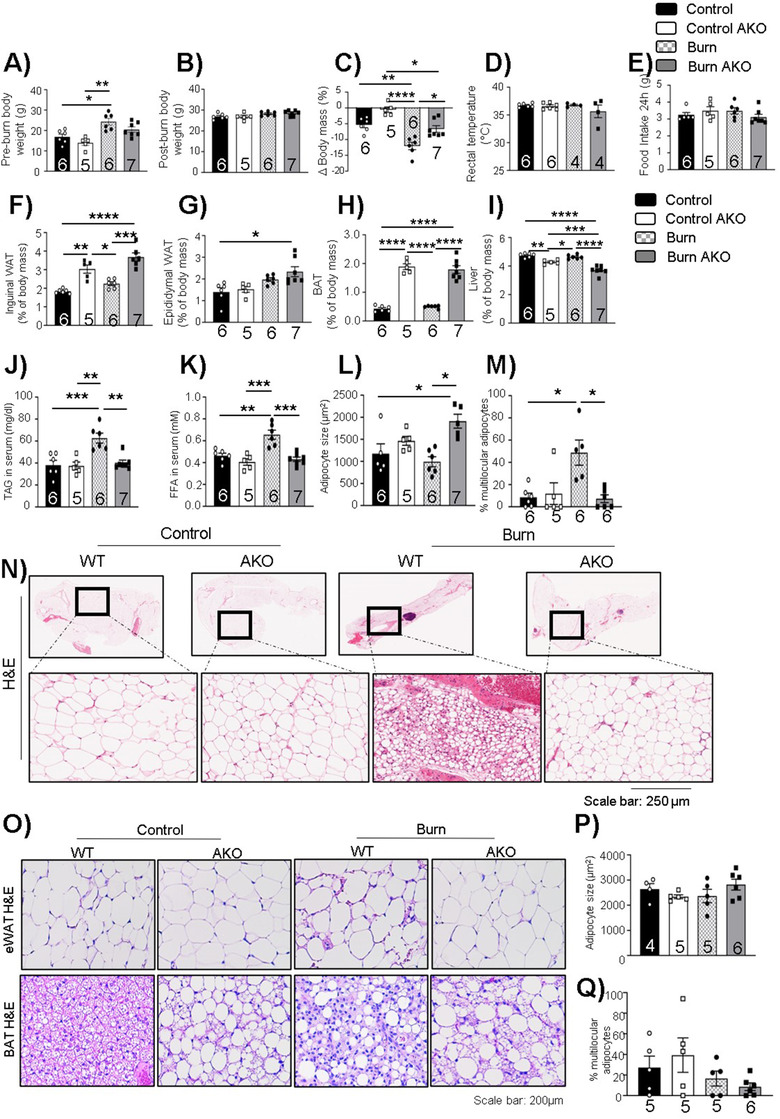
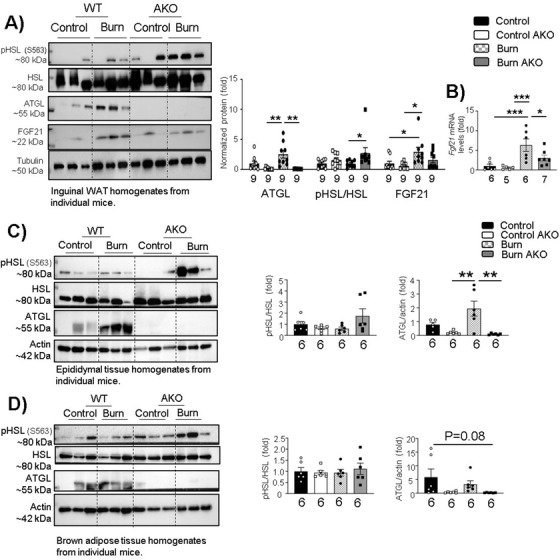
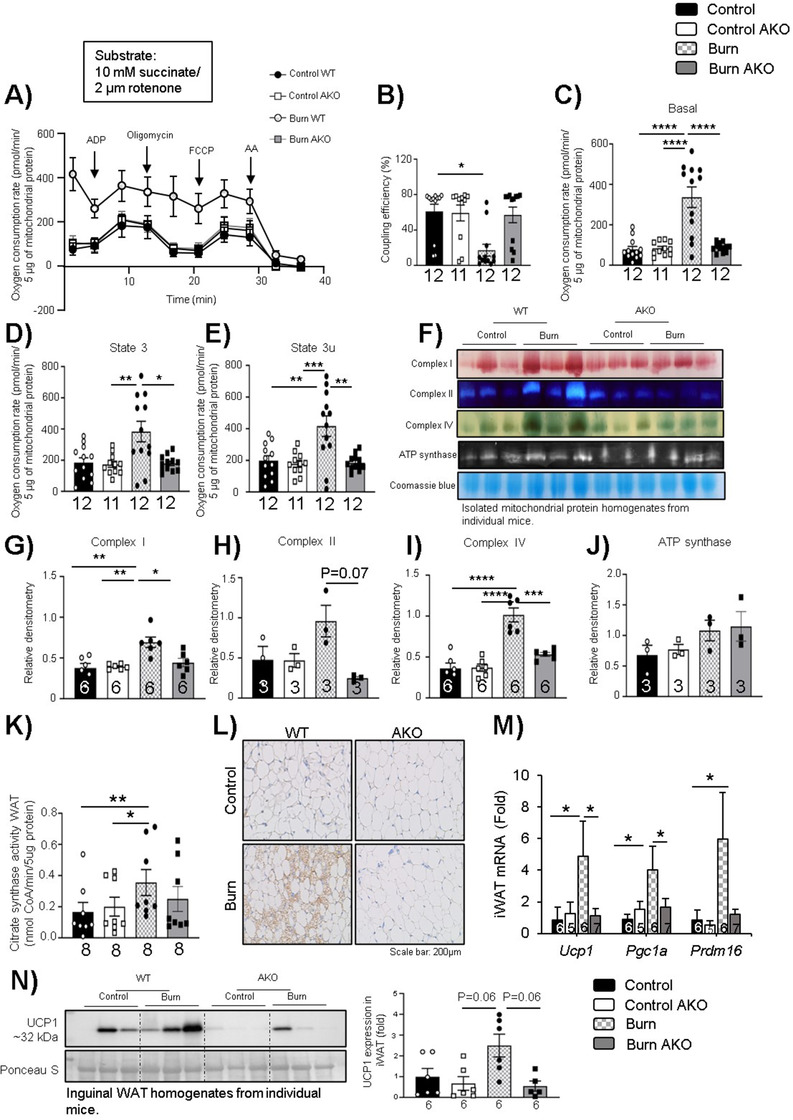
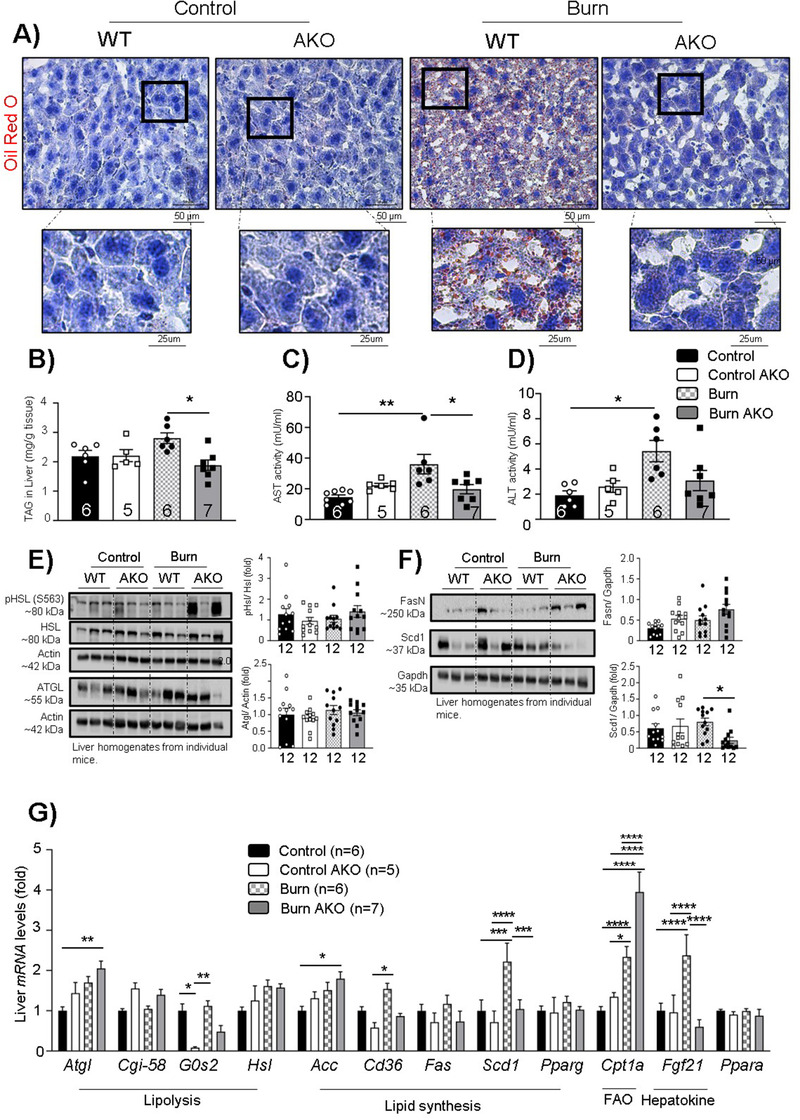
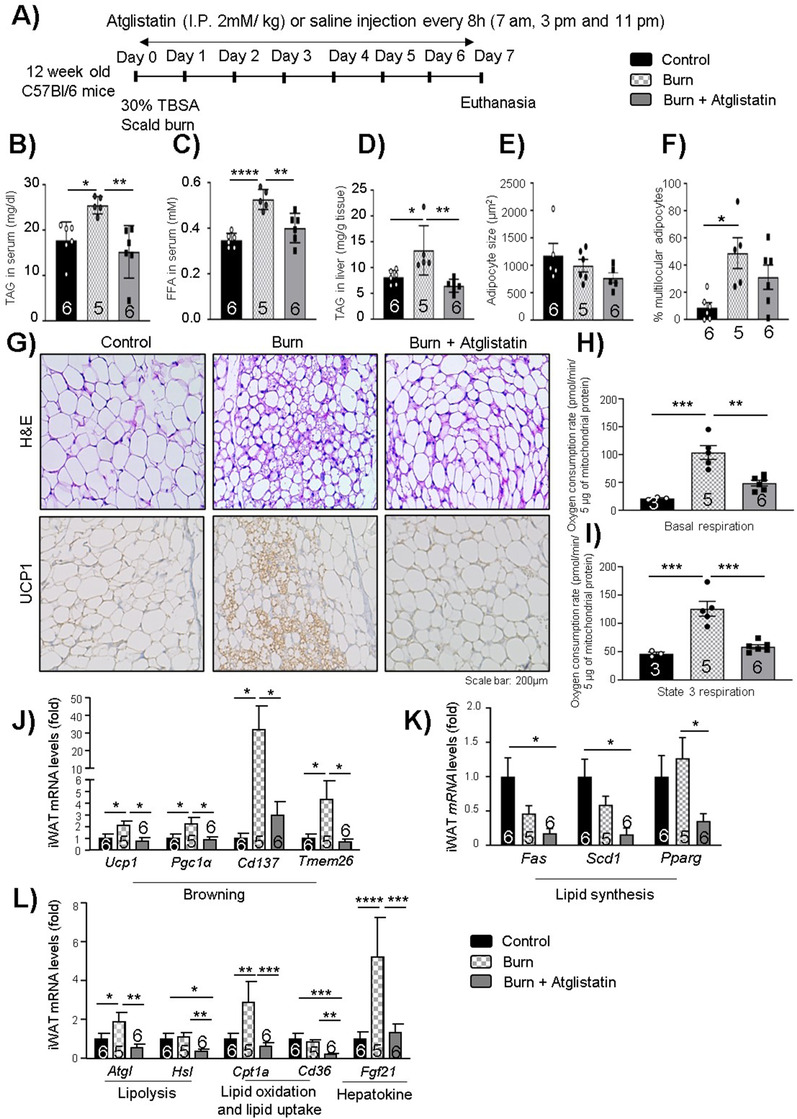
Hypermetabolism following severe burn injuries is associated with adipocyte dysfunction, elevated beige adipocyte formation, and increased energy expenditure. The resulting catabolism of adipose leads to detrimental sequelae such as fatty liver, increased risk of infections, sepsis, and even death. While the phenomenon of pathological white adipose tissue (WAT) browning is well-documented in cachexia and burn models, the molecular mechanisms are essentially unknown. Here, we report that adipose triglyceride lipase (ATGL) plays a central role in burn-induced WAT dysfunction and systemic outcomes. Targeting adipose-specific ATGL in a murine (AKO) model resulted in diminished browning, decreased circulating fatty acids, and mitigation of burn-induced hepatomegaly. To assess the clinical applicability of targeting ATGL, we demonstrate that the selective ATGL inhibitor atglistatin mimics the AKO results, suggesting a path forward for improving patient outcomes.
严重烧伤后的代谢亢进与脂肪细胞功能障碍、米色脂肪细胞形成增加和能量消耗增加有关。脂肪的这种分解代谢导致有害的后遗症,如脂肪肝、感染风险增加、败血症,甚至死亡。虽然在恶病质和烧伤模型中已经很好地记录了病理性白色脂肪组织(WAT)褐变现象,但分子机制基本上是未知的。在这里,我们报告脂肪甘油三酯脂肪酶(ATGL)在烧伤引起的 WAT 功能障碍和全身结果中起着核心作用。在小鼠(AKO)模型中靶向脂肪特异性 ATGL 导致褐变减少、循环脂肪酸减少和烧伤引起的肝肿大减轻。为了评估靶向 ATGL 的临床适用性,我们证明选择性 ATGL 抑制剂 atglistatin 模拟了 AKO 的结果,这为改善患者预后提供了一种途径。