Department of Pathology, Sapporo Medical University, Sapporo, Japan.
Sapporo Dohto Hospital, Sapporo, Japan.
JCI Insight. 2021 Jul 22;6(14):e146356. doi: 10.1172/jci.insight.146356.
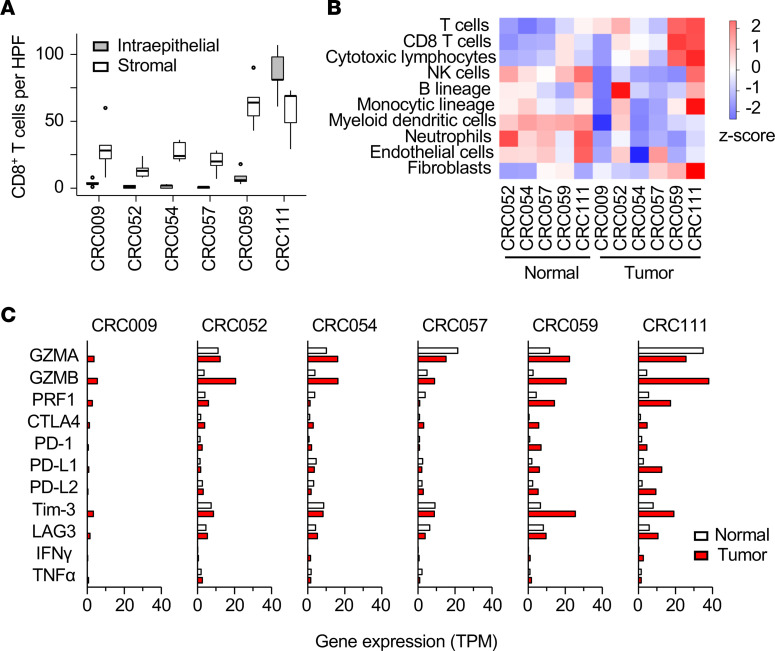
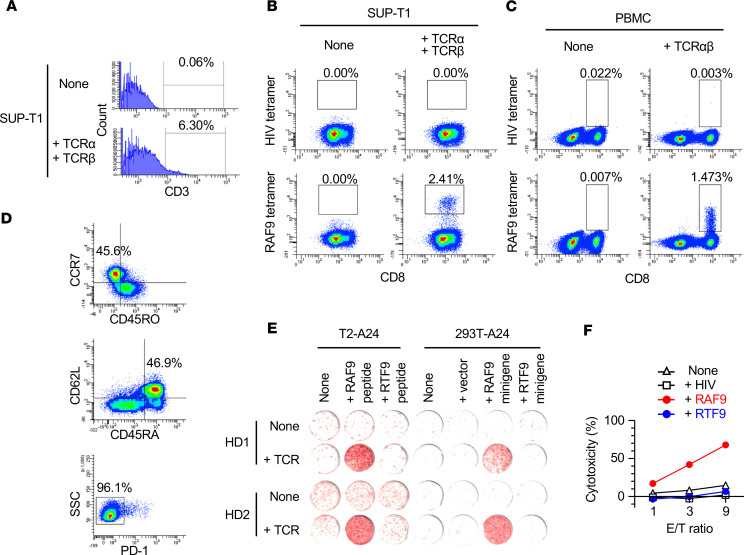
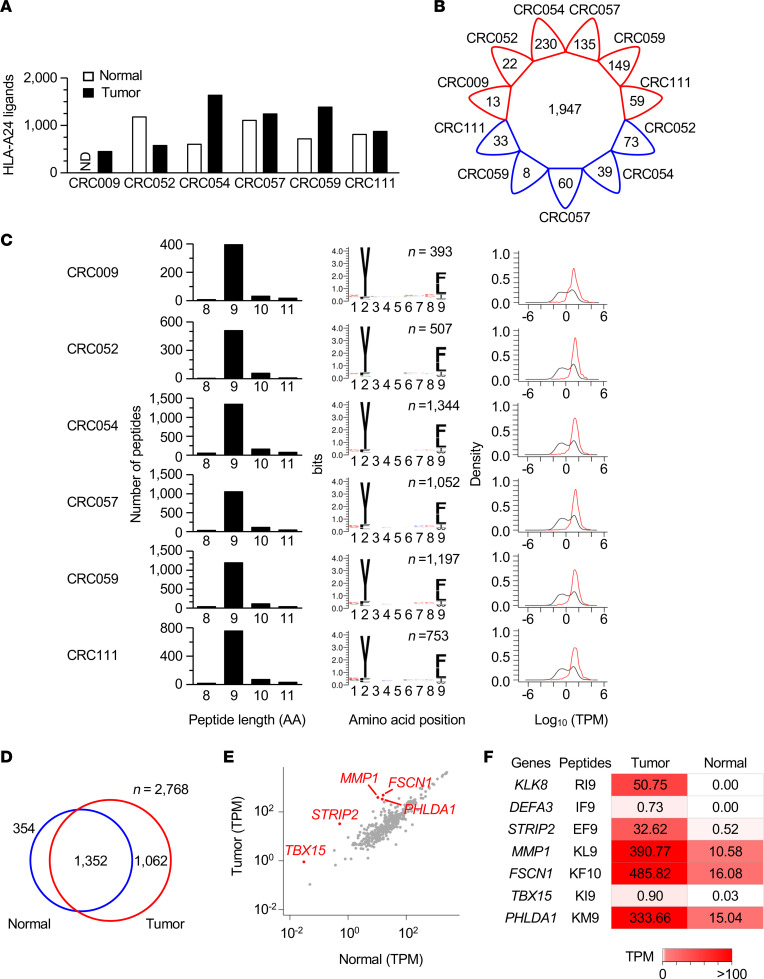
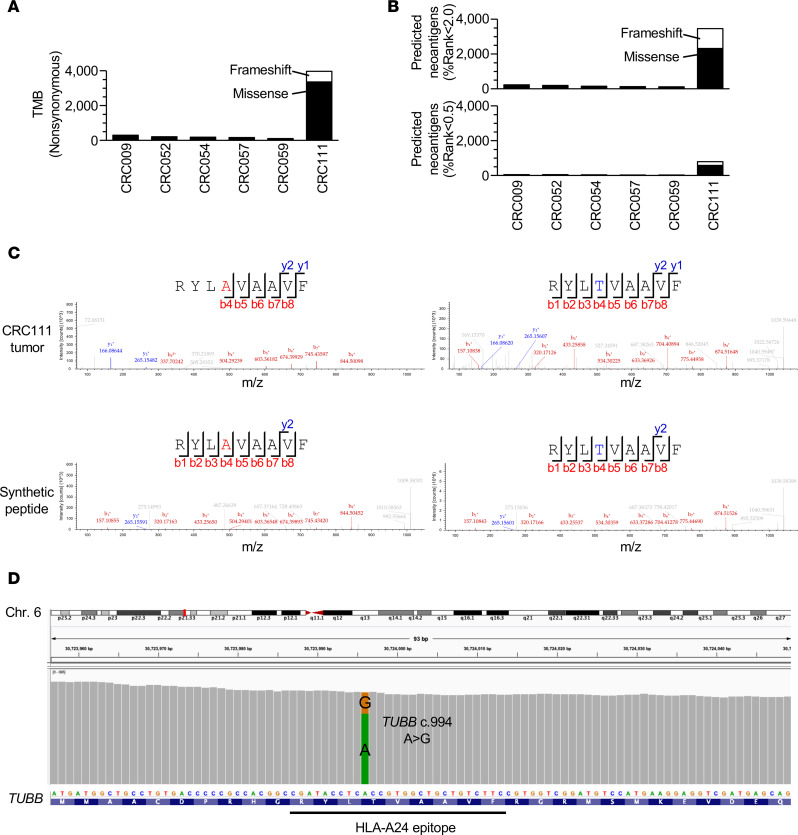
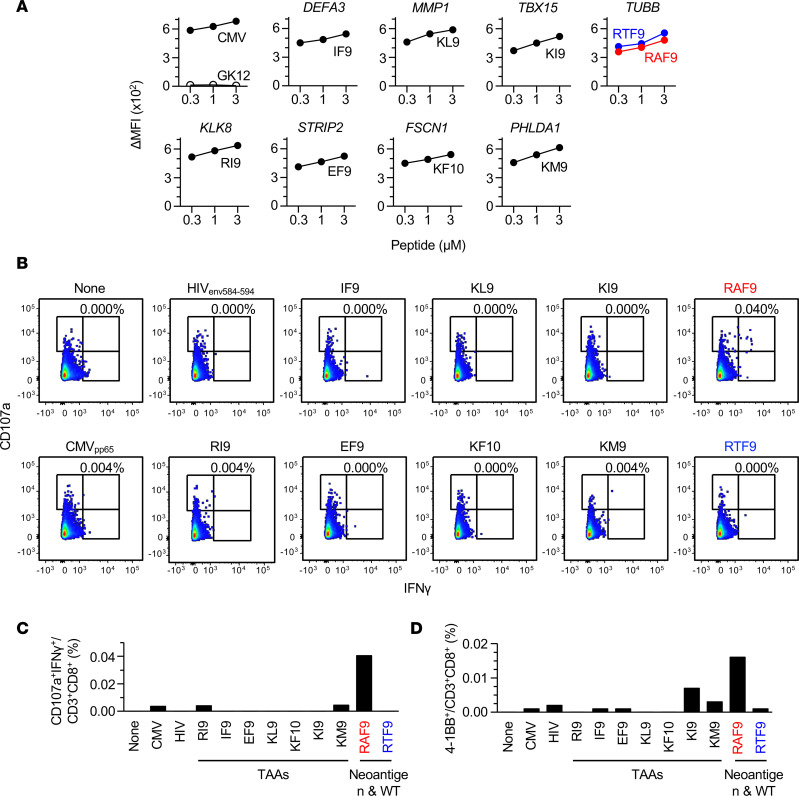
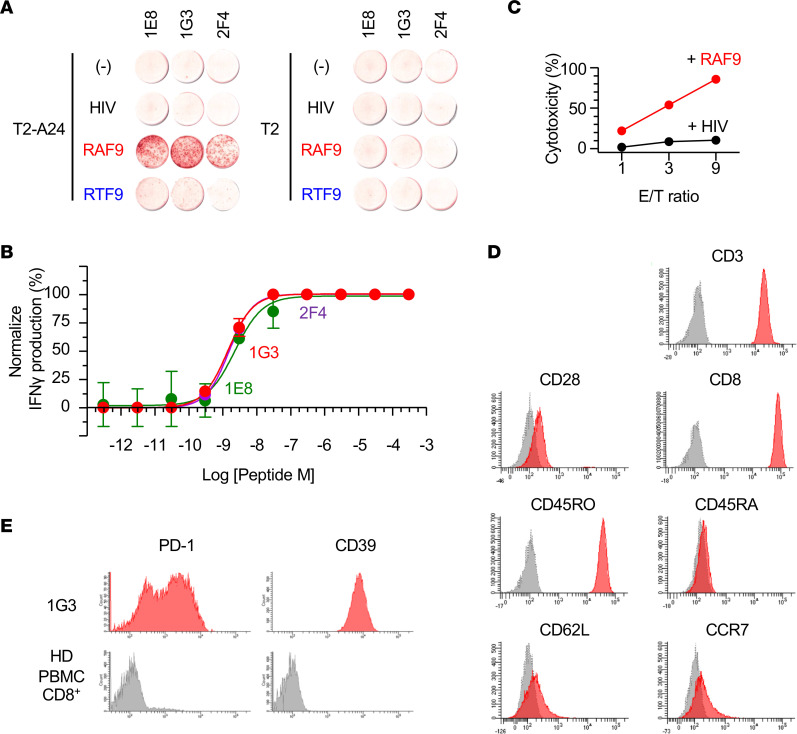
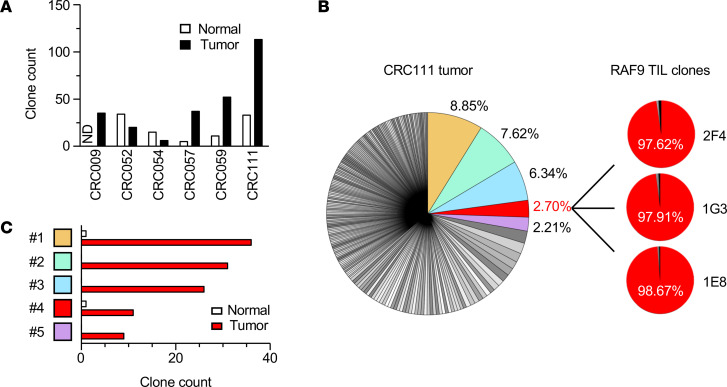
Although CD8+ T cells recognize neoantigens that arise from somatic mutations in cancer, only a small fraction of nonsynonymous mutations give rise to clinically relevant neoantigens. In this study, HLA class I ligandomes of a panel of human colorectal cancer (CRC) and matched normal tissues were analyzed using mass spectrometry-based proteogenomic analysis. Neoantigen presentation was rare; however, the analysis detected a single neoantigen in a mismatch repair-deficient CRC (dMMR-CRC) tissue sample carrying 3967 nonsynonymous mutations, where abundant tumor-infiltrating lymphocytes (TILs) and inflamed gene expression status were observed in the tumor microenvironment (TME). Using the HLA class I ligandome data and gene expression profiles, a set of nonmutated tumor-associated antigen (TAA) candidates was concomitantly identified. Interestingly, CD8+ TILs predominantly recognized the detected neoantigen over the array of TAA candidates. Neoantigen-reactive CD8+ TILs showed PD-1 positivity and exhibited functional and specific responses. Moreover, T cell receptor (TCR) profiling identified the sequence of the neoantigen-reactive TCR clonotype and showed its expansion in the TME. Transduction of the sequenced TCR conferred neoantigen specificity and cytotoxicity to peripheral blood lymphocytes. The proteogenomic approach revealed the antigenic and reactive T cell landscape in dMMR-CRC, demonstrating the presence of an immunogenic neoantigen and its potential therapeutic applications.
虽然 CD8+ T 细胞能够识别源自癌症体细胞突变的新抗原,但只有一小部分非同义突变会产生具有临床相关性的新抗原。在这项研究中,采用基于质谱的蛋白质基因组学分析方法,分析了一组人结直肠癌 (CRC) 和匹配正常组织的 HLA Ⅰ类配体组。新抗原呈递很少见;然而,分析在携带 3967 个非同义突变的错配修复缺陷型 CRC(dMMR-CRC)组织样本中检测到一个新抗原,在肿瘤微环境 (TME) 中观察到大量肿瘤浸润淋巴细胞 (TIL) 和炎症基因表达状态。利用 HLA Ⅰ类配体组数据和基因表达谱,同时鉴定了一组非突变的肿瘤相关抗原 (TAA) 候选物。有趣的是,CD8+ TIL 主要识别检测到的新抗原,而不是数组中的 TAA 候选物。新抗原反应性 CD8+ TIL 表现出 PD-1 阳性,并表现出功能和特异性反应。此外,T 细胞受体 (TCR) 分析鉴定了新抗原反应性 TCR 克隆型的序列,并显示其在 TME 中的扩增。测序 TCR 的转导赋予外周血淋巴细胞新抗原特异性和细胞毒性。蛋白质基因组学方法揭示了 dMMR-CRC 中的抗原和反应性 T 细胞景观,证明了免疫原性新抗原的存在及其潜在的治疗应用。