Schmitt Thomas, Fritz Uwe, Delfino Massimo, Ulrich Werner, Habel Jan Christian
Senckenberg Deutsches Entomologisches Institut, 15374, Müncheberg, Germany.
Department of Zoology, Institute of Biology, Faculty of Natural Sciences I, Martin Luther University Halle-Wittenberg, 06099, Halle (Saale), Germany.
Front Zool. 2021 Jun 29;18(1):34. doi: 10.1186/s12983-021-00418-9.
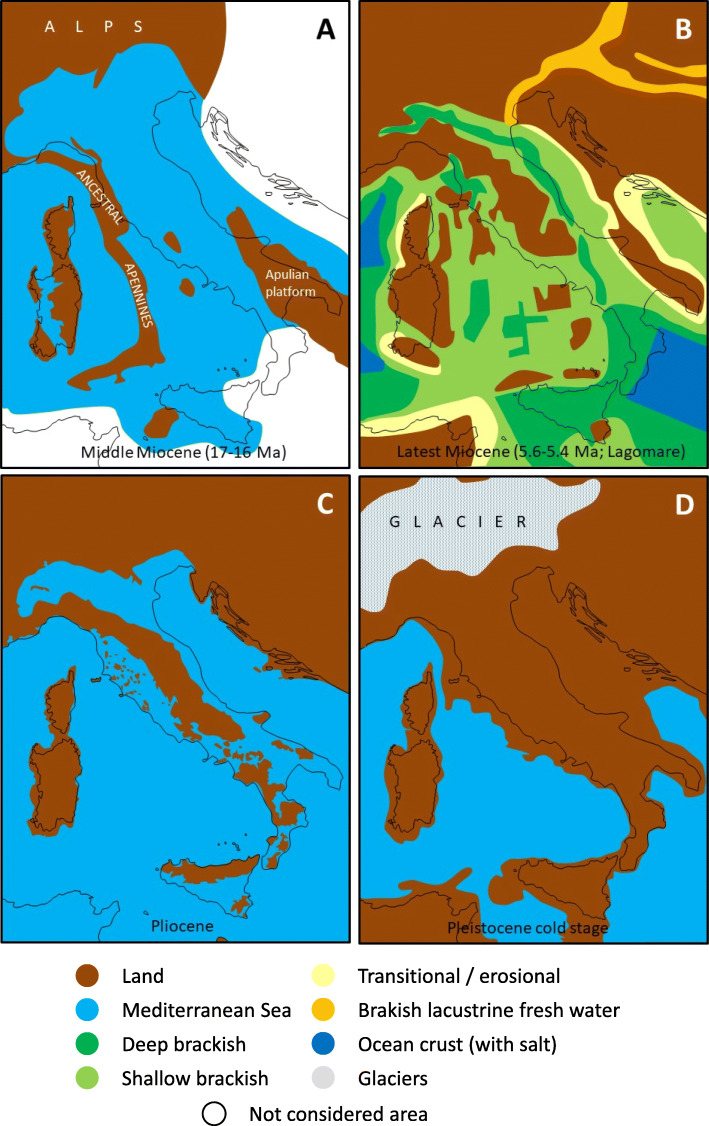
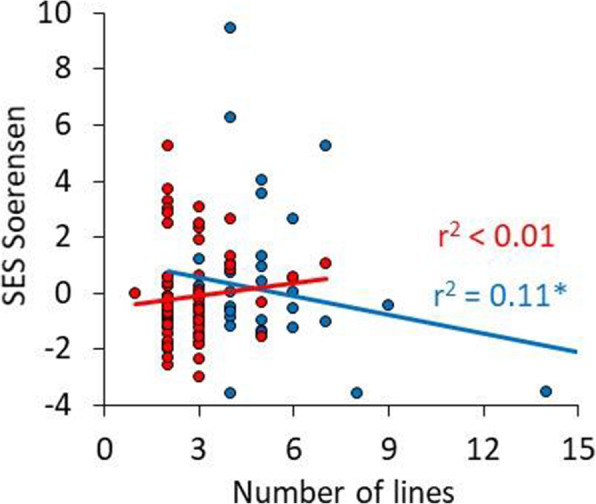
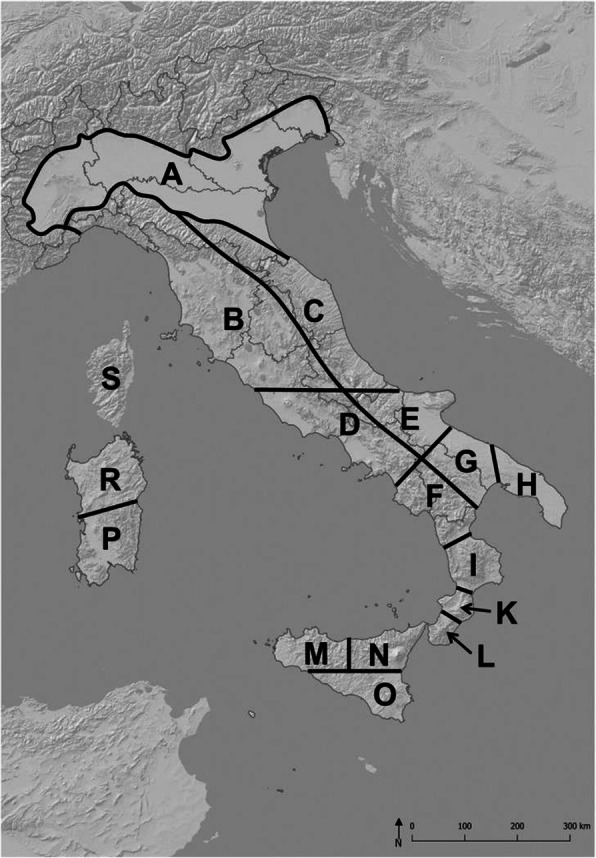
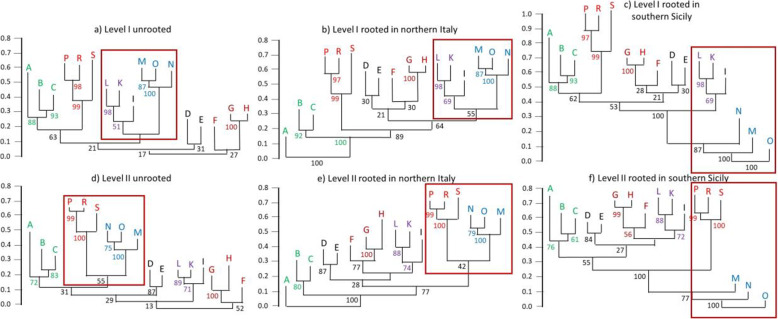
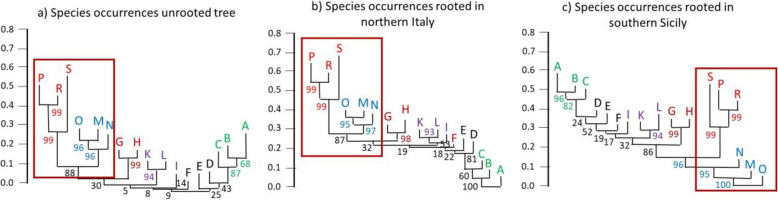
Warm-adapted species survived the cold stages of the past glacial-interglacial cycles in southern European peninsulas and recolonized major parts of Central and Northern Europe in the wake of postglacial warming. However, many of the genetic lineages which differentiated within these refugia predate even the Pleistocene. One of these refugia is the Italian Peninsula with its surrounding islands. In this meta-analysis, we compiled phylogeographic patterns of multiple species across this region. We transformed existing geographic information on 78 animal and plant species (with a total of 471 genetic lineages) within 17 predefined areas into presence/absence matrices. We elaborated three matrices: (i) only old lineages exclusively distinguished by deep splits, (ii) only young lineages distinguished by shallow (i.e. recent) splits, and (iii) presence/absence of the respective species. To infer biogeographic relationships between the predefined areas, we performed bootstrapped neighbour joining cluster analyses on these three matrices. In addition, we reviewed the geological history of Italy to identify causes of the observed biogeographic patterns. We found Sardinia and Corsica to be biogeographically closely linked with each other, and that they diverge strongly from all other regions. Sicily also diverges strongly from all other regions, while the intra-island differentiation was comparatively low. On the Italian mainland, Calabria exhibited the most pronounced biogeographic differentiation, often with several lineages present, resulting from old vicariance events within the region. Furthermore, southern Apulia and the Po Plain with adjoining areas of northern peninsular Italy displayed considerable distinctiveness. Admixture prevailed in the areas between these three regions. The ancient isolation of Sicily, as well as Sardinia plus Corsica, resulted in endemic lineages with only moderate recent exchange with adjacent mainland regions. Pronounced diversification occurs within the Italian Peninsula. The complex tectonic activities, such as shifting (micro)plates, submergence of major parts of peninsular Italy with the genesis of numerous Pliocene islands, in combination with the climatic cycles during the Pleistocene have most likely generated the current biogeographic pattern of species. Immigrations from the Balkan Peninsula into northern Italy partly accounted for the distinctiveness of this region.
适应温暖环境的物种在过去冰川-间冰期循环的寒冷阶段在欧洲南部半岛存活下来,并在冰期后变暖后重新殖民了中欧和北欧的大部分地区。然而,在这些避难所中分化出的许多遗传谱系甚至早于更新世。其中一个避难所是意大利半岛及其周边岛屿。在这项荟萃分析中,我们汇总了该地区多个物种的系统地理学模式。我们将17个预定义区域内78种动植物(共471个遗传谱系)的现有地理信息转换为存在/不存在矩阵。我们精心制作了三个矩阵:(i)仅由深度分支专门区分的古老谱系,(ii)仅由浅(即近期)分支区分的年轻谱系,以及(iii)各物种的存在/不存在。为了推断预定义区域之间的生物地理关系,我们对这三个矩阵进行了自展邻接聚类分析。此外,我们回顾了意大利的地质历史,以确定观察到的生物地理模式的成因。我们发现撒丁岛和科西嘉岛在生物地理学上彼此紧密相连,并且它们与所有其他地区有很大差异。西西里岛也与所有其他地区有很大差异,而岛内分化相对较低。在意大利大陆,卡拉布里亚表现出最明显的生物地理分化,该地区内古老的区域分裂事件通常导致有几个谱系存在。此外,阿普利亚南部和波河平原以及意大利半岛北部的毗邻地区表现出相当大的独特性。这三个地区之间的区域存在混合现象。西西里岛以及撒丁岛加科西嘉岛的古老隔离导致了特有谱系,与相邻大陆地区的近期交流较少。意大利半岛内部发生了显著的多样化。复杂的构造活动,如(微)板块移动、意大利半岛大部分地区的淹没以及众多上新世岛屿的形成,再加上更新世期间的气候循环,很可能产生了当前物种的生物地理模式。从巴尔干半岛向意大利北部的移民部分解释了该地区的独特性。