Department of Sports Science and Clinical Biomechanics, University of Southern Denmark, Campusvej 55, 5230, Odense M, Denmark.
Chiropr Man Therap. 2021 Jun 29;29(1):22. doi: 10.1186/s12998-021-00383-4.
As is the case around the globe, the Danish chiropractic community appears to be an active service provider for the athletic sub-population. However, a paucity of evidence elucidating the experiences, perceptions, and practices of individuals who identify as 'sports chiropractors' complicates strategic development efforts.
A sequential mixed-methods study was conceptualized in which interview responses from seven purposefully selected stakeholders provided context and informed a national descriptive survey exploring practice characteristics and opinions regarding sports chiropractic among Danish chiropractors.
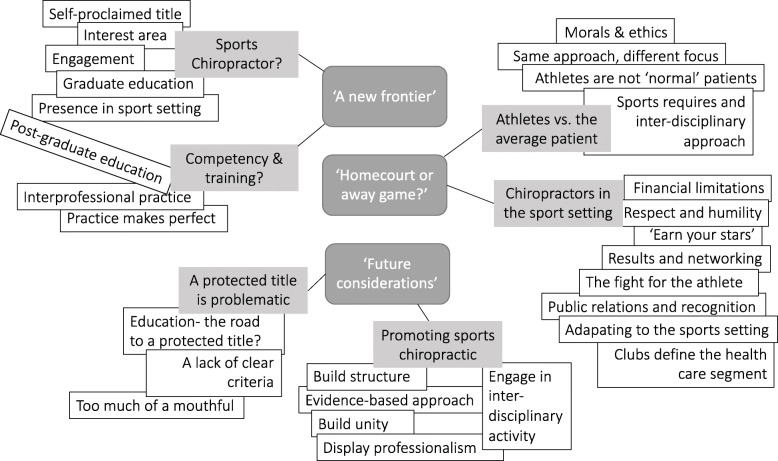
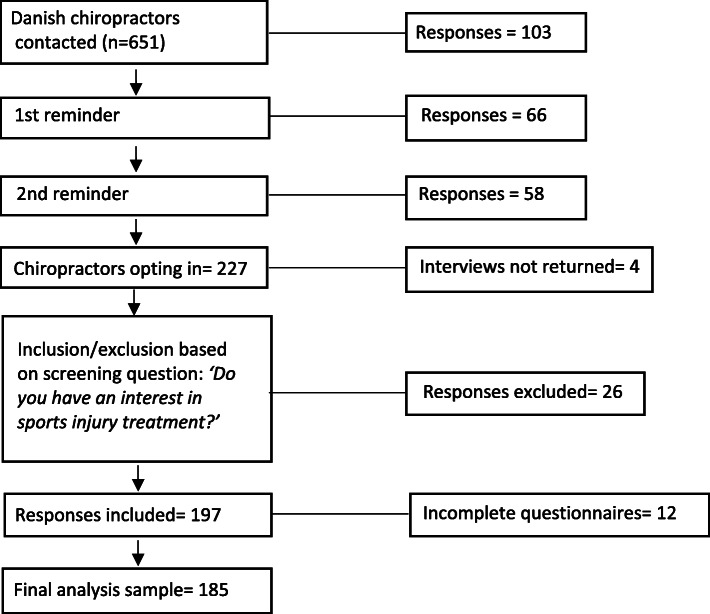
Thematic highlights included divided opinions on the criteria that define a sports chiropractor, the role of a chiropractor functioning beyond the clinic setting, and the need for a structured approach to developing sports chiropractic as a legitimate sub-specialty. The survey response rate was 34.9% (227 of 651), with 27% of responders identifying as a 'sports chiropractor'. Compared to non-sports chiropractors, sports chiropractors engaged in a significantly higher level of interprofessional practice (3.8 versus 2.7 partners), in particular medical doctors (p = 0.016) and personal trainers (p < 0.001). Whether participants identified as a sports chiropractor or not, there was consensus that a high-quality post-graduate qualification and continued education was important. Generally speaking, the framing of sports chiropractic into a protected title was not a priority.
The Danish sports chiropractor tends to be male, has a specialist education and engages other chiropractors, medical practitioners and professional trainers more often as practice partners than generalist chiropractors. The position of the sports chiropractor as a 'knowledgeable expert' was seen as more important than establishing a protected title. Experiential training appears to be an untapped resource for developing real-world competency and gaining greater professional exposure. Given the potential for development across Europe, more focus is required on a strategic plan for embedding chiropractic professionals in inter-professional athletic health and performance practice settings.
与全球其他地区一样,丹麦的脊骨神经医学从业者似乎是运动人群的积极服务提供者。然而,由于缺乏阐明自称为“运动脊骨神经医学家”的个人的经验、看法和实践的证据,这使得战略发展工作变得复杂。
本研究采用序贯混合方法设计,通过对 7 名有针对性选择的利益相关者的访谈回复提供背景信息,并以此为基础,开展了一项全国性的描述性调查,以了解丹麦脊骨神经医学从业者对运动脊骨神经医学的实践特征和看法。
主题重点包括对定义运动脊骨神经医学家的标准存在分歧意见、在诊所以外环境中工作的脊骨神经医学家的角色,以及需要采取结构化方法将运动脊骨神经医学发展为合法的亚专业领域。调查的回复率为 34.9%(227/651),其中 27%的回复者自称为“运动脊骨神经医学家”。与非运动脊骨神经医学家相比,运动脊骨神经医学家更多地参与跨专业实践(3.8 个比 2.7 个合作伙伴),特别是与医生(p=0.016)和私人教练(p<0.001)。无论参与者是否自认为是运动脊骨神经医学家,他们都认为高质量的研究生资格和继续教育很重要。总的来说,将运动脊骨神经医学纳入受保护的头衔并不是当务之急。
丹麦的运动脊骨神经医学家往往是男性,具有专业教育背景,并且比一般的脊骨神经医学家更常与其他脊骨神经医学家、医生和专业教练作为实践伙伴合作。运动脊骨神经医学家作为“知识渊博的专家”的地位比确立受保护的头衔更为重要。实践经验培训似乎是发展现实世界能力和获得更多专业曝光的未开发资源。考虑到在整个欧洲的发展潜力,需要更加关注制定战略计划,使脊骨神经医学专业人员能够融入跨专业的运动健康和表现实践环境中。