Department of Gastrointestinal Surgery, the First Affiliated Hospital of Jinan University, No.613 Huangpu Road West, Guangzhou, 510630, China.
Department of Respiratory, the First Affiliated Hospital of Jinan University, Guangzhou, 510630, China.
Hum Genomics. 2021 Jun 29;15(1):39. doi: 10.1186/s40246-021-00341-4.
Liver cancer is one of the most common cancers and causes of cancer death worldwide. The objective was to elucidate novel hub genes which were benefit for diagnosis, prognosis, and targeted therapy in liver cancer via integrated analysis.
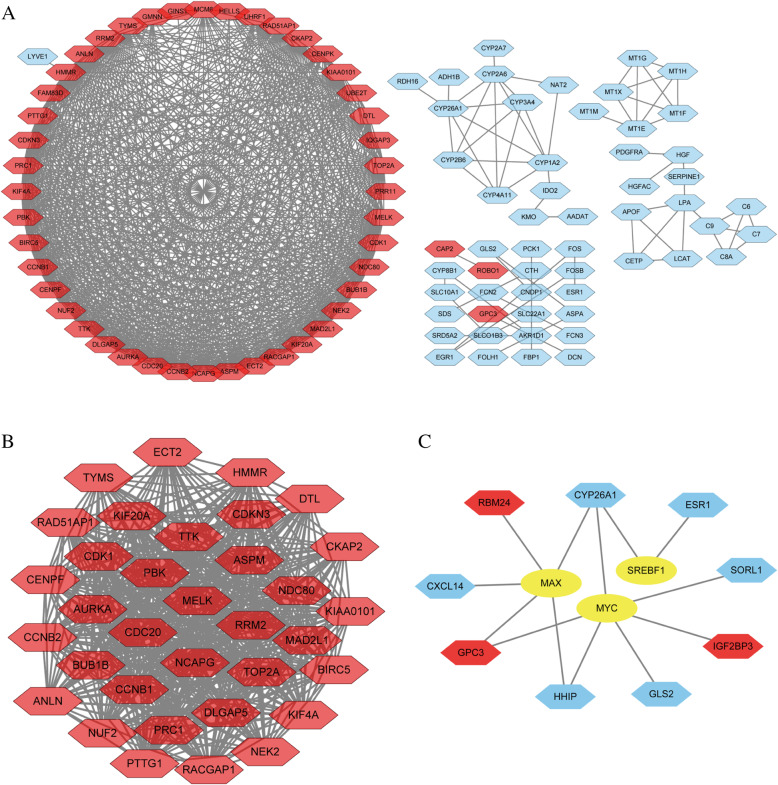
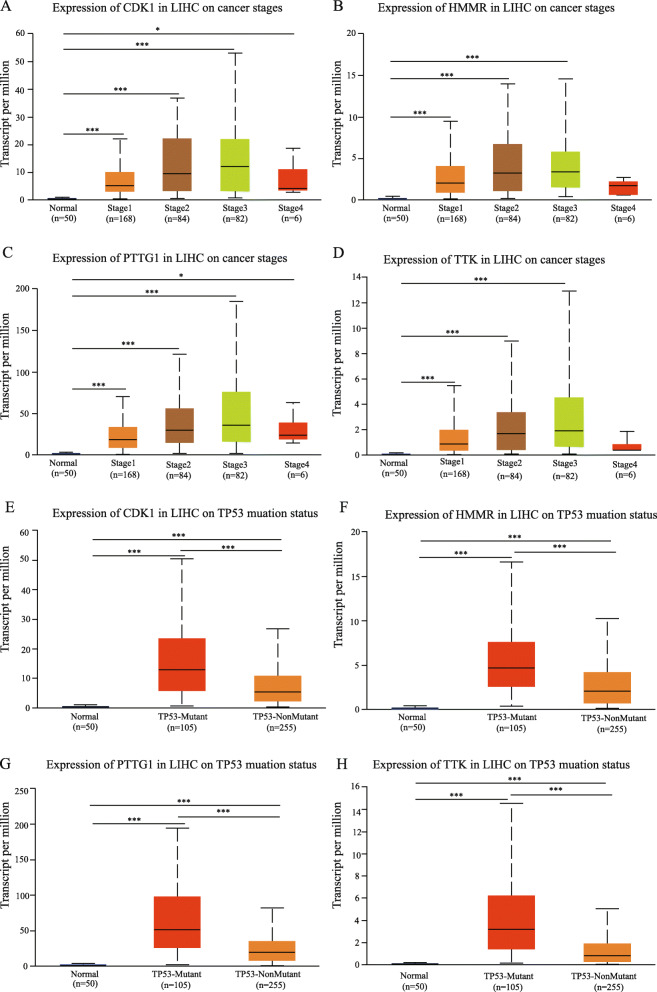
GSE84402, GSE101685, and GSE112791 were filtered from the Gene Expression Omnibus (GEO). Differentially expressed genes (DEGs) were identified by using the GEO2R. The GO and KEGG pathway of DEGs were analyzed in the DAVID. PPI and TF network of the DEGs were constructed by using the STRING, TRANSFAC, and Harmonizome. The relationship between hub genes and prognoses in liver cancer was analyzed in UALCAN based on The Cancer Genome Atlas (TCGA). The diagnostic value of hub genes was evaluated by ROC. The relationship between hub genes and tumor-infiltrate lymphocytes was analyzed in TIMER. The protein levels of hub genes were verified in HPA. The interaction between the hub genes and the drug were identified in DGIdb.
In total, 108 upregulated and 60 downregulated DEGs were enriched in 148 GO terms and 20 KEGG pathways. The mRNA levels and protein levels of CDK1, HMMR, PTTG1, and TTK were higher in liver cancer tissues compared to normal tissues, which showed excellent diagnostic and prognostic value. CDK1, HMMR, PTTG1, and TTK were positively correlated with tumor-infiltrate lymphocytes, which might involve tumor immune response. The CDK1, HMMR, and TTK had close interaction with anticancer agents.
The CDK1, HMMR, PTTG1, and TTK were hub genes in liver cancer; hence, they might be potential biomarkers for diagnosis, prognosis, and targeted therapy of liver cancer.
肝癌是全球最常见的癌症和癌症死亡原因之一。本研究旨在通过综合分析,阐明有助于肝癌诊断、预后和靶向治疗的新的关键基因。
从基因表达综合数据库(GEO)中筛选出 GSE84402、GSE101685 和 GSE112791 数据集。使用 GEO2R 识别差异表达基因(DEGs)。在 DAVID 中对 DEGs 的 GO 和 KEGG 通路进行分析。使用 STRING、TRANSFAC 和 Harmonizome 构建 DEGs 的 PPI 和 TF 网络。基于癌症基因组图谱(TCGA)在 UALCAN 中分析关键基因与肝癌预后的关系。通过 ROC 评估关键基因的诊断价值。在 TIMER 中分析关键基因与肿瘤浸润淋巴细胞的关系。在人类蛋白质图谱(HPA)中验证关键基因的蛋白水平。在 DGIdb 中鉴定关键基因与药物的相互作用。
共富集了 148 个 GO 术语和 20 个 KEGG 通路中的 108 个上调和 60 个下调 DEGs。与正常组织相比,肝癌组织中 CDK1、HMMR、PTTG1 和 TTK 的 mRNA 水平和蛋白水平更高,具有良好的诊断和预后价值。CDK1、HMMR、PTTG1 和 TTK 与肿瘤浸润淋巴细胞呈正相关,可能涉及肿瘤免疫反应。CDK1、HMMR 和 TTK 与抗癌药物有密切的相互作用。
CDK1、HMMR、PTTG1 和 TTK 是肝癌的关键基因;因此,它们可能是肝癌诊断、预后和靶向治疗的潜在生物标志物。