Department of Vision & Cognition, Netherlands Institute for Neuroscience, Amsterdam, The Netherlands.
Donders Institute for Brain, Cognition and Behaviour, Radboud University, Nijmegen, The Netherlands.
Nat Commun. 2021 Jun 29;12(1):4029. doi: 10.1038/s41467-021-24311-5.
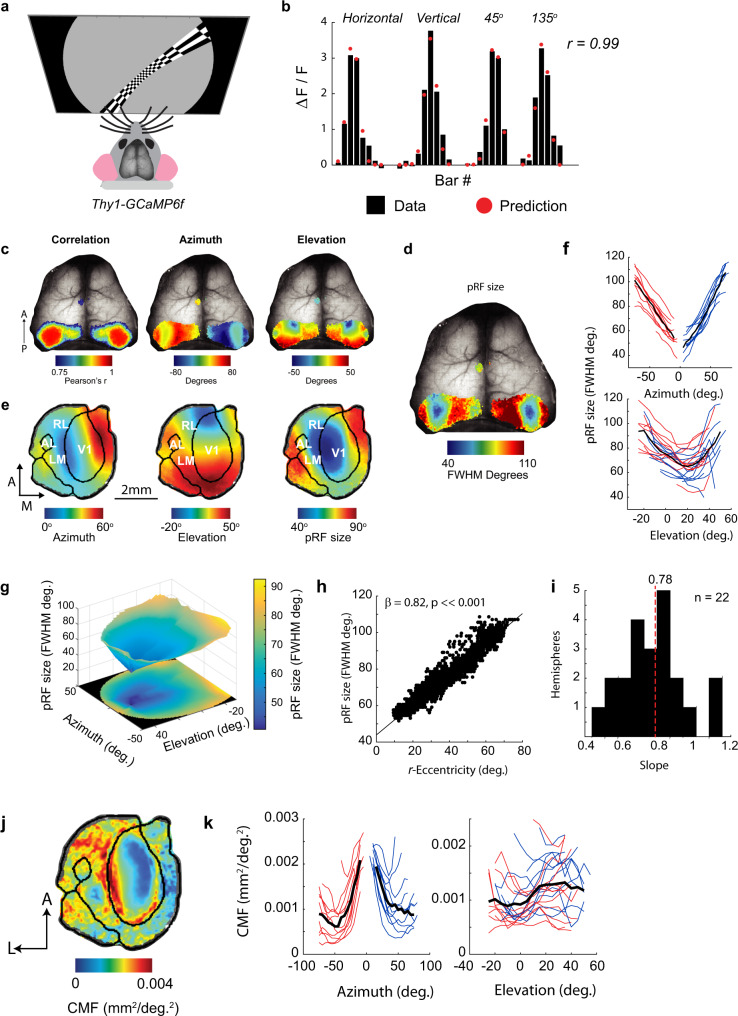
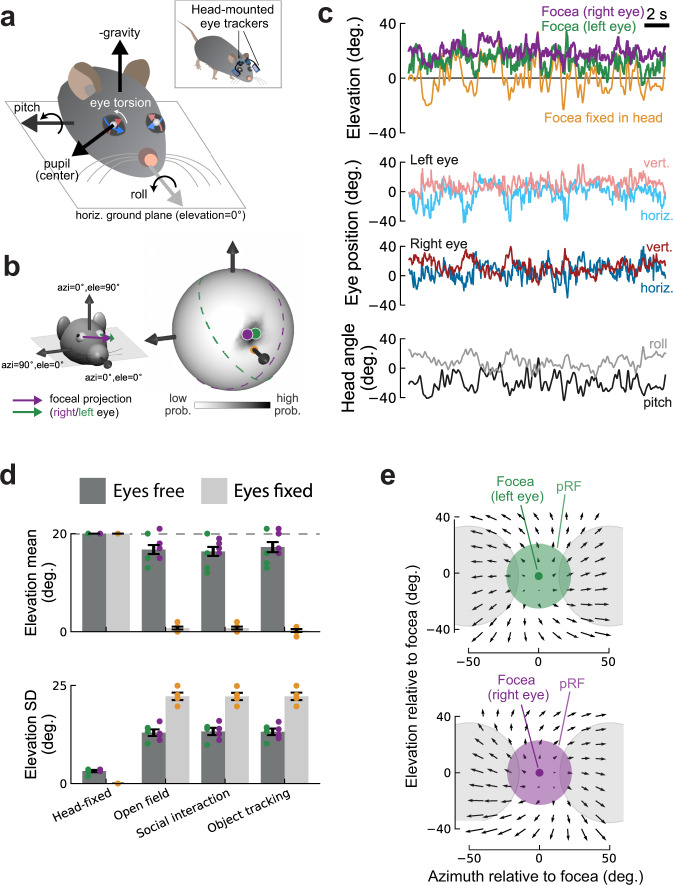
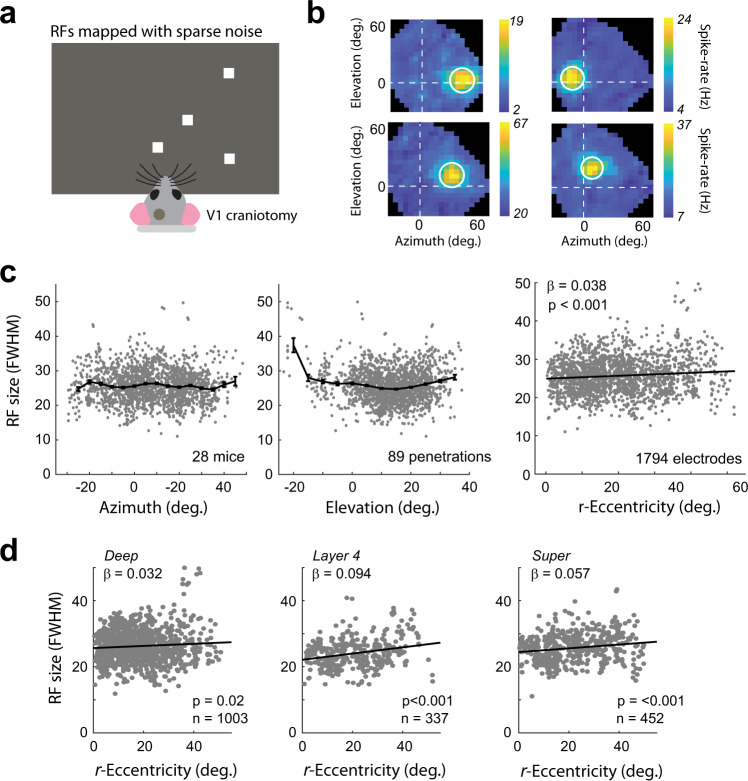
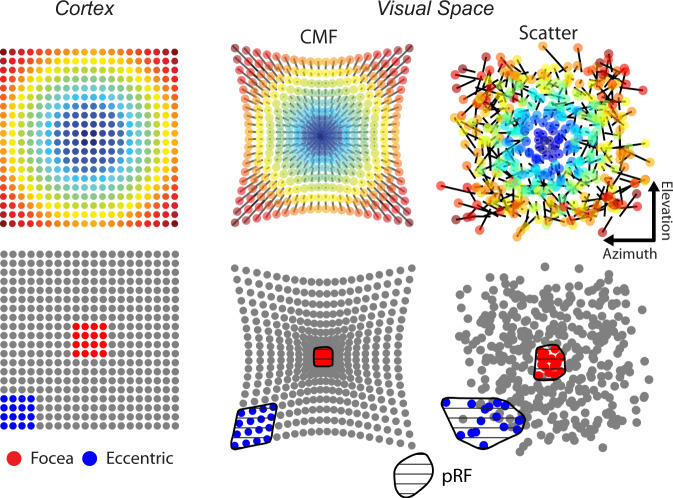
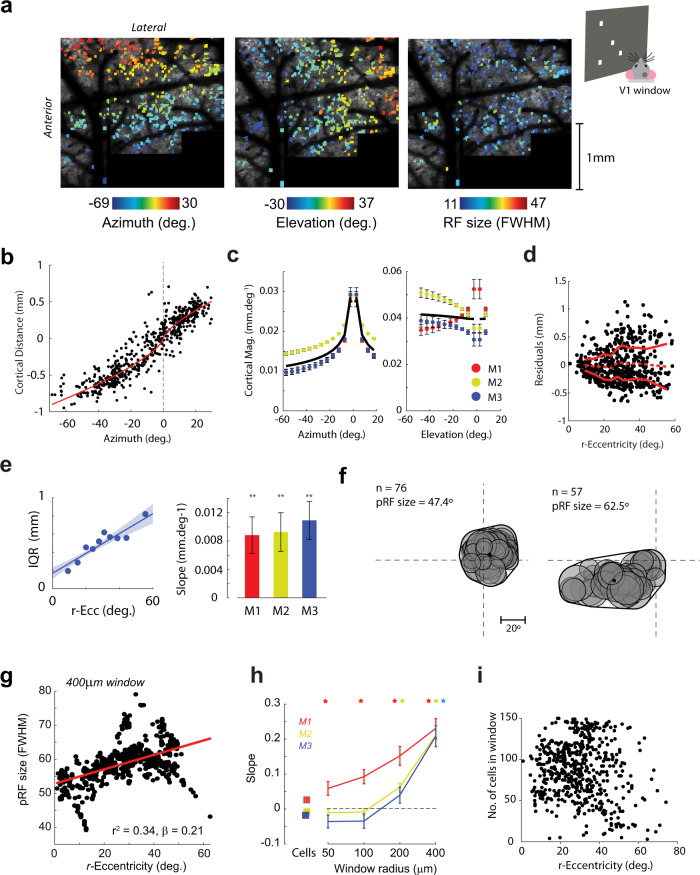
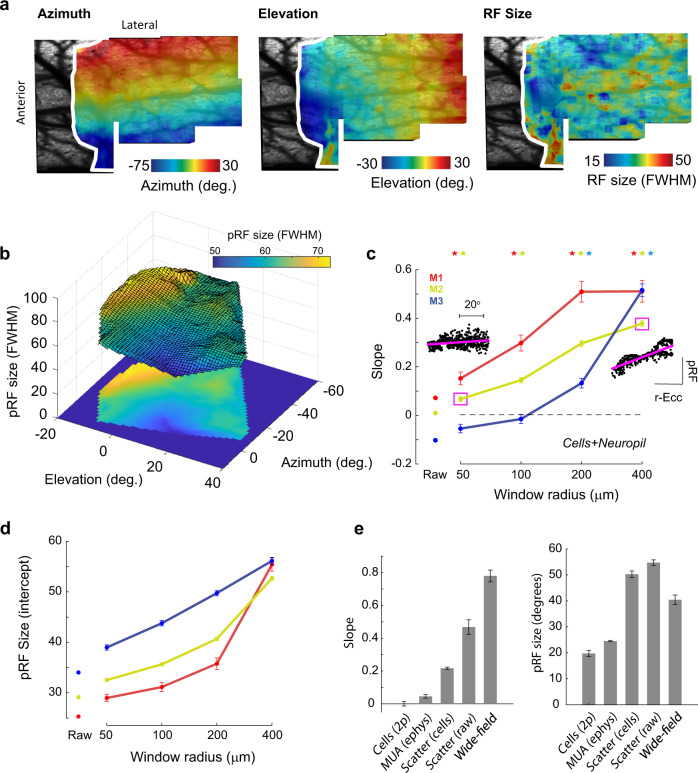
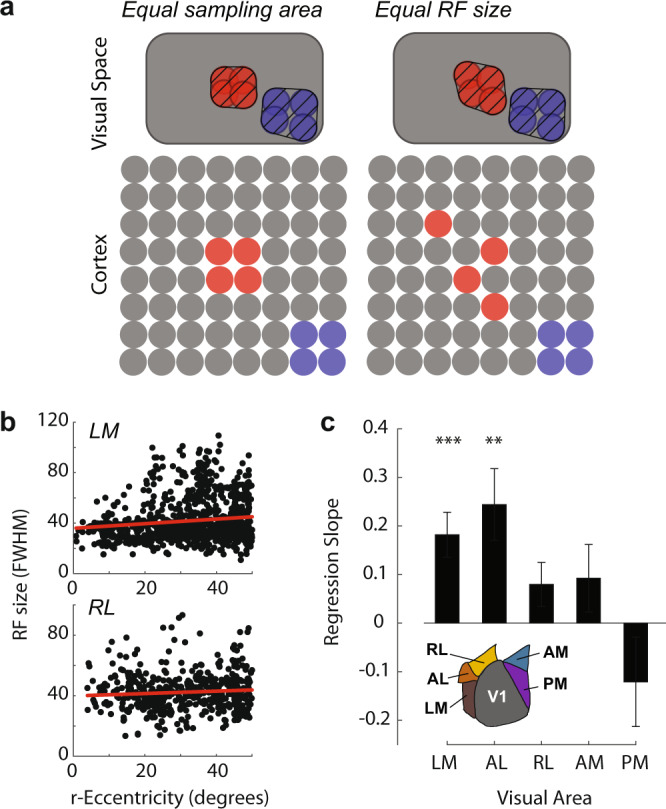
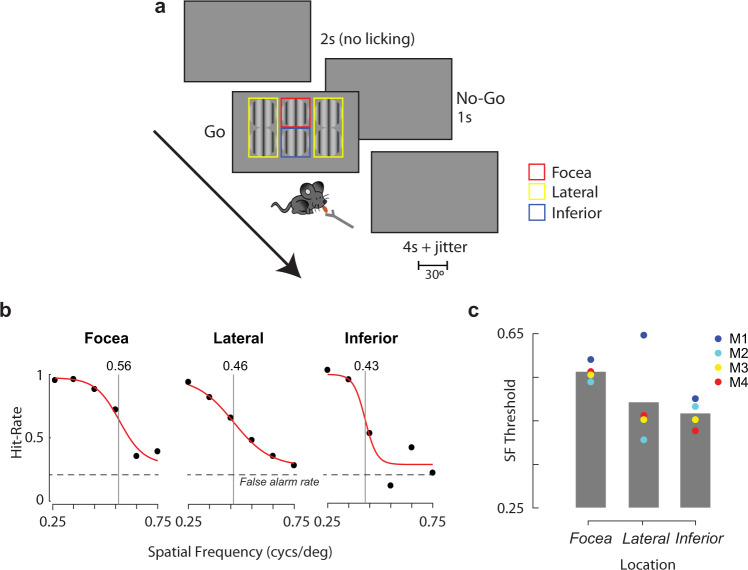
The representation of space in mouse visual cortex was thought to be relatively uniform. Here we reveal, using population receptive-field (pRF) mapping techniques, that mouse visual cortex contains a region in which pRFs are considerably smaller. This region, the "focea," represents a location in space in front of, and slightly above, the mouse. Using two-photon imaging we show that the smaller pRFs are due to lower scatter of receptive-fields at the focea and an over-representation of binocular regions of space. We show that receptive-fields of single-neurons in areas LM and AL are smaller at the focea and that mice have improved visual resolution in this region of space. Furthermore, freely moving mice make compensatory eye-movements to hold this region in front of them. Our results indicate that mice have spatial biases in their visual processing, a finding that has important implications for the use of the mouse model of vision.
在老鼠视觉皮层中,空间的表示被认为是相对均匀的。在这里,我们使用群体感受野 (pRF) 映射技术揭示了老鼠视觉皮层中存在一个区域,其中 pRF 相当小。这个区域,即“focea”,代表了老鼠前方和稍微上方的一个空间位置。使用双光子成像,我们表明较小的 pRF 是由于在 focea 处感受野的散射较低,以及空间的双眼区域的过度代表。我们表明,LM 和 AL 区域的单个神经元的感受野在 focea 处较小,并且老鼠在这个空间区域具有更好的视觉分辨率。此外,自由移动的老鼠会进行补偿性眼球运动,将这个区域保持在它们的前方。我们的结果表明,老鼠在视觉处理中有空间偏向,这一发现对视觉模型的使用具有重要意义。