Wynne Robert, Archer Louise C, Hutton Stephen A, Harman Luke, Gargan Patrick, Moran Peter A, Dillane Eileen, Coughlan Jamie, Cross Thomas F, McGinnity Philip, Colgan Thomas J, Reed Thomas E
School of Biological, Earth and Environmental Sciences University College Cork Cork Ireland.
Environmental Research Institute University College Cork Cork Ireland.
Ecol Evol. 2021 Jun 2;11(12):8347-8362. doi: 10.1002/ece3.7664. eCollection 2021 Jun.
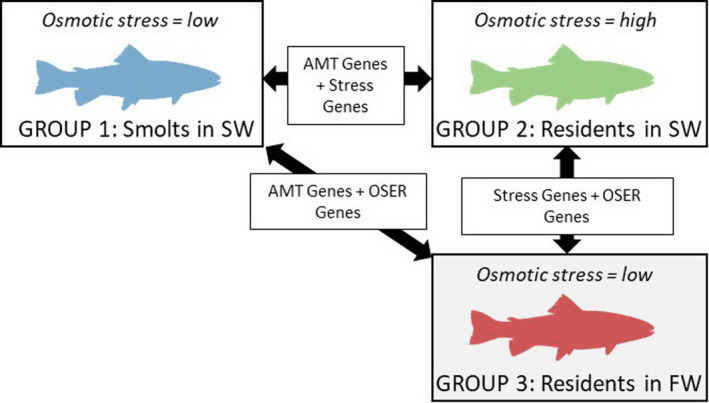
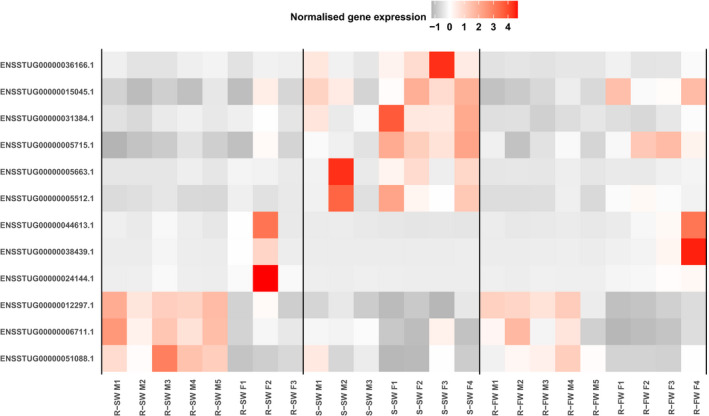
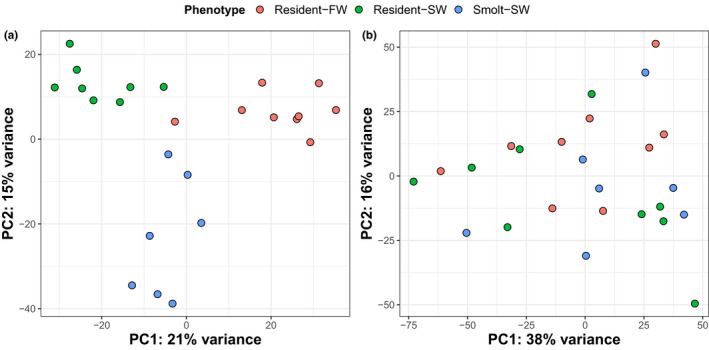
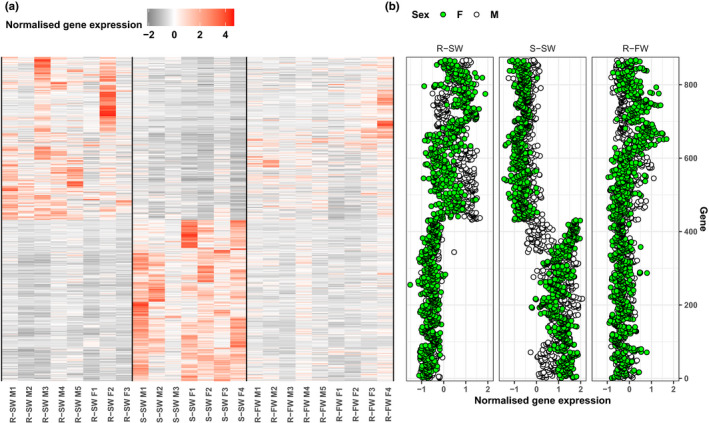
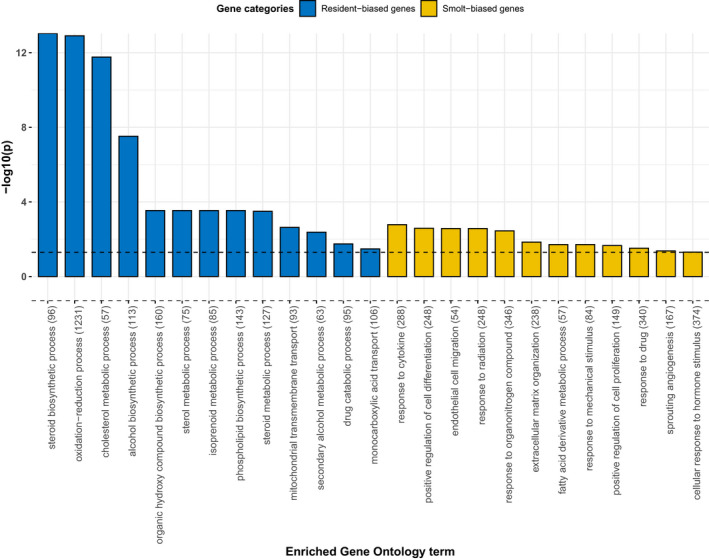
The occurrence of alternative morphs within populations is common, but the underlying molecular mechanisms remain poorly understood. Many animals, for example, exhibit facultative migration, where two or more alternative migratory tactics (AMTs) coexist within populations. In certain salmonid species, some individuals remain in natal rivers all their lives, while others (in particular, females) migrate to sea for a period of marine growth. Here, we performed transcriptional profiling ("RNA-seq") of the brain and liver of male and female brown trout to understand the genes and processes that differentiate between migratory and residency morphs (AMT-associated genes) and how they may differ in expression between the sexes. We found tissue-specific differences with a greater number of genes expressed differentially in the liver ( = 867 genes) compared with the brain ( = 10) between the morphs. Genes with increased expression in resident livers were enriched for Gene Ontology terms associated with metabolic processes, highlighting key molecular-genetic pathways underlying the energetic requirements associated with divergent migratory tactics. In contrast, smolt-biased genes were enriched for biological processes such as response to cytokines, suggestive of possible immune function differences between smolts and residents. Finally, we identified evidence of sex-biased gene expression for AMT-associated genes in the liver ( = 12) but not the brain. Collectively, our results provide insights into tissue-specific gene expression underlying the production of alternative life histories within and between the sexes, and point toward a key role for metabolic processes in the liver in mediating divergent physiological trajectories of migrants versus residents.
种群中出现替代形态很常见,但潜在的分子机制仍知之甚少。例如,许多动物表现出兼性洄游,即种群中存在两种或更多种替代洄游策略(AMT)。在某些鲑科鱼类中,一些个体一生都留在出生地产卵的河流中,而其他个体(尤其是雌性)则洄游到海洋中生长一段时间。在这里,我们对雄性和雌性褐鳟的大脑和肝脏进行了转录谱分析(“RNA测序”),以了解区分洄游型和定居型(与AMT相关的基因)的基因和过程,以及它们在两性之间的表达差异。我们发现形态之间存在组织特异性差异,与大脑(=10个基因)相比,肝脏中有更多差异表达的基因(=867个基因)。定居型肝脏中表达增加的基因在与代谢过程相关的基因本体术语中富集,突出了与不同洄游策略相关的能量需求的关键分子遗传途径。相比之下,银化偏倚基因在诸如对细胞因子的反应等生物学过程中富集,这表明银化个体和定居个体之间可能存在免疫功能差异。最后,我们在肝脏(=12个基因)而非大脑中发现了与AMT相关基因的性别偏倚基因表达的证据。总体而言,我们的结果为两性内部和两性之间替代生活史产生的组织特异性基因表达提供了见解,并指出肝脏中的代谢过程在介导洄游者与定居者不同生理轨迹方面的关键作用。