Miller Jena L
The Johns Hopkins Center for Fetal Therapy, Department of Gynecology and Obstetrics, Johns Hopkins University, Baltimore, MD, USA.
Transl Pediatr. 2021 May;10(5):1518-1529. doi: 10.21037/tp-20-264.
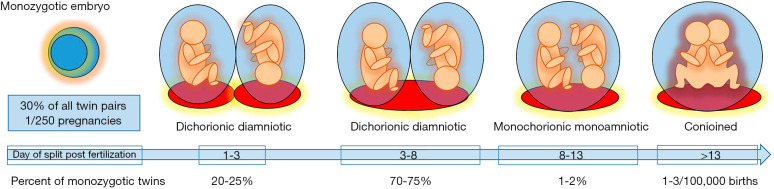
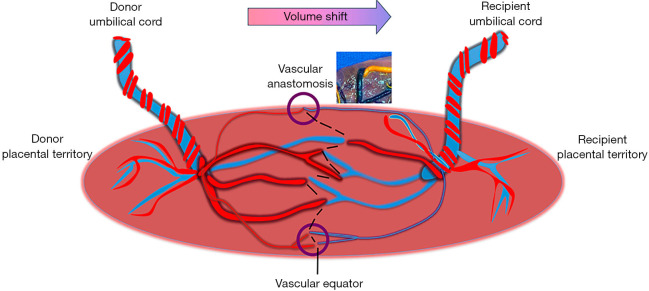
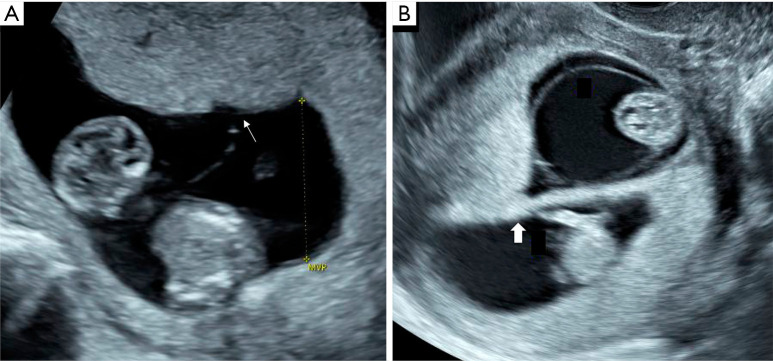
Twin to twin transfusion syndrome (TTTS) is a common complication that typically presents in the second trimester of pregnancy in 10-15% of monochorionic twins due to net transfer of volume and hormonal substances from one twin to the other across vascular anastomoses on the placenta. Without recognition and treatment, TTTS is the greatest contributor to fetal loss prior to viability in 90-100% of advanced cases. Ultrasound diagnosis of monochorionicity is most reliable in the first trimester and sets the monitoring strategy for this type of twins. The diagnosis of TTTS is made by ultrasound with the findings of polyhydramnios due to volume overload and polyuria in one twin and oligohydramnios due to oliguria of the co-twin. Assessment of bladder filling as well as arterial and venous Doppler patterns are required for staging disease severity. Assessment of fetal cardiac function also provides additional insight into the fetal cardiovascular impacts of the disease as well as help identify fetuses that may require postnatal follow up. Fetoscopic laser ablation of the communicating vascular anastomoses between the twins is the standard treatment for TTTS. It aims to cure the condition by interrupting the link between their circulations and making them independent of one another. Contemporary outcome data after laser surgery suggests survival for both fetuses can be anticipated in up to 65% of cases and survival of a single fetus in up to 88% of cases. However, preterm birth remains a significant contributor to postnatal morbidity and mortality. Long term outcomes of TTTS survivors indicate that up to 11% of children may show signs of neurologic impairment. Strategies to minimize preterm birth after treatment and standardized reporting by laser centers are important considerations to improve overall outcomes and understand the long-term impacts of TTTS.
双胎输血综合征(TTTS)是一种常见的并发症,通常发生在单绒毛膜双胎妊娠中期,占单绒毛膜双胎的10% - 15%,原因是体积和激素物质通过胎盘上的血管吻合支从一个胎儿净转移到另一个胎儿。如果未得到识别和治疗,在90% - 100%的严重晚期病例中,TTTS是导致胎儿在可存活之前死亡的最大因素。孕早期超声诊断单绒毛膜性最为可靠,并为这类双胎设定监测策略。TTTS的诊断通过超声进行,表现为一个胎儿因容量过载和多尿出现羊水过多,而另一胎儿因少尿出现羊水过少。评估膀胱充盈情况以及动脉和静脉多普勒血流模式对于疾病严重程度分期是必需的。评估胎儿心功能还能进一步了解该疾病对胎儿心血管系统的影响,并有助于识别可能需要产后随访的胎儿。胎儿镜下激光消融双胎之间的交通血管吻合支是TTTS的标准治疗方法。其目的是通过中断双胎循环之间的联系,使它们相互独立,从而治愈该疾病。激光手术后的当代结局数据表明,高达65%的病例中两个胎儿均可存活,高达88%的病例中可存活一个胎儿。然而,早产仍然是产后发病和死亡的重要原因。TTTS存活者的长期结局表明,高达11%的儿童可能出现神经功能障碍迹象。治疗后尽量减少早产的策略以及激光治疗中心的标准化报告是改善总体结局和了解TTTS长期影响的重要考虑因素。