Smith Rachel J, Alipourjeddi Ehsan, Garner Cristal, Maser Amy L, Shrey Daniel W, Lopour Beth A
Department of Biomedical Engineering, University of California, Irvine, CA, USA.
Division of Neurology, Children's Hospital of Orange County, Orange, CA, USA.
Netw Neurosci. 2021 Jun 21;5(2):614-630. doi: 10.1162/netn_a_00194. eCollection 2021.
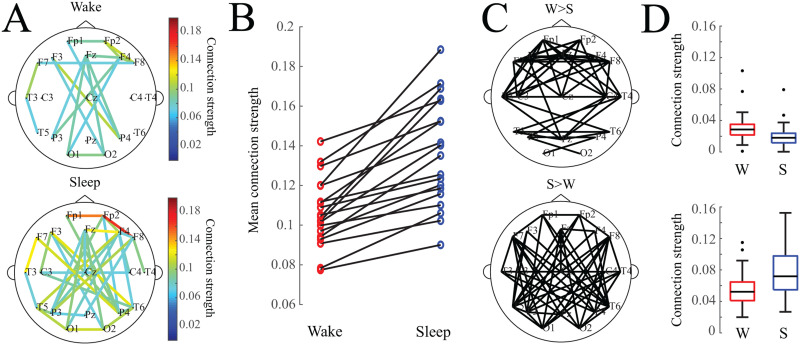
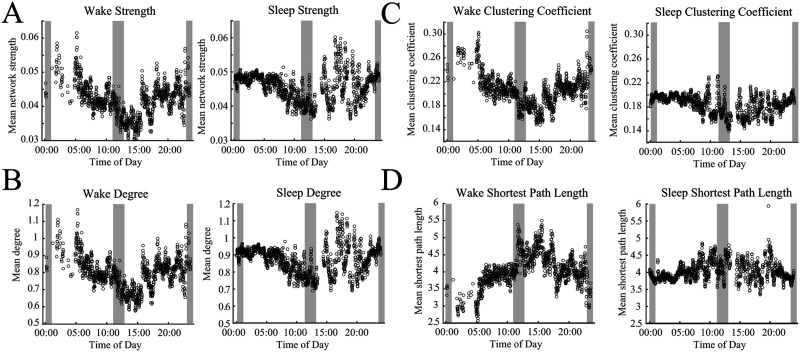
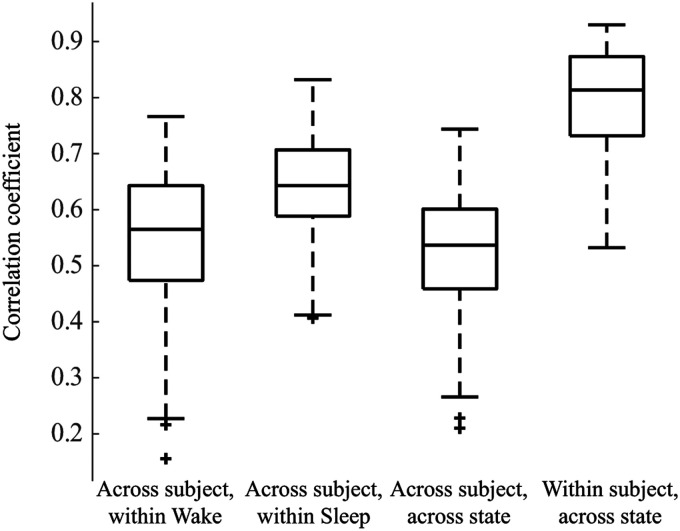
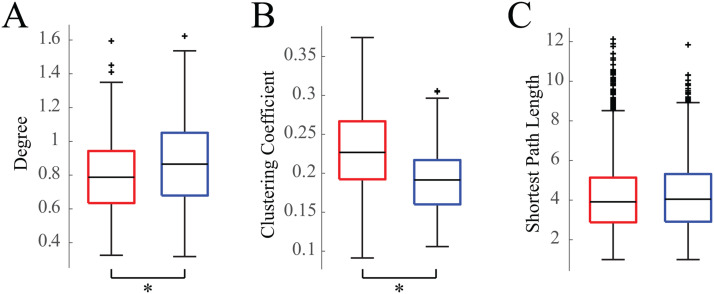
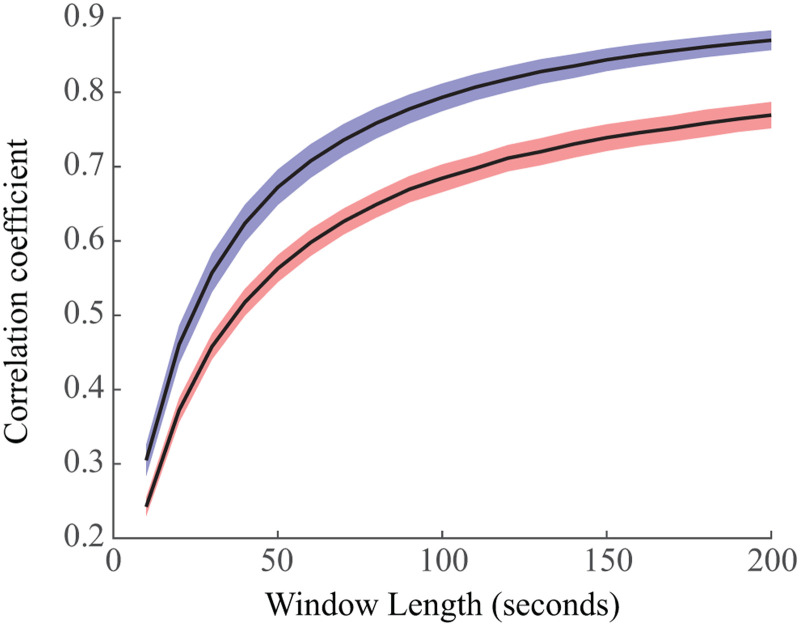
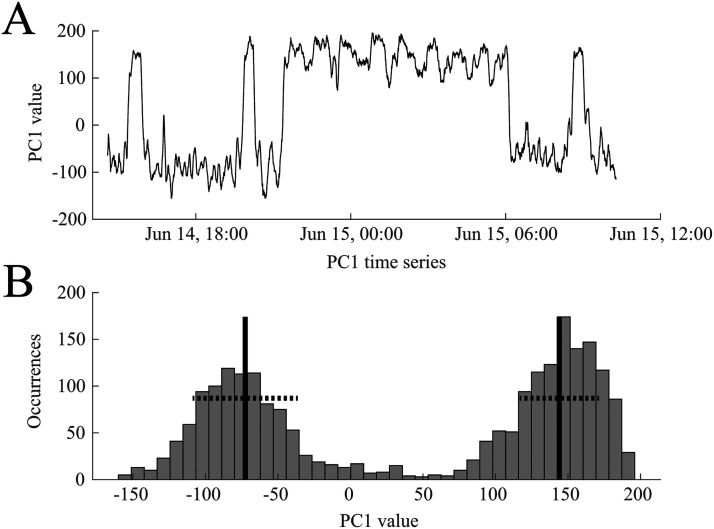
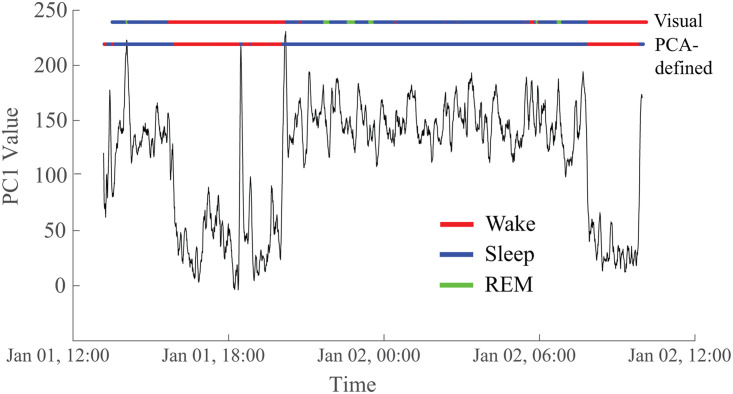
Functional connectivity networks are valuable tools for studying development, cognition, and disease in the infant brain. In adults, such networks are modulated by the state of consciousness and the circadian rhythm; however, it is unknown if infant brain networks exhibit similar variation, given the unique temporal properties of infant sleep and circadian patterning. To address this, we analyzed functional connectivity networks calculated from long-term EEG recordings (average duration 20.8 hr) from 19 healthy infants. Networks were subject specific, as intersubject correlations between weighted adjacency matrices were low. However, within individual subjects, both sleep and wake networks were stable over time, with stronger functional connectivity during sleep than wakefulness. Principal component analysis revealed the presence of two dominant networks; visual sleep scoring confirmed that these corresponded to sleep and wakefulness. Lastly, we found that network strength, degree, clustering coefficient, and path length significantly varied with time of day, when measured in either wakefulness or sleep at the group level. Together, these results suggest that modulation of healthy functional networks occurs over ∼24 hr and is robust and repeatable. Accounting for such temporal periodicities may improve the physiological interpretation and use of functional connectivity analysis to investigate brain function in health and disease.
功能连接网络是研究婴儿大脑发育、认知和疾病的重要工具。在成年人中,此类网络受意识状态和昼夜节律的调节;然而,鉴于婴儿睡眠和昼夜模式的独特时间特性,尚不清楚婴儿脑网络是否表现出类似的变化。为解决这一问题,我们分析了19名健康婴儿长期脑电图记录(平均时长20.8小时)计算得出的功能连接网络。网络具有个体特异性,因为加权邻接矩阵之间的个体间相关性较低。然而,在个体内部,睡眠和清醒网络随时间推移都是稳定的,睡眠期间的功能连接比清醒时更强。主成分分析揭示了两个主要网络的存在;视觉睡眠评分证实这些分别对应于睡眠和清醒状态。最后,我们发现,在群体水平上,无论是在清醒还是睡眠状态下进行测量,网络强度、度、聚类系数和路径长度都随一天中的时间显著变化。总之,这些结果表明,健康功能网络的调节在约24小时内发生,且具有稳健性和可重复性。考虑到这种时间周期性可能会改善功能连接分析在生理解释方面的应用,并有助于研究健康和疾病状态下的脑功能。