Department of Biology, University of Alabama at Birmingham, Birmingham, Alabama, USA.
Department of Integrative Biology, University of Texas, Austin, Texas, USA.
Microbiol Spectr. 2021 Sep 3;9(1):e0026921. doi: 10.1128/Spectrum.00269-21. Epub 2021 Jun 30.
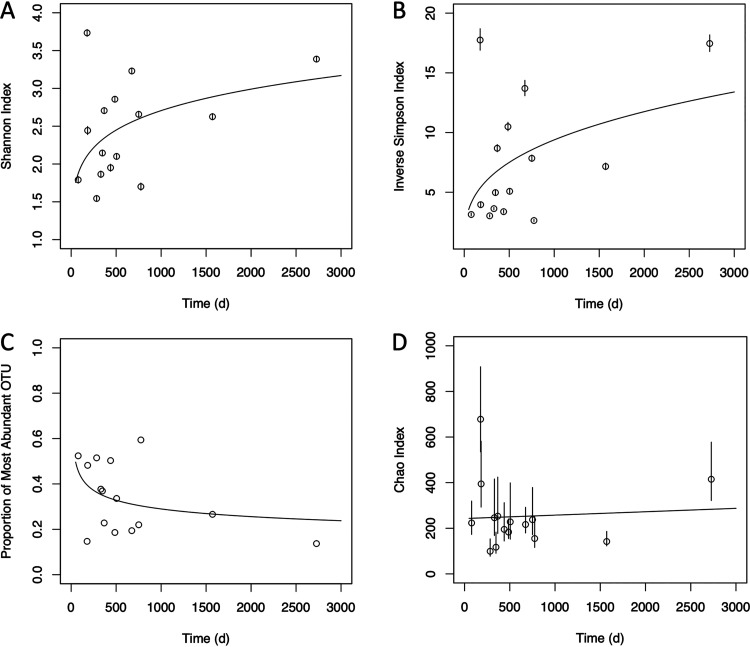
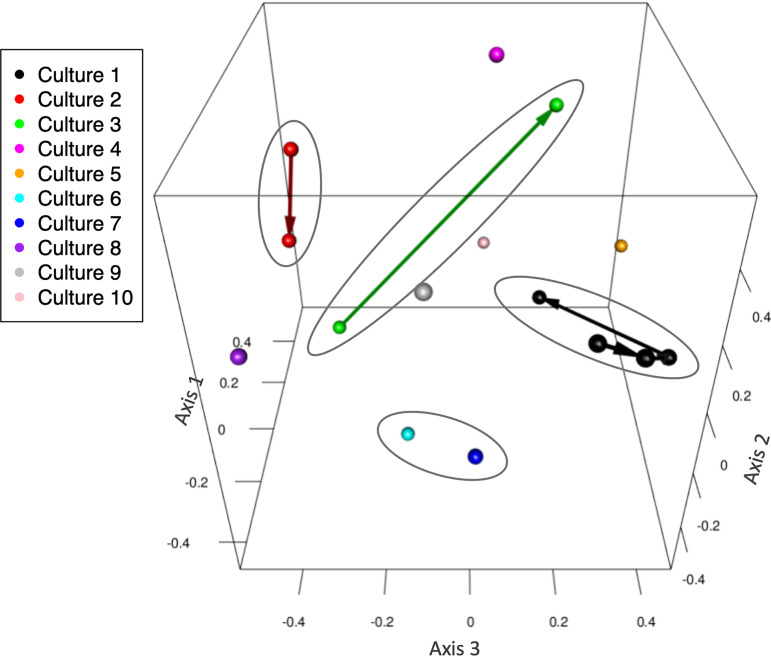
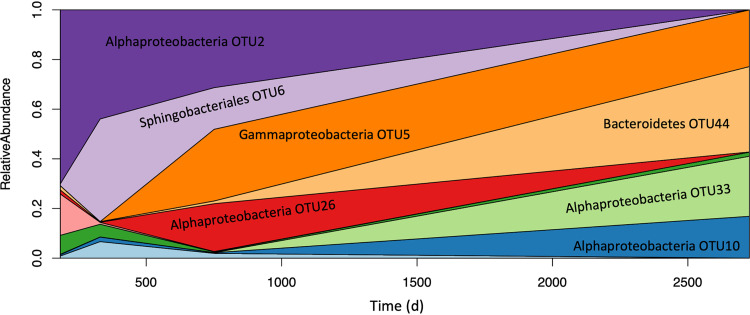
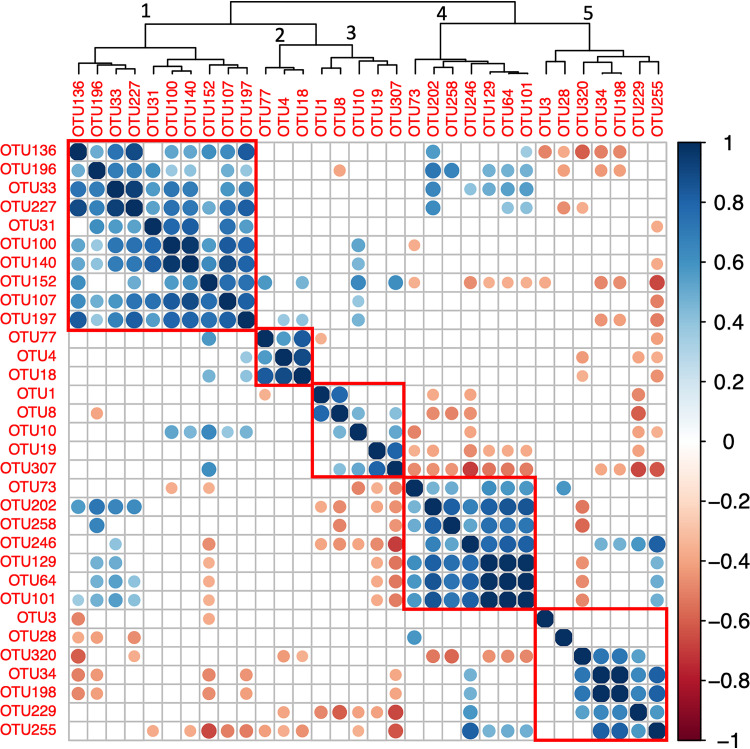
Microalgal cultures are often maintained in xenic conditions, i.e., with associated bacteria, and many studies indicate that these communities both are complex and have significant impacts on the physiology of the target photoautotroph. Here, we investigated the structure and stability of microbiomes associated with a diverse sampling of diatoms during long-term maintenance in serial batch culture. We found that, counter to our initial expectation, evenness diversity increased with time since cultivation, driven by a decrease in dominance by the most abundant taxa in each culture. We also found that the site from which and time at which a culture was initially collected had a stronger impact on microbiome structure than the diatom species; however, some bacterial taxa were commonly present in most cultures despite having widely geographically separated collection sites. Our results support the conclusion that stochastic initial conditions (i.e., the local microbial community at the collection site) are important for the long-term structure of these microbiomes, but deterministic forces such as negative frequency dependence and natural selection exerted by the diatom are also at work. Natural microbial communities are extremely complex, with many more species coexisting in the same place than there are different resources to support them. Understanding the forces that allow this high level of diversity has been a central focus of ecological and evolutionary theory for many decades. Here, we used stock cultures of diatoms, which were maintained for years in continuous growth alongside populations of bacteria, as proxies for natural communities. We show that the bacterial communities remained relatively stable for years, and there is evidence that ecological forces worked to stabilize coexistence instead of favoring competition and exclusion. We also show evidence that, despite some important regional differences in bacterial communities, there was a globally present core microbiome potentially selected for in these diatom cultures. Understanding interactions between bacteria and diatoms is important both for basic ecological science and for practical science, such as industrial biofuel production.
微藻培养通常在异养条件下进行,即与相关细菌一起培养,许多研究表明,这些群落既复杂又对目标光合自养生物的生理学有重大影响。在这里,我们研究了在长期连续批量培养过程中与不同种类的硅藻相关的微生物组的结构和稳定性。我们发现,与我们最初的预期相反,均匀度多样性随着培养时间的增加而增加,这是由每个培养物中最丰富的分类群的优势度下降驱动的。我们还发现,培养物最初采集的地点和时间对微生物组结构的影响比硅藻物种更强;然而,尽管采集地点在地理上相隔很远,但有些细菌类群通常存在于大多数培养物中。我们的结果支持这样的结论,即随机初始条件(即采集地点的本地微生物群落)对这些微生物组的长期结构很重要,但确定性因素,如负频率依赖和硅藻施加的自然选择,也在起作用。自然微生物群落极其复杂,同一地点共存的物种比能够支持它们的不同资源多得多。几十年来,理解允许这种高度多样性存在的力量一直是生态和进化理论的核心关注点。在这里,我们使用硅藻的库存培养物作为自然群落的替代品,这些培养物在连续生长的同时与细菌种群一起维持了多年。我们表明,细菌群落多年来保持相对稳定,有证据表明生态力量有助于稳定共存,而不是有利于竞争和排斥。我们还提供了证据,表明尽管细菌群落存在一些重要的地区差异,但在这些硅藻培养物中存在一个可能被选择的全球存在的核心微生物组。了解细菌和硅藻之间的相互作用对基础生态科学和实际科学都很重要,如工业生物燃料生产。